Pauline Hanson has provided her clearest roadmap yet for what a One Nation government would attempt to achieve during its first 100 days in office, outlining a sweeping agenda that touches immigration, energy, government spending, healthcare, childcare, Indigenous affairs and free speech.
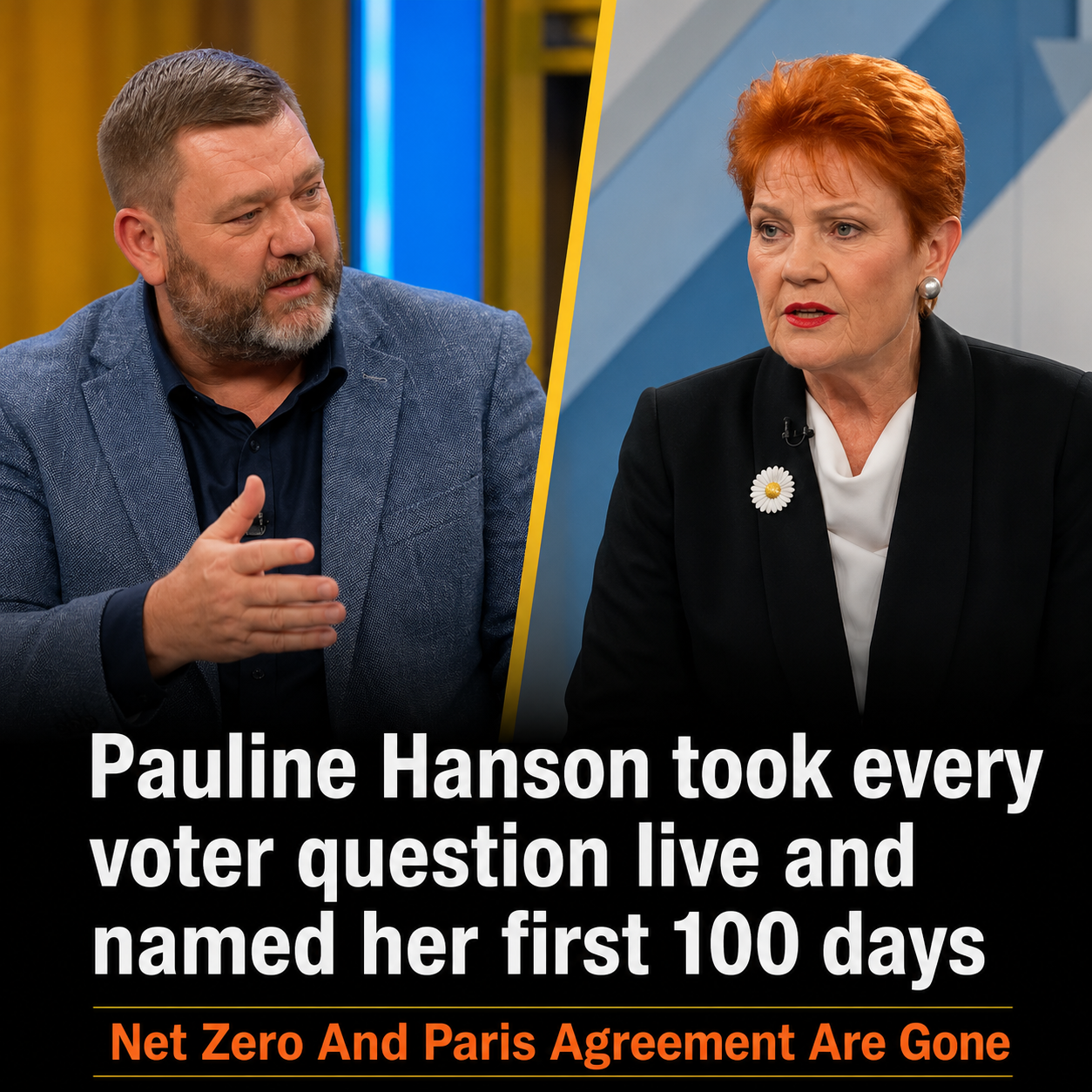
Appearing in a special live edition of Paul Murray Live: Pauline Hanson, Please Explain on News24, the One Nation leader answered questions directly from voters without prepared speeches or scripted responses, using the opportunity to explain how she says she would govern if the party won the 2028 federal election.
The discussion offered one of the most detailed public explanations of One Nation’s governing priorities, with Hanson identifying three immediate objectives that she believes would address many of Australia’s biggest economic and social challenges: reducing immigration, cutting government expenditure and dismantling net zero climate policies.
While those three issues formed the centrepiece of her proposed agenda, Hanson also detailed a series of additional measures covering healthcare, childcare funding, the National Disability Insurance Scheme (NDIS), Indigenous policy and legal reform.
The interview came at a time when One Nation has enjoyed renewed political momentum following stronger opinion polling and increasing public attention on cost-of-living pressures, housing affordability and energy prices. Hanson argued that many Australians are becoming frustrated with both Labor and the Coalition and are looking for a different political direction.
Immigration would be the first priority
Asked what her government would tackle immediately after taking office, Hanson said reducing Australia’s annual migration intake would be her first major decision.
She proposed lowering annual immigration to around 130,000 people while continuing to admit workers needed in sectors experiencing genuine labour shortages.
“(I would) cut back on the immigration. I’m selecting a figure around about 130,000 people,” Hanson said.
Rather than completely closing Australia’s migration program, Hanson said doctors, nurses and other highly skilled workers would continue to be welcomed where employers could demonstrate genuine workforce shortages.
She argued that reducing overall migration would help ease pressure on Australia’s housing market while still allowing businesses and essential services to recruit specialist staff where required.
The proposal aligns with One Nation’s long-standing position that migration levels should be substantially lower than recent years while prioritising skills that directly contribute to the Australian economy.
During the discussion, Hanson also addressed a personal question from a viewer whose elderly parents migrated to Australia decades ago as permanent residents but never became Australian citizens.
The viewer asked whether One Nation would remove benefits from long-term permanent residents under its immigration policies.
Hanson rejected that suggestion immediately.
“No way,” she replied.
She said elderly permanent residents who had spent decades paying taxes and contributing to Australia should not lose their benefits simply because they had never formally taken Australian citizenship.
The exchange provided Hanson with an opportunity to distinguish between reducing future migration and changing arrangements for existing long-term permanent residents.
Government spending and inflation
After immigration, Hanson said her second major priority would be reducing what she described as excessive government spending.
She argued that rising public expenditure had contributed to inflation, placing additional pressure on household budgets through higher prices and increasing living costs.
“Government has been wasting and spending too much money, which created the inflation, which has driven cost of living,” Hanson said.
Her comments reflect One Nation’s broader economic argument that governments should focus more heavily on reducing waste and improving efficiency before increasing taxes or expanding major spending programs.
Inflation and cost-of-living pressures have become dominant political issues across Australia, with higher grocery prices, insurance premiums, electricity bills, rents and mortgage repayments continuing to affect households.
While economists generally attribute inflation to a combination of domestic and international factors—including global supply chain disruptions, energy prices, labour shortages and consumer demand—political parties continue to debate the extent to which government spending has contributed to price growth.
Childcare spending under review
One of Hanson’s more detailed policy proposals involved Australia’s childcare system.
Responding to a question from a parent, she argued the Commonwealth should undertake a comprehensive investigation into childcare funding before committing additional taxpayer money to the sector.
Hanson pointed to the estimated annual cost of government childcare support, saying the level of expenditure justified closer examination.
“Actually, to tell you the truth, it’s costing the taxpayers $16 billion a year, and something’s out of control there,” she said.
Rather than immediately proposing funding cuts, Hanson said she wanted a detailed investigation into how the money was being spent and whether taxpayers were receiving value for that investment.






