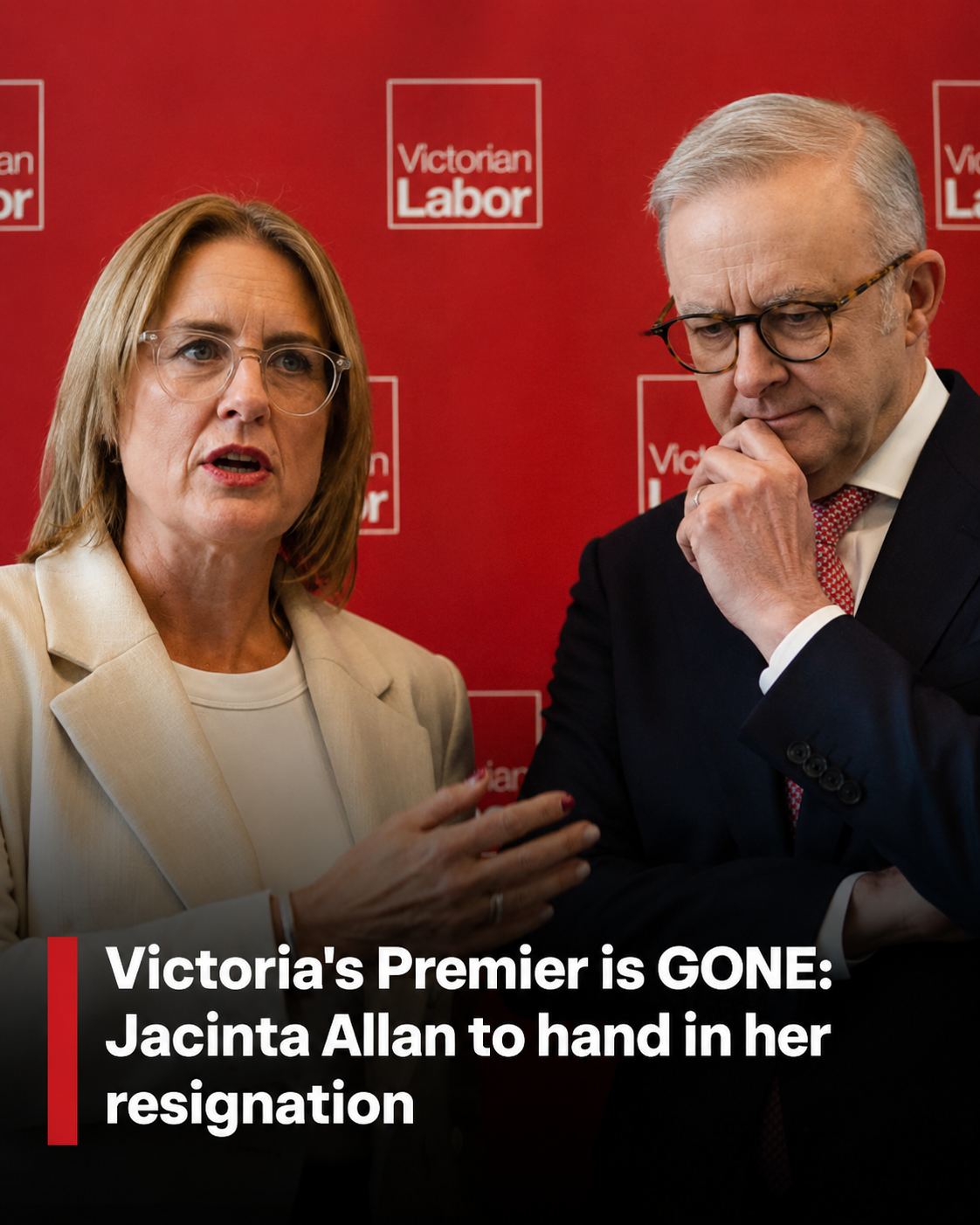
Victoria has entered a new political chapter after Ben Carroll was elected leader of the Victorian Labor Party and sworn in as the state’s 50th premier, following the dramatic resignation of Jacinta Allan after weeks of mounting internal pressure.
The leadership change unfolded in extraordinary circumstances, with Allan stepping down only minutes before she was expected to face a caucus vote that many within Labor believed she was unlikely to survive. Her resignation brought to an end an increasingly turbulent period marked by poor polling, internal dissatisfaction and controversy surrounding the government’s handling of integrity issues and major infrastructure projects.
Fighting back tears as she announced her decision, Allan insisted she still believed Labor could have won the November state election under her leadership.
However, she said a prolonged leadership battle would consume valuable time and resources only months before Victorians head to the polls.
Her resignation came less than 24 hours after a cross-factional delegation of senior ministers and MPs informed her that she no longer enjoyed the support of a majority of the parliamentary Labor Party.
What initially appeared likely to be a straightforward transition soon descended into chaos.
Carroll had been widely expected to secure the leadership unopposed after Allan’s resignation, but Attorney-General Sonya Kilkenny unexpectedly nominated for the leadership, throwing the caucus meeting into confusion.
Reports from inside the party room described raised voices and heated exchanges as MPs debated the future direction of the government.
After a brief period of uncertainty, Kilkenny withdrew her nomination, allowing Carroll to be elected unanimously as Labor leader.
One of the more unusual moments during the transition involved Transport Infrastructure Minister Gabrielle Williams.
To facilitate the formal leadership process, Williams briefly became interim leader of the Victorian Labor Party for only a matter of minutes before Carroll’s election was completed.
She was subsequently elected deputy leader, becoming Deputy Premier alongside Carroll in the new ministry.
The 51-year-old Carroll now inherits a government confronting some of the most difficult political conditions Labor has faced in Victoria for more than a decade.
Opinion polls have pointed to declining public support, while concerns over state debt, cost-of-living pressures, community safety and allegations surrounding the construction sector have dominated political debate.
Many Labor MPs concluded that changing leaders before the election offered the party its best opportunity to reset its political message.
Carroll wasted little time attempting to distinguish his administration from those of Daniel Andrews and Jacinta Allan.
In his first press conference after being sworn in, he declared that he was “not Daniel Andrews” and “not Jacinta Allan”, promising a different style of leadership centred on integrity, accountability and practical government.
He described Victoria as entering a new chapter and argued that changing circumstances required a fresh approach from Labor.
His first major policy announcement reinforced that message.
Carroll confirmed he would establish a Royal Commission into alleged corruption within Victoria’s construction sector, an inquiry that previous Labor governments had repeatedly resisted despite sustained political pressure.
He also announced plans to appoint a special prosecutor and expand the investigative powers of the Independent Broad-based Anti-corruption Commission (IBAC), saying public confidence in government must be restored.
The decision represents one of the clearest policy departures from the Andrews and Allan governments.
Throughout Allan’s premiership, opposition parties argued that only a Royal Commission possessed sufficient powers to investigate allegations involving organised crime, unions, contractors and public infrastructure projects.
Allan maintained other investigative mechanisms were already available, but Carroll concluded a broader inquiry was now necessary.
Despite presenting himself as a fresh leader, Carroll faces immediate criticism from political opponents.
Opposition Leader Jess Wilson has argued that he cannot simply separate himself from decisions made during more than a decade of Labor government because he served in senior cabinet positions under both Andrews and Allan.
The Coalition contends that changing the premier does not erase Labor’s broader record on debt, infrastructure management or integrity issues.
Supporters of the new premier respond that leadership changes should be judged by future decisions rather than past associations.
They argue Carroll has demonstrated his willingness to adopt a different governing style by immediately embracing reforms that had previously been resisted.
Whether those changes prove sufficient to convince voters remains one of the central questions facing Victorian politics over coming months.
Carroll’s political journey has been shaped by a long career within Labor.
After entering Parliament in 2012, he served in several ministerial portfolios before becoming Deputy Premier when Jacinta Allan succeeded Daniel Andrews in 2023.
Colleagues have often described him as pragmatic, policy-focused and skilled at building relationships across different factions of the party. Those qualities are now expected to be tested as he attempts to reunite a caucus that only days earlier was deeply divided over its leadership.
For Allan, the resignation marks the end of a premiership that lasted less than three years.
She entered office following Daniel Andrews’ surprise departure in 2023 and became Victoria’s second female premier.
Although her government continued major infrastructure projects and introduced new policy initiatives, her leadership increasingly came under pressure amid declining public support, growing criticism over government debt and persistent controversy surrounding the construction sector.
The leadership transition also arrives at a critical moment for Victorian Labor.
With the state election only months away, Carroll has little time to establish his own political identity while convincing voters that Labor represents meaningful renewal after more than twelve years in office.
His early focus on integrity reforms, economic management and accountability reflects an attempt to reassure voters that the government has heard public concerns.
Political analysts, however, caution that leadership changes close to elections carry significant risks as well as opportunities.
For the Coalition, Carroll’s appointment provides an opportunity to argue that Labor’s problems extend beyond its leadership.
For Labor, the new premier represents the party’s final opportunity to reset before Victorians cast their ballots in November.
Whether Carroll can successfully distance himself from the Andrews-Allan era while preserving Labor’s electoral base may determine not only his own political future, but also whether the party secures a fourth consecutive term in government.
As Parliament prepares to resume under a new premier, attention will quickly shift from the drama of the leadership spill to the substance of Carroll’s agenda.
His promised Royal Commission, strengthened anti-corruption framework and efforts to restore confidence in government are expected to dominate Victoria’s political landscape in the lead-up to one of the state’s most closely watched elections in recent years.






