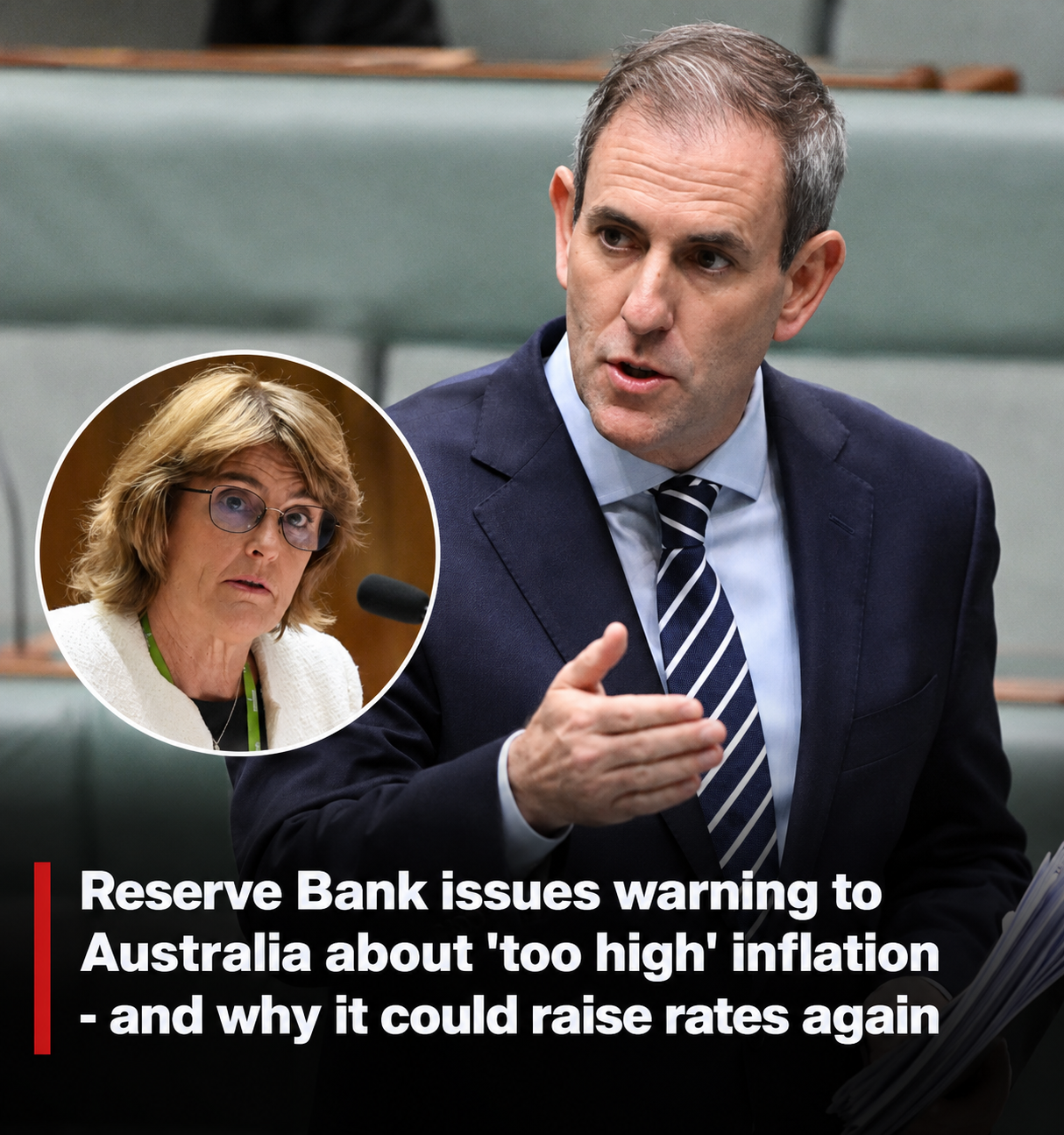
Australian mortgage holders have been warned that the fight against inflation may not yet be over, with Reserve Bank Governor Michele Bullock signalling that further interest rate increases remain a real possibility if price pressures fail to ease.
Delivering a speech at the Anika Foundation Fundraising Lunch in Sydney, Bullock acknowledged that inflation has continued to move broadly in line with the Reserve Bank’s forecasts since May. However, she stressed that underlying inflation remains above the central bank’s target and that policymakers are prepared to tighten monetary policy further if required.
“Underlying inflation has evolved broadly as expected since May. But it is still too high,” Bullock said.
“A key question in the period ahead is whether the tightening in monetary policy earlier in the year is sufficient to achieve this. The Board is prepared to act as required to achieve its mandate, including by increasing the cash rate further if needed.”
The remarks immediately reinforced expectations that the Reserve Bank remains firmly focused on returning inflation to its 2–3 per cent target, even if doing so requires keeping borrowing costs elevated or lifting them again.
Australia has already experienced three interest rate increases since February, reversing some of the easing that occurred during 2025.
According to Bullock, those earlier increases have begun slowing demand across the economy, while labour market conditions have softened modestly.
Even so, she warned that more moderation in demand may be necessary before inflation can be brought under sustainable control.
The warning comes at a particularly sensitive time for households, with financial markets awaiting the latest quarterly inflation figures.
Economists have indicated that a stronger-than-expected inflation result could significantly increase the likelihood of another rate rise at a future Reserve Bank meeting.
Some analysts believe underlying inflation materially above the RBA’s own forecasts would strengthen the case for further tightening.
One of the biggest uncertainties confronting policymakers is the renewed conflict in the Middle East.
Oil prices have remained volatile as investors assess the potential impact of geopolitical instability on global energy supplies.
Although Australia imports only a relatively small share of its crude oil directly from the region, international fuel prices are largely determined by global markets, meaning Australian motorists and businesses are still exposed to rising costs.
Higher oil prices can spread rapidly through the economy.
Fuel is a major input cost for road freight, aviation, agriculture, manufacturing and shipping.
As businesses face higher transport and production costs, many eventually pass those increases on to consumers through higher prices for groceries, household goods and services.
This process risks slowing the decline in inflation that the Reserve Bank has spent several years trying to achieve.
In her speech, Bullock argued that the global economy has become increasingly vulnerable to supply shocks.
She noted that the pandemic, geopolitical conflicts and disruptions to international trade have demonstrated how quickly external events can influence domestic inflation.
Unlike demand-driven inflation, supply shocks often leave central banks facing difficult choices because higher interest rates cannot directly increase the supply of oil or reduce geopolitical tensions.
Instead, monetary policy aims to prevent temporary price increases from becoming permanently embedded in wages and broader inflation expectations.
The Reserve Bank’s concern extends beyond petrol prices alone.
If businesses begin expecting permanently higher costs, they may raise prices more aggressively across a wide range of products.
Workers may also seek larger wage increases to offset higher living expenses, potentially creating a cycle in which inflation becomes more persistent.
Central banks around the world closely monitor these so-called “inflation expectations” because they can influence future price-setting behaviour throughout the economy.
For mortgage holders, the prospect of another rate rise carries significant financial implications.
Higher cash rates generally translate into increased mortgage repayments for borrowers on variable-rate home loans, while also influencing interest rates offered on new fixed-rate lending.
Households already facing elevated living costs would likely experience further pressure on disposable incomes if borrowing costs rise again.
Bullock acknowledged that tighter monetary policy has already affected the housing market more than initially anticipated, but maintained that restoring price stability remains the Reserve Bank’s primary responsibility.
The Governor also highlighted Australia’s longer-term productivity challenges.
Weak productivity growth has limited improvements in real wages and living standards, making it more difficult for the economy to grow without generating inflationary pressure.
She suggested that improving productivity would help ease inflation over time by allowing stronger economic growth without placing excessive pressure on prices.
Economists remain divided on what the Reserve Bank will ultimately decide.
Some believe the cumulative effect of recent rate increases will continue slowing the economy over coming months, reducing the need for additional tightening.
Others argue that if fuel prices remain elevated because of prolonged instability in the Middle East, inflation could remain above target for longer, forcing the Board to consider another increase in the cash rate.
The uncertainty surrounding global energy markets has become an increasingly important factor in Australia’s inflation outlook.
The conflict in the Middle East has already contributed to volatility in oil markets, while concerns about shipping routes and global supply chains continue to influence commodity prices.
Although energy shocks often begin overseas, their effects can quickly spread through domestic economies via transport, logistics and production costs.
Bullock emphasised that monetary policy cannot eliminate external shocks.
Instead, the Reserve Bank’s role is to ensure those shocks do not become entrenched in Australia’s broader inflation environment.
That objective, she said, sometimes requires difficult decisions that slow economic activity in the short term in order to preserve long-term price stability.
The Governor’s comments also underline the delicate balancing act currently facing Australia’s central bank.
Raising interest rates too aggressively risks weakening economic growth and increasing unemployment.
Acting too cautiously, however, could allow inflation to remain above target for an extended period, ultimately requiring even stronger policy action later.
Finding that balance has become more challenging as international events increasingly influence domestic inflation outcomes.
For households, businesses and financial markets, attention will now turn to the next inflation figures and subsequent Reserve Bank meetings.
If inflation continues to ease broadly in line with forecasts, policymakers may judge that existing interest rates are sufficiently restrictive.
However, should underlying inflation remain stubbornly high—or if global energy prices generate fresh upward pressure on costs—the possibility of another rate increase remains firmly on the table.
For millions of Australians with mortgages, the message from the Reserve Bank is clear: while progress has been made, the battle against inflation is not yet over, and further monetary tightening cannot be ruled out.






