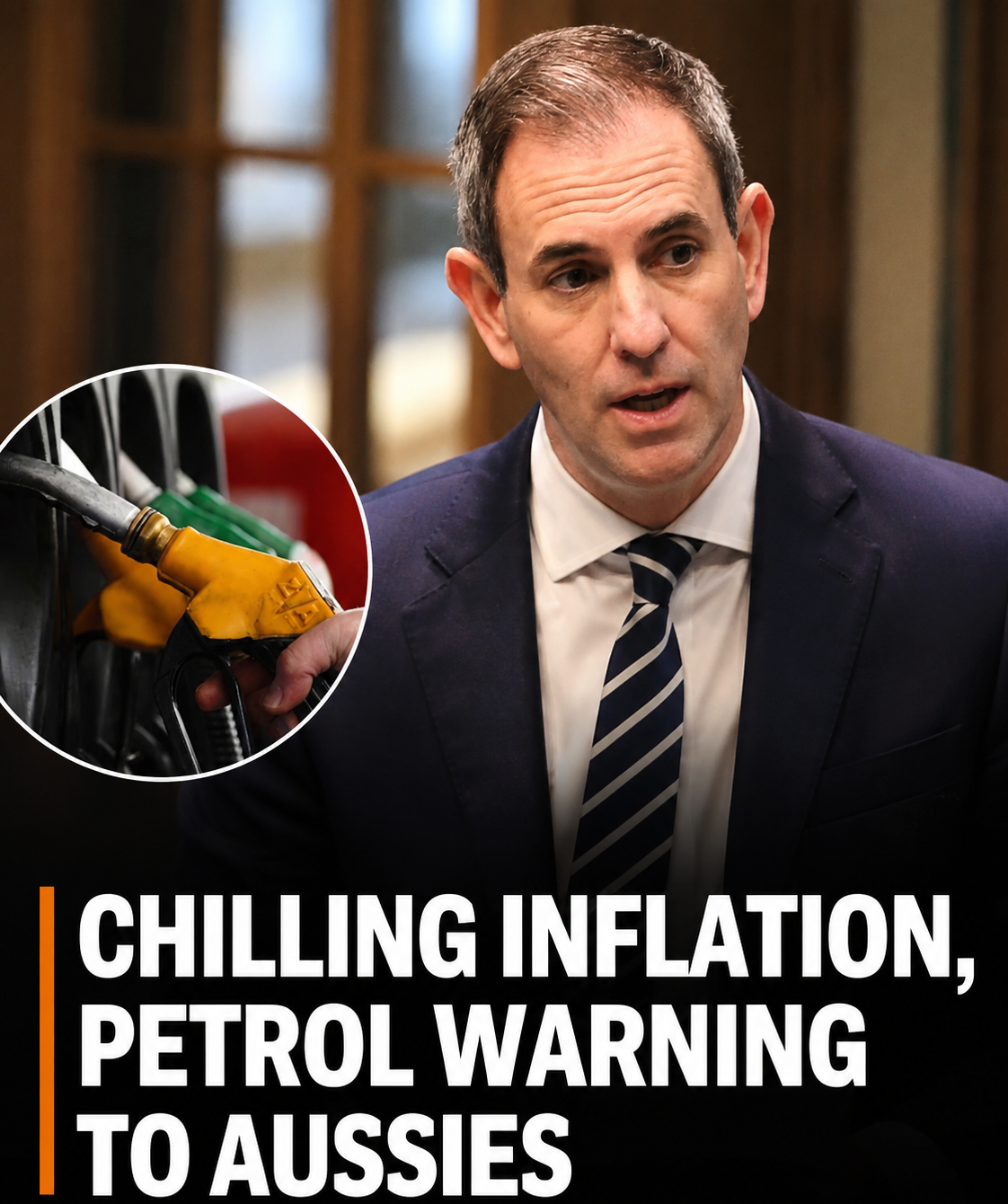
Australia could face renewed inflationary pressure in the months ahead as escalating conflict in the Middle East continues to disrupt global energy markets, prompting Treasurer Jim Chalmers to warn that the economic consequences may extend well beyond petrol prices.
In an unusual move, Chalmers authorised the public release of parts of a confidential Treasury briefing outlining the risks posed by the worsening conflict, saying Australians deserved to understand the challenges confronting the economy.
“There is still so much uncertainty about this war and its ongoing costs and consequences,” Chalmers said, warning that recent developments represent “a substantial threat to global inflation”.
The briefing identifies rising oil prices as the most immediate concern.
Brent crude has climbed sharply in recent weeks, with prices moving above US$100 a barrel as investors reacted to fears that instability across the Middle East could further disrupt global energy supplies.
Treasury officials warned that continued disruption to shipping routes and oil production could keep fuel prices elevated for an extended period, adding renewed pressure to household budgets already stretched by the cost of living.
One of the government’s principal concerns is the Strait of Hormuz, one of the world’s most strategically important maritime chokepoints.
Roughly one-fifth of global oil supplies normally pass through the narrow waterway connecting the Persian Gulf to international markets.
Any prolonged interruption to tanker traffic could significantly reduce available supply, driving oil prices even higher and affecting economies around the world.
Although US President Donald Trump has suggested the latest military operation has achieved its objectives, Australian Treasury officials believe considerable uncertainty remains.
The briefing notes that geopolitical tensions, attacks on shipping in the Red Sea and broader instability across the region continue to create substantial risks for international energy markets despite political claims that the immediate conflict has eased.
Higher oil prices affect far more than motorists filling their cars.
Fuel represents a major input cost across virtually every sector of the economy, including freight transport, aviation, manufacturing, agriculture and logistics.
As transport costs increase, businesses frequently pass at least part of those additional expenses on to consumers through higher prices for food, household goods and services.
Treasury officials therefore warned that an extended energy shock could slow Australia’s progress in bringing inflation back towards the Reserve Bank’s target range.
Chalmers acknowledged that Australia cannot isolate itself from international developments.
While domestic inflation has eased compared with the peaks experienced following the pandemic, the Treasurer said global events remain capable of reversing recent progress.
He stressed that Australia is particularly exposed because global energy prices influence both domestic fuel costs and broader supply chains.
The Treasury briefing also highlighted concerns that the world is now less prepared for major energy disruptions than in previous decades.
Officials pointed to lower strategic fuel reserves in several countries, continued attacks on commercial shipping routes and reduced flexibility across global supply chains as factors increasing the risk of sustained price volatility.
Combined with previous disruptions affecting Russian energy exports, these developments have narrowed the margin available to absorb additional shocks.
Australians have been urged not to respond by panic-buying petrol.
Government ministers say Australia’s fuel distribution network continues operating normally despite rising wholesale prices, and they have encouraged motorists to purchase fuel as needed rather than stockpiling supplies.
Authorities warn that panic buying itself can create unnecessary shortages and place additional pressure on local service stations.
The warning comes as policymakers continue monitoring inflation ahead of future Reserve Bank decisions on interest rates.
If energy prices remain elevated for a prolonged period, economists say it could complicate the central bank’s efforts to return inflation sustainably to target.
Persistent inflation could reduce the scope for future interest rate cuts—or, in a more severe scenario, require monetary policy to remain tighter for longer than previously expected.
Airlines are also expected to feel increasing pressure.
Jet fuel is one of the industry’s largest operating costs, meaning sustained increases in oil prices can eventually feed through to airfares.
Travellers may therefore experience higher ticket prices if fuel costs remain elevated over coming months, particularly on long-haul international routes where fuel represents a significant proportion of total operating expenses.
The government has already begun examining measures designed to strengthen Australia’s long-term energy security.
Earlier this week, the Commonwealth and Western Australian governments announced a jointly funded feasibility study into constructing the nation’s first new large-scale oil refinery since the 1960s.
While the proposed refinery would still rely on imported crude oil, ministers argue it could improve Australia’s capacity to refine fuel domestically during future international supply disruptions.
Economic analysts caution that the ultimate impact will depend on how long instability continues.
If geopolitical tensions ease and shipping routes remain open, oil prices could retreat relatively quickly.
However, a prolonged disruption involving the Strait of Hormuz or further attacks on regional energy infrastructure could trigger a more sustained period of elevated inflation across many advanced economies.
Some Treasury modelling has examined severe scenarios in which oil prices rise substantially beyond current levels, although officials emphasise these represent risk assessments rather than forecasts.
Australia’s experience illustrates how closely interconnected the global economy has become.
Events occurring thousands of kilometres away can influence the price motorists pay at local service stations, the cost of groceries, airline tickets, imported goods and even mortgage repayments if inflation remains higher for longer.
For that reason, Treasury continues to monitor developments in the Middle East alongside domestic economic indicators as it advises the government on future policy responses.
Despite the uncertainty, Chalmers sought to reassure Australians that governments and financial authorities remain closely engaged with the evolving situation.
He acknowledged that geopolitical events cannot be controlled from Canberra but said the government’s responsibility is to prepare for potential economic consequences while maintaining confidence in Australia’s financial resilience.
With global markets continuing to react to developments in the Middle East, the coming weeks are likely to prove critical in determining whether the current surge in energy prices becomes a temporary disruption—or the beginning of another significant inflationary challenge for households, businesses and policymakers alike.






