Victoria’s newly elected Premier Ben Carroll has wasted little time signalling a break from the Andrews and Allan eras, announcing that his first official act in office will be the establishment of a Royal Commission into alleged corruption within the state’s construction sector.
Speaking at his first press conference after being unanimously elected leader of the Victorian Labor Party, Carroll described the inquiry as an essential step towards restoring public confidence in government and ensuring allegations of corruption are examined independently.
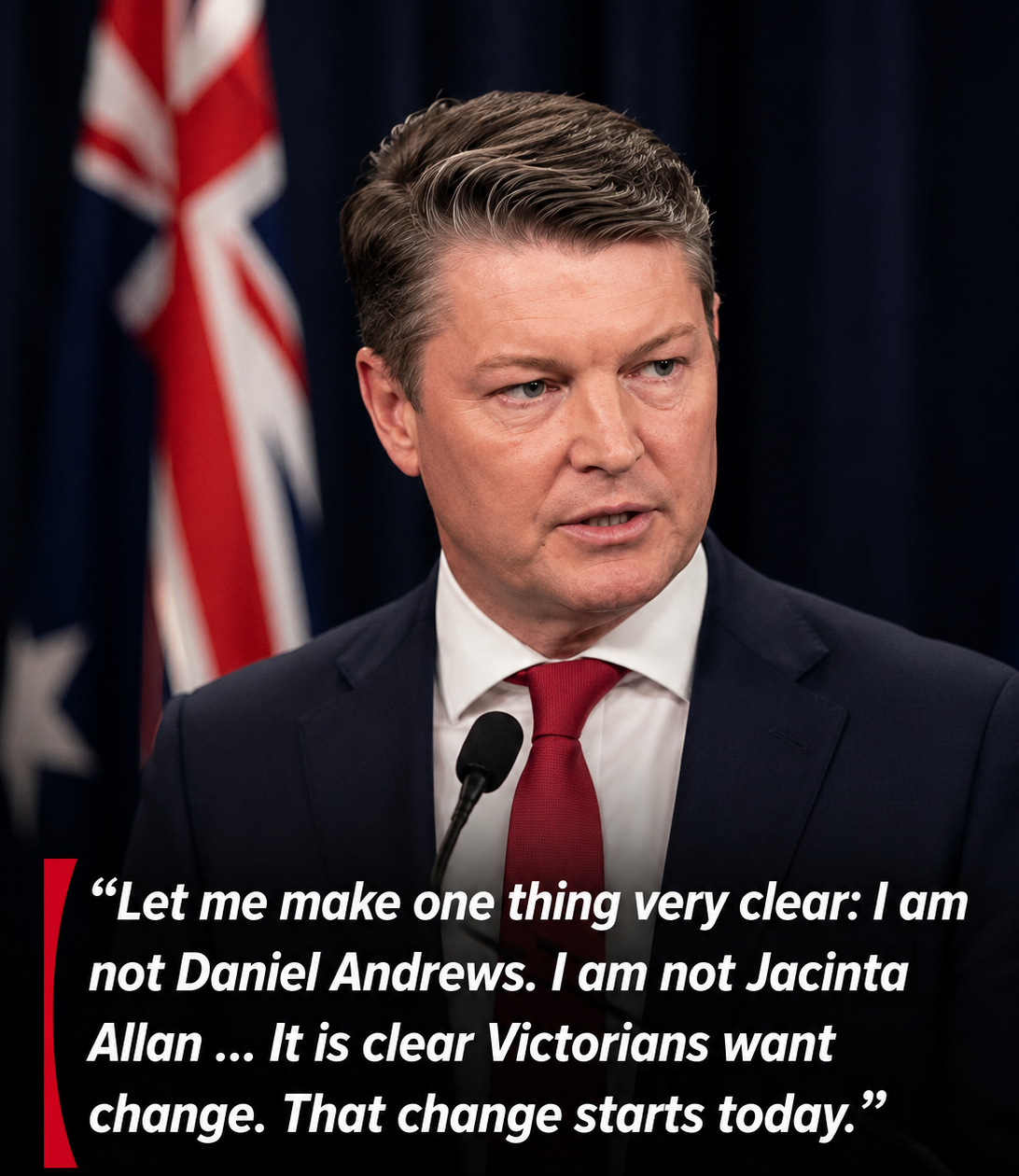
“Let me make one thing very clear: I am not Daniel Andrews. I am not Jacinta Allan,” Carroll said.
“I will do things differently, because different times require a new approach.”
The announcement marked a dramatic change in tone from the previous Labor administration, which had repeatedly resisted calls from the opposition and sections of the media for a royal commission into Victoria’s construction industry.
Instead of limiting the government’s response to existing investigations, Carroll argued that the seriousness of the allegations now required the state’s highest level of independent public inquiry.
He said Victorians deserved confidence that taxpayer-funded infrastructure projects were being managed transparently and free from criminal influence.
In addition to the royal commission, Carroll announced plans to establish a specialist prosecutor who would work alongside the inquiry.
The prosecutor would be responsible for pursuing any criminal matters emerging from the commission’s findings, ensuring that evidence capable of supporting prosecutions could be acted upon without delay.
The new premier also pledged to strengthen the powers available to Victoria’s Independent Broad-based Anti-corruption Commission (IBAC), arguing that integrity agencies should be equipped with stronger investigative tools where serious misconduct is suspected.
The construction sector has been under intense scrutiny following allegations involving organised crime, unlawful conduct and improper influence within parts of the industry.
Recent investigations and reports have prompted renewed debate over governance arrangements for Victoria’s multibillion-dollar infrastructure program, commonly referred to as the “Big Build”.
Those allegations became an increasingly significant political issue during Jacinta Allan’s premiership, particularly because she previously served as Minister for Transport and Infrastructure during much of the period in which many of the major projects were planned or delivered.
Throughout the leadership crisis that eventually ended Allan’s premiership, several Labor MPs privately expressed concern that continuing to reject a royal commission was damaging the government’s credibility.
Opposition parties argued that only an inquiry with the extensive investigative powers of a royal commission could fully examine allegations involving organised crime, procurement practices and governance failures.
Allan consistently defended her position, maintaining that other investigative mechanisms were already available and questioning whether another royal commission would produce different outcomes.
Carroll’s announcement therefore represents one of the clearest policy departures from his predecessor.
Although he served as deputy premier under Allan and previously held senior ministerial positions during the Andrews government, he sought to emphasise that his administration would adopt a different approach to accountability.
Political observers viewed the decision as an attempt to reassure voters that Labor had listened to public concerns following months of controversy surrounding the construction industry.
During the press conference, Carroll repeatedly framed integrity as a defining principle of his premiership.
He argued that restoring confidence in government required decisive action rather than simply defending past decisions.
According to the new premier, Victorians expect governments to investigate serious allegations openly, regardless of political consequences.
He said the inquiry would be designed to identify any systemic failures, recommend reforms and ensure future infrastructure projects operate under stronger oversight.
The announcement also carries significant political implications.
Victoria heads to a state election in November, leaving Carroll with only a few months to convince voters that Labor has genuinely changed direction after more than twelve years in office.
Opinion polling before Allan’s resignation suggested growing public concern over government debt, cost-of-living pressures, infrastructure spending and allegations surrounding the construction sector.
Labor MPs ultimately concluded a leadership change offered the party its best opportunity to reset before voters return to the polls.
Opposition Leader Jess Wilson welcomed renewed attention to integrity but questioned whether Carroll could genuinely distance himself from previous governments after serving as a senior minister throughout much of the Andrews-Allan era.
Coalition MPs argue that Carroll participated in many of the cabinet decisions now attracting scrutiny and therefore bears responsibility alongside his predecessors.
Government ministers reject that argument, saying Carroll should instead be judged on the actions of his own administration.
Beyond the royal commission, Carroll outlined a broader agenda focused on restoring public confidence in Victoria’s institutions.
He indicated that economic management, fiscal discipline, community safety and government integrity would become central priorities over the remaining months before the election.
The new premier also signalled a more collaborative style of cabinet government, promising that major decisions would involve broader consultation rather than relying on individual leadership authority.
Royal commissions occupy a unique place within Australia’s system of government.
Established by executive government under legislation, they possess extensive powers to compel witnesses, require the production of documents and conduct public hearings into matters of significant public importance.
Although royal commissions do not determine criminal guilt, their findings frequently lead to legislative reform, regulatory changes and, where appropriate, criminal investigations by relevant authorities.
Supporters of Carroll’s decision argue those powers make a royal commission the most appropriate mechanism for examining allegations involving complex relationships between public agencies, contractors, unions and organised crime.
Critics caution that such inquiries can take years to complete and involve significant public expense, while their recommendations are not automatically implemented by governments.
Even so, few dispute that a royal commission carries greater investigative authority and public visibility than ordinary departmental reviews or parliamentary inquiries.
For Carroll personally, the announcement represents more than a policy decision—it is a statement about how he wants his premiership to be judged.
By making integrity his first priority, he has attempted to draw a clear distinction between his leadership and that of Daniel Andrews and Jacinta Allan, both of whom faced sustained criticism over their handling of construction-sector controversies.
Whether that distinction persuades Victorian voters remains uncertain.
Political analysts note that leadership changes shortly before elections create opportunities but also expose new leaders to immediate scrutiny.
Opposition parties will likely continue arguing that Carroll cannot separate himself from decisions made during his years in cabinet, while Labor hopes early initiatives such as the royal commission will demonstrate genuine renewal.
With only months remaining before Victorians head to the polls, the inquiry is expected to become one of the defining issues of the election campaign.
Its establishment signals the beginning of a new phase in Victoria’s political debate—one centred not only on infrastructure delivery and economic management, but increasingly on public trust, accountability and whether Labor’s new leadership represents a substantive change or simply a change of faces.






