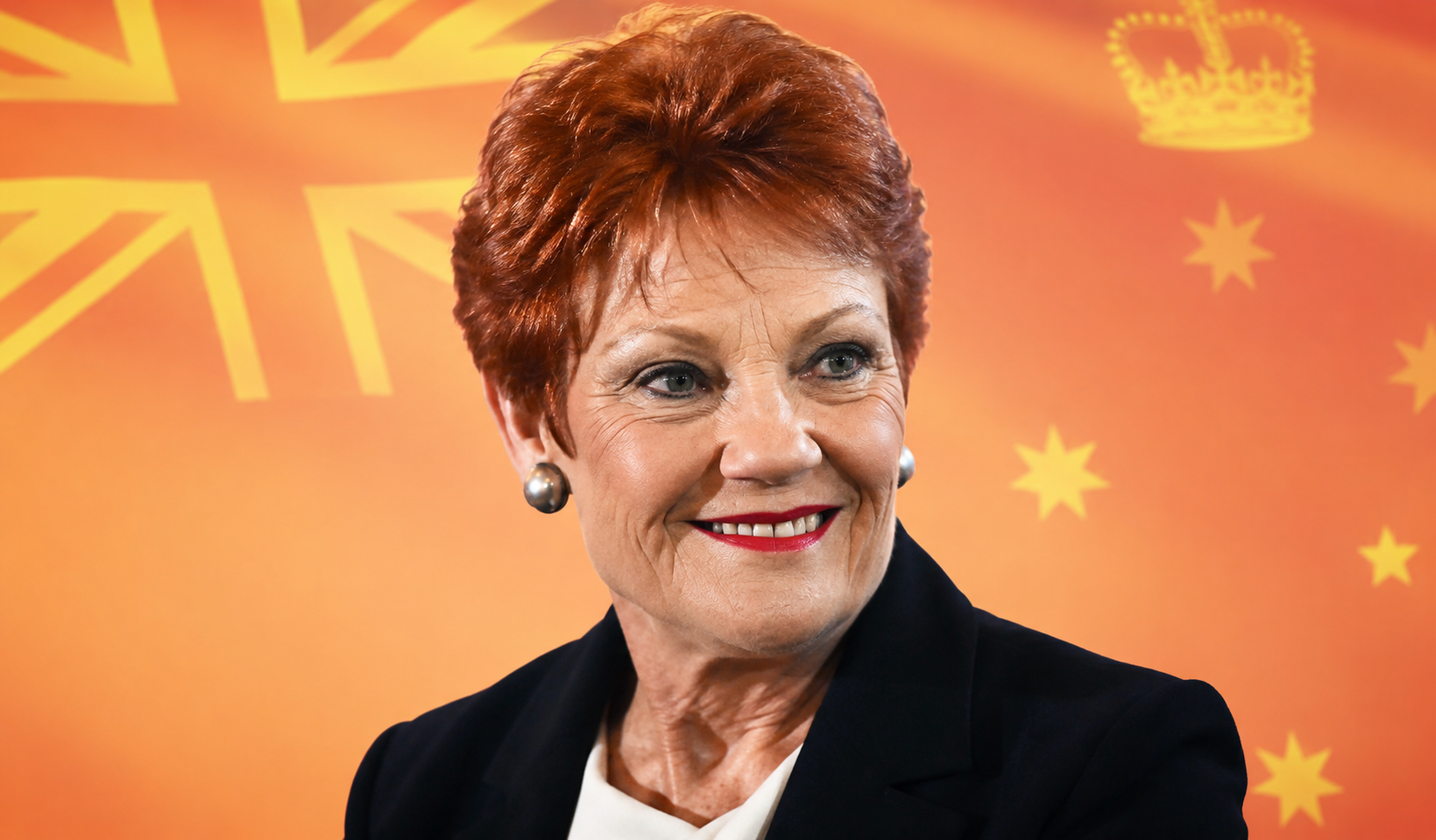
Pauline Hanson has declared One Nation is preparing for its most ambitious Victorian state election campaign yet, revealing the party has identified candidates for almost every lower house electorate ahead of the November poll.
Speaking as campaigning intensifies across Victoria, the One Nation leader said the party now has candidates lined up for around 76 seats, positioning itself to challenge Labor, the Liberal Party and the Nationals across metropolitan, regional and outer suburban electorates.
The announcement reflects growing confidence within One Nation that dissatisfaction with the state’s major parties has created a rare opportunity to significantly expand its parliamentary presence in Victoria.
“We have our candidates,” Hanson said, adding that the party had spent months recruiting local representatives and building campaign infrastructure before formally launching its statewide push.
The November election is shaping up as one of Victoria’s most unpredictable contests in decades.
After more than a decade in government, Labor enters the campaign facing voter concerns over cost-of-living pressures, housing affordability, infrastructure spending and state debt. At the same time, the Liberal opposition is seeking to convince voters it represents a credible alternative government while also responding to the growing influence of minor parties and independents.
One Nation believes that political environment provides an opening to attract voters who are frustrated with both major parties.
Hanson said many Victorians feel the political establishment has failed to address issues they consider most important, particularly rising household costs, energy prices, crime, immigration and access to housing.
“People are looking for another option,” she said, arguing that increasing numbers of voters no longer see Labor or the Coalition as representing their interests.
While One Nation has historically achieved its strongest electoral performances in Queensland and parts of regional Australia, the party believes Victoria now presents one of its biggest opportunities in recent years.
Recent opinion polling has fuelled that optimism.
Several surveys conducted during 2026 have suggested One Nation’s primary vote in Victoria has risen sharply, particularly in outer suburban and regional electorates where concerns over cost-of-living pressures have become dominant political issues.
Some modelling has suggested the party could hold the balance of power in a hung parliament or even secure multiple lower house seats if current voting trends continue. Although polling remains only a snapshot of voter sentiment, the figures have intensified interest in One Nation’s campaign strategy.
Political analysts caution that translating polling support into parliamentary seats remains a difficult task under Victoria’s preferential voting system.
Minor parties often record strong statewide vote shares but struggle to convert those votes into victories unless support is concentrated geographically or preference flows work in their favour.
Even so, One Nation’s campaign has become increasingly difficult for the major parties to ignore.
Earlier this year, the party demonstrated its competitiveness in the Nepean by-election, where One Nation candidate Darren Hercus secured a substantial share of the primary vote despite ultimately falling short of victory. The result reinforced the party’s belief that it can compete strongly in a number of Victorian electorates.
Hanson said candidate recruitment has focused on finding community members with local connections rather than career politicians.
She argued that many Australians have become increasingly frustrated with professional political careers and want representatives who have practical experience running businesses, raising families or working in local industries.
According to Hanson, that grassroots approach forms a central part of One Nation’s electoral strategy.
The party intends to campaign heavily on issues including reducing immigration, easing cost-of-living pressures, strengthening community safety, expanding domestic energy production and opposing policies it argues place unnecessary financial burdens on households and businesses.
Those themes have featured prominently throughout One Nation’s national messaging and are expected to dominate its Victorian campaign.
The announcement comes during a period of major political change in Victoria.
Only days ago, Ben Carroll replaced Jacinta Allan as Premier after Labor’s internal leadership change ahead of the November election. The leadership transition followed months of speculation over Labor’s electoral prospects as polling suggested growing dissatisfaction with the government after more than 12 years in office.
The Liberal Party is likewise attempting to capitalise on voter frustration while preventing support from shifting towards One Nation and other minor parties.
That competitive political landscape means the election is increasingly being viewed as a three-cornered contest in many electorates, particularly across Melbourne’s outer suburbs and regional Victoria.
Election analysts note that preference arrangements could prove crucial if no party secures a decisive majority.
Although One Nation has traditionally maintained its independence, preference recommendations can significantly influence outcomes in closely contested seats under Australia’s preferential voting system.
The prospect of a hung parliament has become an increasingly prominent topic in Victorian political discussion.
If neither Labor nor the Coalition secures enough seats to govern outright, minor parties and independents could potentially hold the balance of power.
While Hanson has repeatedly said One Nation’s priority is to maximise its own representation, she has also indicated the party would negotiate on legislation based on policy outcomes rather than automatically supporting either major party.
That position mirrors the party’s broader approach in federal and state politics, where it has sought to portray itself as an independent conservative alternative rather than an extension of the Coalition.
One Nation currently maintains representation in several Australian parliaments, including the federal Senate, and has continued expanding its organisational presence across multiple states.
Victoria has traditionally proven more challenging for the party than Queensland, but Hanson argues changing political conditions have altered the electoral landscape.
The party’s confidence has also been reinforced by increased membership activity and candidate recruitment during the past year.
One Nation’s Victorian branch has progressively announced candidates across metropolitan and regional seats as preparations for the election have accelerated, with the party indicating it intends to contest electorates across almost the entire state.
For Labor, the Liberal Party and the Nationals, One Nation’s expanding campaign represents another variable in what is already expected to be one of Victoria’s closest elections in years.
Whether the party can convert growing public attention into parliamentary seats remains uncertain, but few observers now dismiss its influence as insignificant.
As campaigning intensifies over the coming months, Hanson believes One Nation is entering the contest in its strongest Victorian position to date.
“We have our candidates,” she said, presenting the announcement as evidence that the party is prepared to compete across almost the entire state rather than concentrating on only a handful of electorates.
With Victoria’s political landscape undergoing rapid change and voter sentiment remaining highly fluid, the November election is expected to test whether One Nation’s expanding organisation and rising profile can translate into electoral success. Regardless of the final outcome, the party’s decision to field candidates across almost every seat underscores its ambition to become a far more significant force in Victorian politics than at any previous state election.