Australia’s battle against inflation may be far from over, with fresh Treasury warnings suggesting households could face months of elevated prices as geopolitical instability continues to threaten global energy markets.
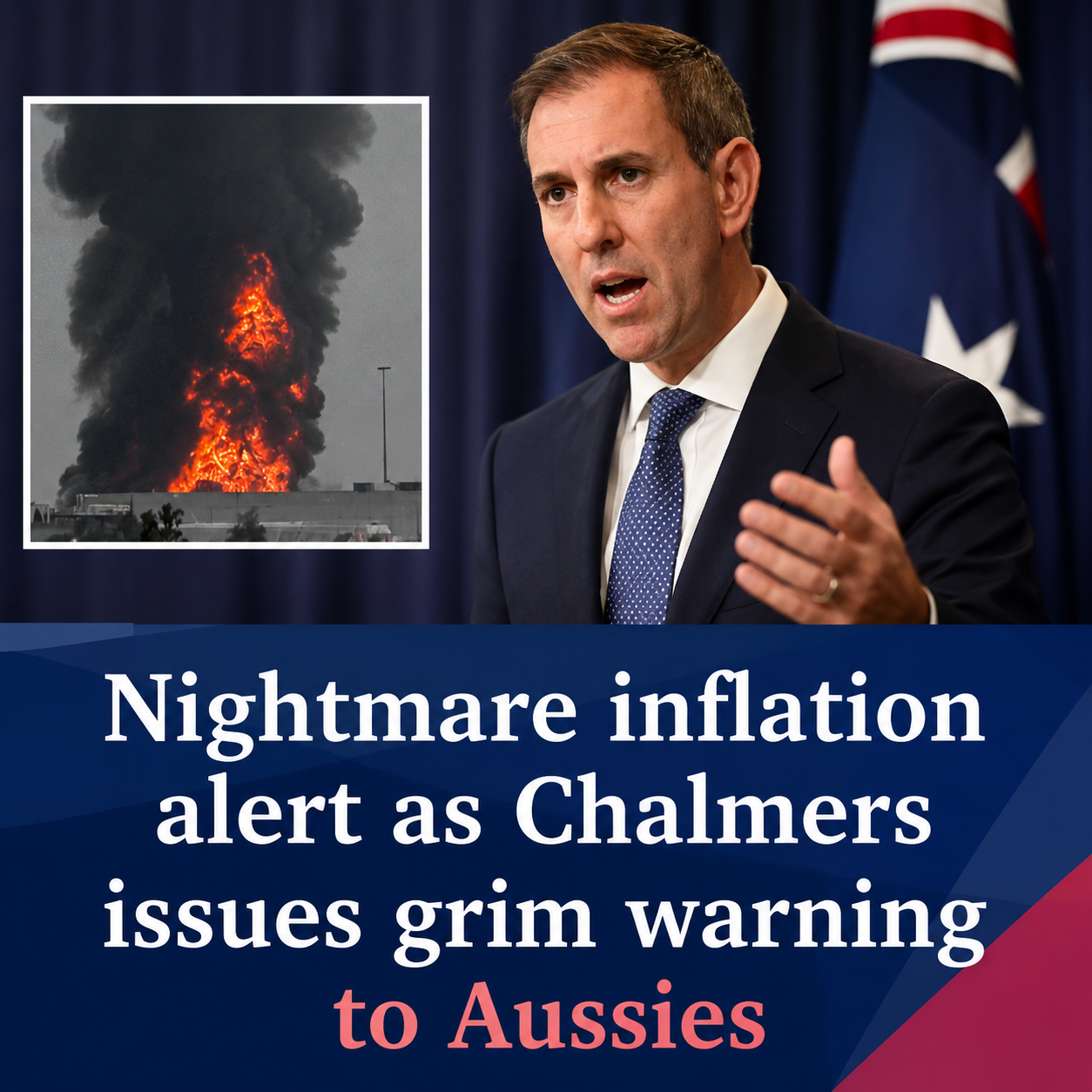
Senior economic officials have reportedly warned Treasurer Jim Chalmers that inflation has not yet reached its peak under some scenarios, with the ongoing conflict involving Iran creating fresh uncertainty over global oil supplies and the cost of living.
Although recent trading has seen oil prices retreat from their highs after signs of a temporary easing in military tensions, policymakers remain concerned that the underlying risks have not disappeared. Markets continue to monitor developments in the Middle East closely, knowing that even a short disruption to energy supplies can quickly flow through to fuel prices, transport costs and consumer inflation.
Treasury’s assessment reportedly considers a range of scenarios, including one in which Brent crude could climb as high as US$200 a barrel if supply disruptions worsen. Under that extreme case, Australia’s inflation rate could rise to around 7.25 per cent, reversing much of the progress made in bringing price growth under control over the past year.
While officials stress that such an outcome is not the central forecast, they say the possibility illustrates how vulnerable Australia’s economy remains to overseas events beyond the government’s direct control.
The renewed concerns come after inflation had shown encouraging signs of moderating earlier in 2026. Lower price growth had raised hopes that the Reserve Bank of Australia was nearing the end of its tightening cycle and that households might soon experience some relief from rising mortgage repayments.
Instead, escalating geopolitical tensions have complicated the outlook.
Oil remains one of the world’s most influential commodities because it affects almost every part of the economy. Higher crude prices increase the cost of petrol and diesel, raise freight expenses for businesses, lift manufacturing costs and eventually feed through to supermarket shelves, electricity bills and countless everyday goods and services.
For Australian households already dealing with elevated housing costs, insurance premiums and grocery prices, another sustained increase in fuel costs would place additional pressure on family budgets.
Treasurer Jim Chalmers has acknowledged that developments in the Middle East represent one of the largest external risks facing Australia’s economy.
He has repeatedly called for a peaceful resolution to the conflict while warning that prolonged instability could undermine global economic growth and place renewed upward pressure on inflation.
According to Treasury’s advice, Australia is particularly exposed because international energy markets have become more fragile following years of reduced spare production capacity, disruptions to shipping routes and tighter global fuel inventories.
One of the biggest concerns centres on the Strait of Hormuz, one of the world’s most strategically important shipping corridors.
Roughly one-fifth of globally traded crude oil passes through the narrow waterway each day. Any interruption to traffic can rapidly reduce available supply and push prices sharply higher across international markets.
Recent attacks on commercial shipping, threats to energy infrastructure and continued uncertainty surrounding the conflict have heightened concerns among traders, insurers and governments alike.
Although oil prices have fallen from recent peaks after diplomatic efforts reduced fears of immediate escalation, analysts caution that markets remain highly sensitive to new developments.
Brent crude briefly surged above US$100 a barrel before retreating as reports emerged that military operations had been paused and diplomatic discussions had resumed. Even with that decline, prices remain well above levels seen before the latest escalation.
The Reserve Bank now faces an increasingly difficult balancing act.
If higher energy costs begin flowing into broader consumer prices, the central bank may feel compelled to keep interest rates higher for longer or even consider additional tightening despite slowing economic growth.
Higher borrowing costs would place further strain on homeowners, businesses and property investors while potentially reducing consumer spending across the wider economy.
Economists have frequently described this situation as one of the most challenging policy environments because central banks have little ability to influence the underlying cause of the inflation.
Unlike demand-driven inflation, which can often be moderated through higher interest rates, supply shocks caused by war, shipping disruptions or energy shortages are far more difficult to manage.
Increasing borrowing costs cannot produce more oil or reopen disrupted trade routes.
Instead, policymakers are often forced to balance the need to control inflation against the risk of pushing the economy into recession.
That dilemma explains why governments around the world have been closely monitoring developments in global energy markets since the conflict intensified.
Australia’s own fuel security has also become part of the national conversation.
The Albanese Government recently announced a pre-feasibility study into developing Australia’s first major new oil refinery in decades as part of broader efforts to strengthen domestic fuel resilience.
The proposal reflects growing concern that Australia’s heavy dependence on imported refined fuel leaves the country vulnerable whenever global supply chains come under pressure.
At the same time, debate continues over whether temporary fuel tax relief should be extended if petrol prices continue climbing.
Previous reductions in fuel excise helped cushion households during earlier periods of elevated prices, but governments must also weigh the budgetary cost of such measures against the risk of adding further inflationary pressure through increased consumer spending.
Business groups are likewise watching developments closely.
Transport operators, manufacturers, airlines, farmers and retailers all face higher operating costs when fuel prices increase. Many eventually pass at least part of those additional costs on to consumers, contributing to broader inflation throughout the economy.
Small businesses are particularly vulnerable because they often have less capacity to absorb sustained increases in operating expenses.
For households, the consequences extend beyond the petrol pump.
Higher energy prices can influence everything from grocery bills to construction costs, holiday travel, parcel deliveries and utility charges. When combined with elevated mortgage repayments and insurance costs, the cumulative effect can significantly reduce disposable income.
Despite the challenging outlook, officials have stopped short of predicting that the worst-case scenario will occur.
Much will depend on whether diplomatic efforts succeed in preventing further disruptions to global oil supplies and whether energy markets continue to stabilise over coming weeks.
The recent decline in crude prices following signs of de-escalation has provided some cautious optimism, but analysts warn that markets could quickly reverse course if the security situation deteriorates again.
For the Albanese Government, the immediate priority is preparing for a period in which inflation may prove more persistent than previously expected while continuing to support households facing ongoing cost-of-living pressures.
There are no quick or painless solutions to an inflation shock driven largely by global events.
Instead, Australia’s economic outlook over the coming months is likely to depend not only on domestic policy decisions but also on developments thousands of kilometres away in one of the world’s most strategically important energy-producing regions.
With Treasury warning that inflation risks remain elevated even as oil markets fluctuate, both policymakers and households may need to prepare for continued economic uncertainty rather than expecting a rapid return to the low-inflation environment experienced before the recent wave of global instability.






