Australia’s housing market is showing clear signs of slowing after months of rapid growth, with new lending data revealing a sharp fall in mortgage applications as higher interest rates and recent federal tax reforms weigh on buyer confidence.
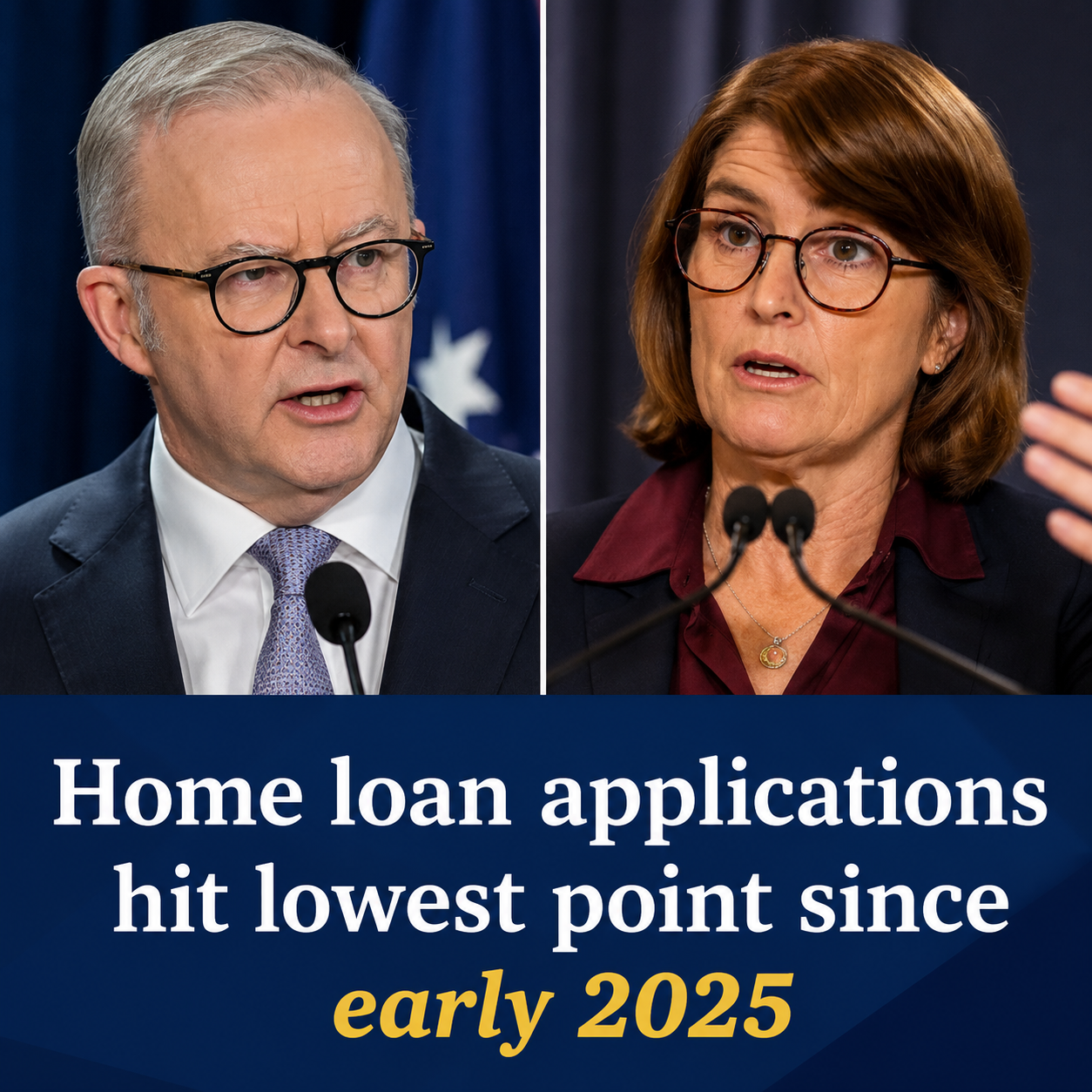
New figures released in Loan Market’s latest Application Trends Report show mortgage lodgements have fallen by 26 per cent since February, highlighting a significant cooling in borrowing activity across the country.
By value, total mortgage lodgements have dropped 23 per cent over the same period. Investors have recorded the steepest decline, with applications falling 35 per cent, while first-home buyers are down 19 per cent. Australians upgrading to larger homes have proven comparatively resilient, although activity among that group has still fallen by 15 per cent.
The data suggests Australia’s housing market has shifted gears after an exceptionally strong period through late 2025 and early 2026, when falling borrowing costs, improving consumer confidence and strong competition pushed property prices higher across many parts of the country.
That momentum began to fade following a series of Reserve Bank of Australia interest rate increases aimed at containing persistent inflation, combined with changes to housing taxation announced in the Federal Budget.
Together, those developments have significantly altered borrowing conditions, prompting many prospective buyers to delay purchasing decisions while reassessing affordability and investment returns.
The decline has been evident across almost every major borrower category, although investors appear to have responded most aggressively.
According to the report, uncertainty surrounding changes affecting investment property taxation has contributed to the sharp reduction in investor lending activity. Higher borrowing costs have further reduced expected returns, encouraging many investors to postpone purchases until there is greater clarity about future market conditions.
First-home buyers have also become more cautious.
While government assistance programs continue to provide pathways into the market for eligible buyers, rising property prices over recent years mean many purchasers still face substantial deposit requirements and significantly higher monthly mortgage repayments than they would have encountered only a few years ago.
The combination of higher interest rates and elevated home values has reduced borrowing capacity for many households, forcing some prospective buyers to either delay entering the market or lower their purchasing budgets.
Despite the broad slowdown, Australians seeking to upgrade their existing homes have remained comparatively active.
Loan Market’s data indicates upgrader activity has declined by 15 per cent—less than either investors or first-home buyers—suggesting existing homeowners with accumulated equity remain in a stronger financial position than many new entrants.
Many established homeowners have also benefited from capital gains generated during previous years of rising house prices, giving them greater flexibility when purchasing larger properties despite higher borrowing costs.
Compared with the final two weeks of June 2025, overall mortgage lodgements are now down 18 per cent, reinforcing the view that housing demand has cooled materially over the past year.
Even so, average loan sizes have continued to increase modestly, reflecting the reality that Australian property prices remain historically high despite softer transaction volumes.
Regional differences are also emerging.
Loan Market’s research found Queensland experienced one of the largest declines in mortgage activity since February, while several smaller jurisdictions—including Western Australia, South Australia, Tasmania, the Australian Capital Territory and the Northern Territory—recorded even steeper percentage falls.
New South Wales also saw a substantial reduction in lodgements, while Victoria proved relatively more resilient despite weaker market conditions.
Industry analysts say the slowdown should be viewed in context.
Housing activity reached exceptionally high levels during late 2025 and the opening months of 2026 as buyers rushed to secure finance before borrowing conditions tightened.
That strong starting point means current declines partly represent a normalisation following an unusually active period rather than evidence of a collapsing housing market.
Higher interest rates nevertheless continue to have a significant influence on household decision-making.
Each increase in the Reserve Bank’s cash rate flows through to mortgage repayments for many borrowers, reducing disposable income and limiting the amount prospective buyers can borrow under bank serviceability assessments.
For households already managing higher living costs, the combined financial pressure has encouraged greater caution before committing to large long-term loans.
At the same time, uncertainty surrounding taxation changes affecting investment property has further dampened confidence among property investors, many of whom are reassessing future investment strategies.
Despite weaker lending activity, many property professionals argue the underlying fundamentals supporting Australia’s housing market remain largely intact.
Population growth continues to place pressure on housing demand, while persistent supply shortages in many capital cities continue to limit the number of homes available for sale.
Those structural factors have prevented widespread price declines even as transaction volumes have softened.
Several brokers believe the current slowdown may also create opportunities for buyers who remain financially prepared.
With fewer investors and first-home buyers actively competing at auctions, some purchasers may find themselves facing less competition than during the highly competitive conditions seen earlier this year.
Industry participants note that reduced competition can improve buyers’ negotiating power, particularly in markets where vendors have become more realistic about pricing expectations.
Attention is now turning to upcoming Reserve Bank decisions, which are expected to play a significant role in determining the direction of housing demand over the remainder of the year.
If interest rates stabilise or begin easing, mortgage activity could recover as borrowing affordability improves.
Conversely, any further increases in financing costs may extend the current period of subdued lending, particularly among first-home buyers and investors who are already the most sensitive to changes in borrowing costs.
Property market experts also expect the traditional spring selling season to provide an important test of buyer confidence.
A stronger-than-expected increase in listings could encourage more transactions if buyers conclude interest rates have peaked, while continued caution may result in a slower recovery in mortgage demand.
For now, however, Loan Market’s latest figures provide one of the clearest indications that Australia’s housing market has entered a more restrained phase after the rapid expansion experienced over the past year.
Although demand has softened significantly since February, the combination of strong population growth, constrained housing supply and ongoing affordability challenges means the market remains in transition rather than experiencing a broad-based downturn.






