One Nation Senator Malcolm Roberts has pledged to continue pressing the Australian Federal Police over what he describes as unanswered questions surrounding the highly publicised arrest of former SAS soldier Ben Roberts-Smith at Sydney Airport earlier this year.
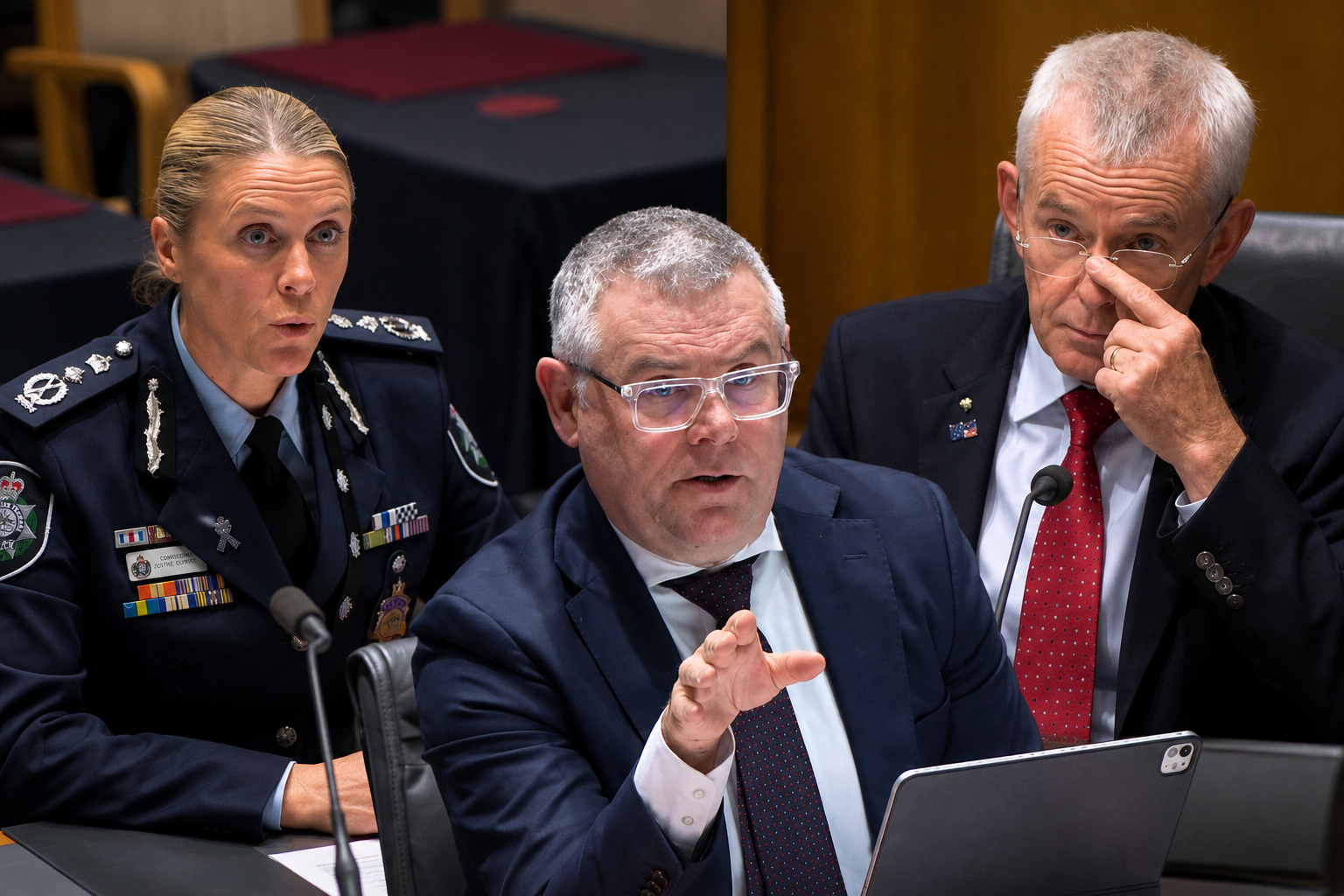
Roberts says he remains dissatisfied with the response he received during Senate Estimates in June after attempting to determine whether the AFP specifically discussed the location of Roberts-Smith’s arrest with the Commonwealth Director of Public Prosecutions (CDPP) before officers detained him at Sydney Airport.
The senator revealed that both Employment Minister Murray Watt and AFP Commissioner Krissy Barrett told him most of his questions had already been comprehensively addressed during an earlier exchange between Commissioner Barrett and Liberal Senator Michaelia Cash.
Accepting that advice during the hearing, Roberts agreed to review the official parliamentary transcript before pursuing the matter further. However, after examining the Hansard, he says he has reached a different conclusion.
“Having since reviewed the comprehensive answers provided to Senator Cash, I strongly disagree that my question was covered,” Roberts said.
He argued that the central issue he wished to clarify—whether the AFP specifically consulted the CDPP about conducting the arrest at Sydney Airport—was never answered directly during either round of questioning.
According to Roberts, Commissioner Barrett instead referred broadly to operational decision-making and consultation with relevant stakeholders without confirming whether the arrest location itself had been discussed with federal prosecutors.
Roberts has now vowed to raise the issue again at the next available parliamentary opportunity, signalling the matter remains unresolved in his view.
The controversy stems from the arrest of Ben Roberts-Smith on 7 April 2026, when AFP officers detained the Victoria Cross recipient shortly after he arrived at Sydney Airport from Brisbane with members of his family.
Roberts-Smith was subsequently charged with five counts of the war crime of murder relating to alleged conduct during Australia’s military operations in Afghanistan. He has consistently denied all allegations and is defending the charges before the courts. As the criminal proceedings continue, the allegations remain untested before a jury.
The airport arrest attracted enormous public attention after television crews were already waiting inside the terminal and recorded the operation as it unfolded.
Footage showing Roberts-Smith being escorted by AFP officers quickly spread across television broadcasts and online news platforms, prompting criticism from some politicians and commentators who questioned why such a high-profile arrest was conducted in a public location and in front of his family.
Those concerns formed the basis of extensive questioning during Senate Estimates, where Commissioner Barrett defended both the operational planning and the decision to arrest Roberts-Smith at Sydney Airport.
Barrett told senators the airport was selected for several operational reasons rather than publicity.
She said investigators had information suggesting Roberts-Smith intended to relocate overseas and that the AFP believed the airport represented the safest and most practical location to execute the arrest.
According to the Commissioner, airports provide a controlled environment where travellers have already passed through security screening, reducing potential operational risks for officers and members of the public. She also rejected suggestions that the location had been chosen to influence any future legal proceedings.
The Commissioner further explained that investigators considered, but ultimately rejected, the possibility of allowing Roberts-Smith to voluntarily surrender to authorities.
Given the seriousness of the allegations—five counts of war crime murder carrying potential life sentences—Barrett said officers determined that an arranged surrender would not be an appropriate operational response. Additional police were also deployed to assist Roberts-Smith’s family during the arrest because officers knew they would be travelling with him.
Another significant issue raised during the parliamentary hearing concerned the apparent media leak before the arrest.
Television crews were already positioned inside Sydney Airport before Roberts-Smith’s aircraft landed, prompting questions about how journalists became aware of the operation.
Commissioner Barrett told senators she was “determined” to identify whoever disclosed sensitive operational information to the media.
She confirmed that the suspected leak had been referred to the National Anti-Corruption Commission (NACC), warning that any unauthorised disclosure of operational information could have serious consequences for those responsible.
The AFP has consistently denied leaking information itself and has maintained that the investigation into the source of the disclosure remains ongoing.
Roberts’ latest comments do not challenge the legality of the charges against Roberts-Smith, but instead focus on whether the decision-making process surrounding the location of the arrest has been fully explained to Parliament.
Specifically, the One Nation senator argues there remains an important distinction between broad discussions with prosecuting authorities and any explicit consultation regarding the choice of Sydney Airport as the location where officers would execute the arrest warrant.
That distinction lies at the centre of the question he says has still not received a clear yes-or-no answer.
The issue also highlights the role of Senate Estimates hearings, where ministers and senior public officials are questioned about government administration, operational decisions and the expenditure of public funds.
Although officials are generally expected to answer questions put by senators, they may decline to provide operational details where disclosure could affect ongoing investigations, legal proceedings or security considerations.
Commissioner Barrett relied on those principles during several exchanges concerning Roberts-Smith’s arrest, telling senators that operational matters often involve multiple stakeholders and that some decisions cannot be discussed publicly in full.
Roberts nevertheless argues that confirming whether a discussion occurred with the CDPP about the arrest location would not compromise any operational sensitivities and therefore should be answered directly.
Whether that question is eventually addressed may depend on future parliamentary hearings, where senators are expected to revisit several unresolved issues arising from the April arrest.
Meanwhile, the broader criminal case against Roberts-Smith continues through the courts.
The former soldier remains on bail after being charged with five alleged war crimes offences and has repeatedly stated that he categorically denies every allegation against him.
As those proceedings move forward, parliamentary scrutiny of the AFP’s operational decisions appears likely to continue alongside the criminal prosecution, ensuring questions about the handling of one of Australia’s highest-profile arrests remain firmly in the public spotlight.






