A new nationwide polling model has delivered one of the most dramatic projections seen in Australian federal politics in recent years, suggesting Pauline Hanson’s One Nation could emerge as the country’s second-largest force in the House of Representatives and potentially play a decisive role in forming the next government.
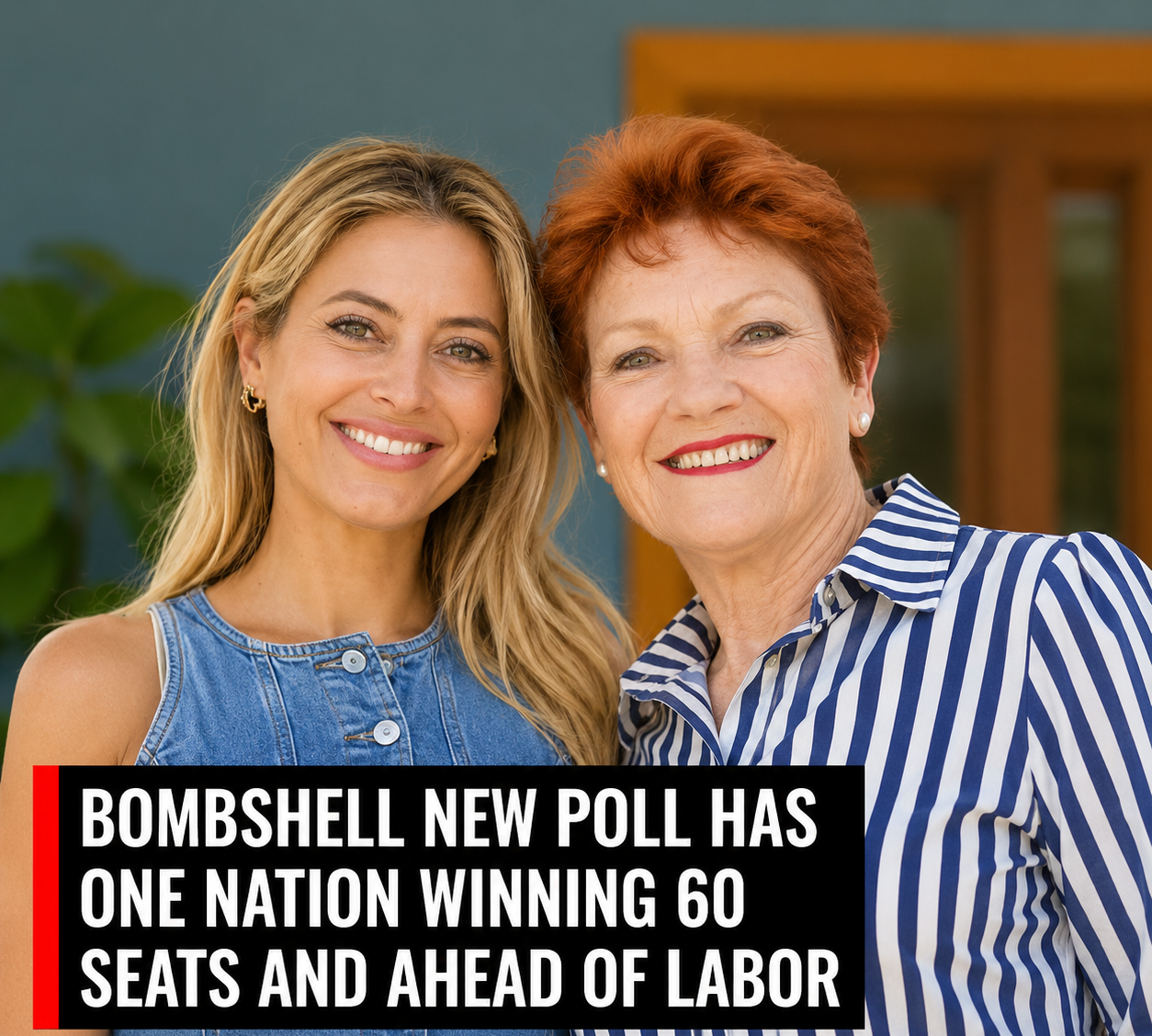
The latest DemosAU Multilevel Regression with Poststratification (MRP) poll projects Labor would secure just 68 of the 150 seats in the House of Representatives if Australians went to the polls today. That would leave Anthony Albanese’s government well short of the 76 seats required for a parliamentary majority.
Perhaps even more striking is the projection that One Nation could win around 60 seats, while the Coalition would be reduced to only 13 seats. The Greens are projected to secure three seats, with six electorates expected to fall to independents or other minor parties.
If those numbers were replicated at an actual election, Australia would almost certainly face a hung parliament, with negotiations between parties becoming critical to determining who forms government.
The polling also places One Nation ahead of Labor on primary vote, underlining the scale of the political shift suggested by the research. According to the model, One Nation sits on around 30 per cent of the primary vote, compared with Labor on approximately 26 per cent, while the Coalition trails further behind.
While Australia uses preferential voting rather than deciding elections solely on primary vote, the figures nevertheless represent a remarkable turnaround for Pauline Hanson’s party, which until recently was viewed largely as a minor political force concentrated in regional Australia.
The survey was conducted by DemosAU for Capital Brief using Multilevel Regression with Poststratification, commonly known as MRP. Unlike traditional national opinion polls, MRP attempts to estimate results in every electorate individually by combining demographic modelling with large survey samples.
The latest study surveyed 9,343 Australians between May 27 and July 11, making it one of the largest federal political surveys conducted this year. Because the interviewing period stretched across several weeks, analysts caution that the poll is designed to estimate seat outcomes rather than capture rapid shifts in voter sentiment from week to week.
The modelling indicates Labor has fallen sharply since DemosAU’s previous MRP survey earlier this year, while One Nation has continued to build support across multiple parts of the country.
One Nation’s strongest momentum appears to be outside Australia’s traditional inner-city Labor strongholds. The polling suggests the party now dominates many regional communities and has expanded significantly into outer metropolitan electorates, areas that have become increasingly important battlegrounds during recent elections.
Housing affordability, cost-of-living pressures and dissatisfaction with both major parties have all been identified by political analysts as factors helping fuel the party’s rise.
The modelling suggests that even though Labor would still emerge as the single largest party, it would no longer command enough parliamentary support to govern alone.
Meanwhile, the combined total of One Nation and Coalition seats would place the conservative side of politics within striking distance of a parliamentary majority.
That possibility has intensified discussion about what would happen if no party reaches the 76-seat threshold.
Australia’s Westminster system does not require the party with the largest number of seats to automatically form government. Instead, whichever political grouping can demonstrate majority support in the House of Representatives is invited by the Governor-General to govern.
That means negotiations between parties, independents and crossbench MPs become crucial whenever no party wins outright.
Under the DemosAU projection, One Nation would almost certainly require support from the Coalition in order to form government, while Labor would need backing from both the Greens and a significant number of independents or minor party MPs.
Whether either scenario would actually occur remains highly uncertain.
Senior Coalition figures have repeatedly expressed differing views about future cooperation with Pauline Hanson’s party, with some indicating limited openness while others have firmly rejected any formal arrangement.
Political scientists also caution against treating any single poll as an election forecast.
MRP polling has become increasingly popular internationally because it attempts to estimate outcomes seat by seat rather than relying solely on national voting intention. However, every modelling approach depends on assumptions about demographic behaviour, preference flows and local electoral dynamics.
Australia’s preferential voting system further complicates projections because final seat outcomes often depend on how supporters of eliminated candidates distribute their preferences.
In addition, incumbency effects, strong local candidates and regional issues can produce significantly different outcomes from national polling trends.
Election analysts have noted that while One Nation’s growth is substantial, converting a large national vote into dozens of parliamentary seats remains one of the biggest unknowns heading into any future federal election.
The latest DemosAU modelling nevertheless reinforces a broader trend that has been developing throughout 2026.
Earlier surveys from the same polling organisation have consistently shown One Nation attracting voters from both Labor and the Coalition while expanding beyond its traditional electoral base.
Previous DemosAU polling suggested the party had already climbed into first place on primary vote while narrowing the gap in projected parliamentary seats. The newest MRP analysis indicates that trend has continued, with One Nation now projected to gain approximately 60 seats under the model.
The projected collapse in Coalition representation is equally significant.
Under the modelling, the Liberal-National Coalition would retain only 13 lower house seats, representing one of the weakest performances ever projected for Australia’s traditional centre-right alliance.
That result reflects One Nation’s ability to capture conservative voters dissatisfied with the Coalition while also attracting some voters who previously supported Labor, according to polling analysis released alongside the survey.
For Labor, the figures suggest growing political pressure despite remaining the largest single party in the projected parliament.
Losing majority government after only one term would represent a major setback and force the party to negotiate support from multiple crossbench MPs in order to remain in office.
The Greens, projected to win only three seats, could still become influential if Labor required every available vote to maintain confidence and supply.
Independent MPs may also hold considerable bargaining power under a hung parliament scenario, potentially shaping policy priorities in exchange for parliamentary support.
Despite the attention generated by the poll, analysts continue to emphasise that federal elections are decided by actual ballots rather than polling models.
Campaign performance, leadership debates, economic conditions, candidate selection, preference arrangements and unforeseen political events all have the potential to reshape the electoral landscape before Australians next head to the polls.
For now, however, the latest DemosAU MRP survey paints a picture of an Australian political system undergoing profound change, with One Nation emerging as a central player in a contest that only a few years ago appeared firmly dominated by Labor and the Coalition.
Whether that momentum ultimately translates into parliamentary seats will only become clear when voters cast their ballots, but the new projections have already intensified debate over what Australia’s next federal election could look like if current political trends continue.






