A remarkable wave of generosity from Australians has given three-year-old South Australian girl Elsie Avery a chance to access an experimental personalised cancer treatment after thousands of people helped raise more than A$400,000 in just hours to support her fight against one of the world’s deadliest childhood brain cancers.
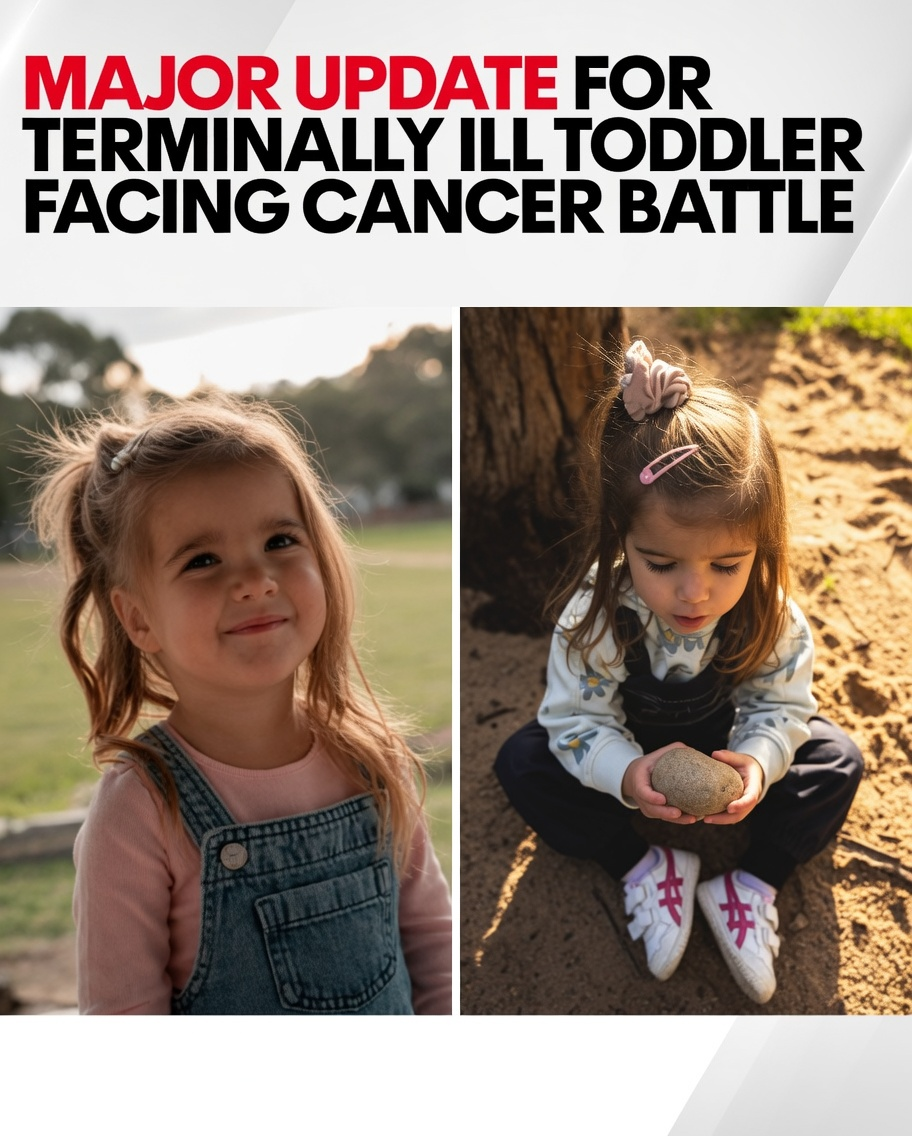
The extraordinary fundraising effort followed a national television appeal highlighting Elsie’s battle with diffuse intrinsic pontine glioma (DIPG), a rare and highly aggressive tumour that develops in the brain stem and carries one of the poorest prognoses of any childhood cancer.
Within hours of the story airing on 7NEWS, nearly 5,000 Australians had donated enough money to push the family’s fundraising campaign beyond its A$400,000 target, allowing Elsie to move forward with plans to receive a highly specialised personalised mRNA vaccine available through a Canadian manufacturer.
For Elsie’s parents, Abbey and Dane Avery, the response from complete strangers across Australia was almost impossible to comprehend.
Only the previous morning, they believed they remained hundreds of thousands of dollars short of reaching their goal.
By the following day, they awoke to discover the campaign had been transformed by an overwhelming outpouring of generosity.
“Thank you doesn’t seem enough,” Abbey said.
“The generosity has been absolutely incredible — from people we know and complete strangers from around the country. It’s just been overwhelming, and we’re so grateful.”
Elsie’s story began with subtle changes noticed by her parents shortly before Christmas.
After two hospital visits, doctors ordered an MRI scan.
Within an hour, the family received devastating news: their energetic three-year-old daughter had a four-centimetre tumour located deep within her brain stem.
She was formally diagnosed on 10 January with diffuse intrinsic pontine glioma, commonly known as DIPG.
The diagnosis immediately changed the lives of the Avery family, who also care for Elsie’s twin brother and two older siblings.
DIPG is considered one of the most challenging childhood cancers to treat.
The tumour develops within the pons, a critical area of the brain stem responsible for controlling essential functions including breathing, swallowing, movement and communication between the brain and spinal cord.
Because of its location, surgeons cannot safely remove the tumour without causing catastrophic neurological damage.
Radiotherapy remains the standard treatment available in Australia, but it generally slows tumour growth only temporarily rather than providing a cure.
Approximately 25 Australian children are diagnosed with DIPG each year, and most survive only nine to twelve months after diagnosis.
Abbey Avery has spoken publicly about one conversation with Elsie’s neurosurgeon that remains impossible to forget.
Concerned about possible side effects from radiation treatment, she asked how the therapy might affect her daughter in the future.
The doctor’s response was devastating.
According to Abbey, he explained that Elsie was unlikely to live long enough to experience many of those long-term side effects.
The comment illustrated the devastating reality facing families whose children receive a DIPG diagnosis.
For a brief period, the family believed a clinical trial due to open in Adelaide could provide hope.
The PaedNeo Vax trial is expected to investigate an innovative personalised mRNA vaccine designed specifically for children with aggressive brain tumours.
However, Elsie narrowly missed the eligibility window because trial participants were required to have been diagnosed within a specified timeframe before enrolment.
Although she could not participate in the Australian trial, doctors advised the family that an identical personalised vaccine could still be manufactured privately in Canada.
The obstacle was cost.
The treatment would require approximately A$400,000 before it could begin.
Unlike conventional vaccines used to prevent infectious diseases, the treatment planned for Elsie is a personalised therapeutic mRNA vaccine.
Scientists would analyse DNA taken directly from Elsie’s tumour and manufacture a vaccine specifically designed to help her immune system recognise and attack cancer cells carrying those unique genetic characteristics.
Researchers hope this highly individualised approach may improve outcomes for some patients with otherwise untreatable cancers.
Although the treatment remains experimental and cannot guarantee success, it represents one of the few emerging therapeutic strategies currently being investigated for DIPG worldwide.
The A$400,000 fundraising target reflected far more than the cost of producing the vaccine itself.
According to Rare Cancers Australia, the funds will also support manufacturing, medical preparation, treatment administration, specialist care and associated clinical requirements needed for Elsie to receive the therapy safely.
Importantly, information gathered during her treatment may also contribute to future research that could benefit other children diagnosed with DIPG.
Recognising the urgency of the situation, friends established a public fundraising campaign and appealed for support across social media.
South Australian personalities, community organisations and thousands of ordinary Australians rapidly shared Elsie’s story.
As national attention grew following the 7NEWS broadcast, donations accelerated dramatically.
The campaign surpassed its target in a matter of hours, illustrating the extraordinary willingness of Australians to support families confronting rare childhood diseases.
Medical researchers continue searching for more effective treatments for DIPG.
Over the past decade, advances in molecular genetics have significantly improved scientists’ understanding of how these tumours develop.
New approaches—including targeted therapies, immunotherapy, precision medicine and personalised mRNA vaccines—are currently being evaluated through clinical trials internationally.
While none has yet become an established cure, many researchers believe personalised treatment strategies represent one of the most promising directions for future progress against this devastating disease.
For families living with rare childhood cancers, however, time remains the greatest challenge.
Every week can influence eligibility for clinical trials, access to experimental therapies and opportunities to explore emerging treatment options.
That reality was painfully illustrated by Elsie’s experience of missing the Adelaide trial by only a matter of weeks.
Rather than accepting defeat, her family decided to pursue the private treatment pathway despite the enormous financial burden.
The community’s response ensured that pathway remained open.
Rare childhood cancers often receive less research funding than more common cancers because relatively few patients are diagnosed each year.
Organisations supporting affected families argue that continued investment in genomics, international collaboration and personalised medicine is essential if survival rates are to improve.
Campaigns such as Elsie’s also help raise public awareness of diseases many Australians have never previously encountered.
For Abbey and Dane Avery, the overwhelming support has provided more than financial assistance.
It has offered renewed hope during what has become the most difficult period of their lives.
Although the personalised vaccine cannot guarantee a cure, it represents an opportunity that previously appeared impossible.
The family says every donation, every message of encouragement and every shared post has helped carry them through an unimaginably difficult journey.
As Elsie prepares for the next stage of treatment, Australians who contributed to her campaign have become part of a story demonstrating the extraordinary compassion that can emerge when an entire community rallies around a child in need.
Whether the experimental therapy ultimately changes the course of Elsie’s illness remains unknown.
What is already certain is that thousands of strangers have given one little girl—and her family—something medicine alone could not provide: the chance to keep fighting, supported by the hope and generosity of an entire nation.






