Cheek Media founder Hannah Ferguson has announced she will challenge Prime Minister Anthony Albanese in the Sydney electorate of Grayndler, declaring the inner-west community deserves stronger local representation and arguing Australia’s political system needs more independent voices.
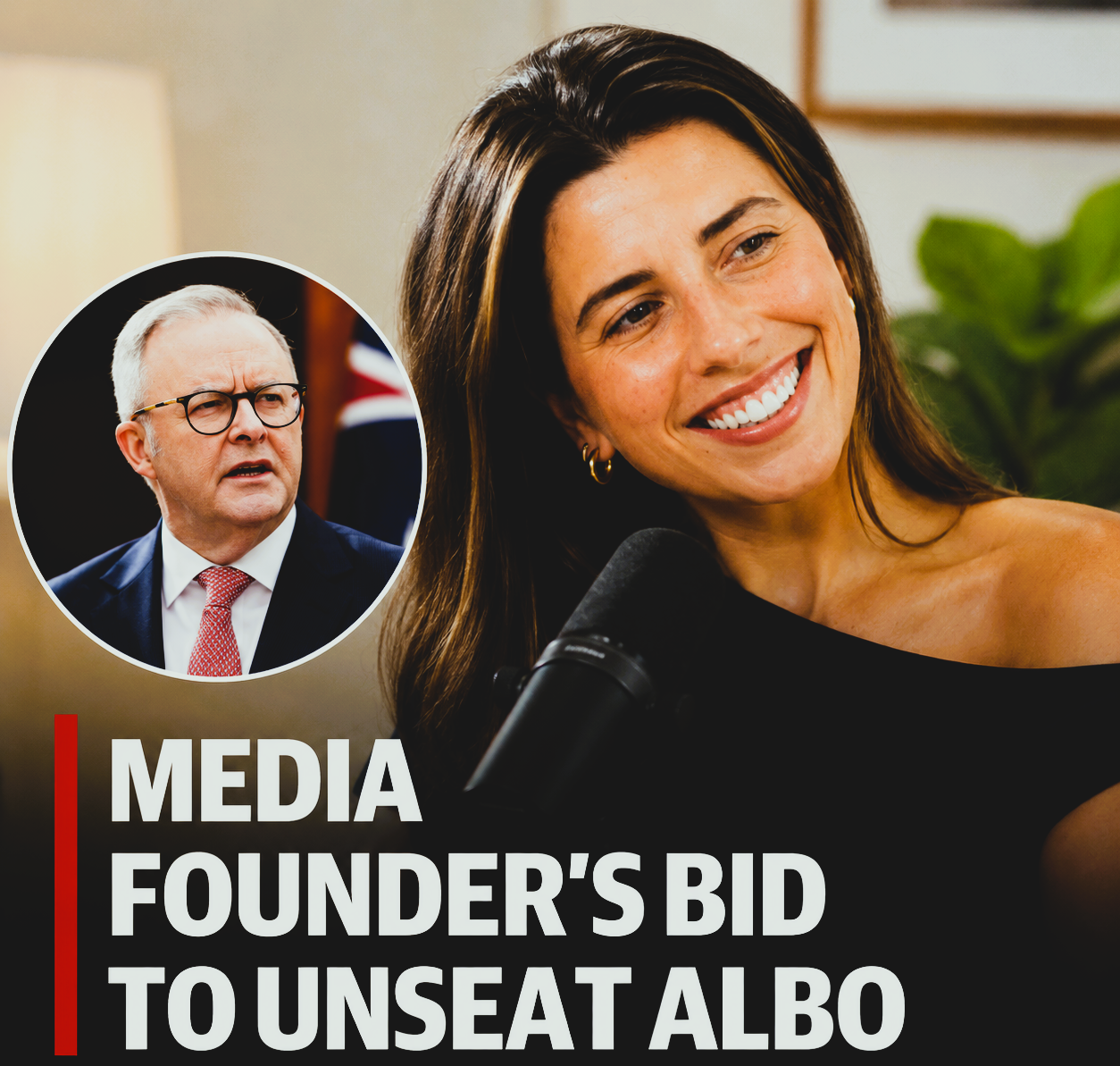
The 28-year-old journalist, commentator and entrepreneur revealed her decision through social media before expanding on her reasons during an appearance on Sunrise, describing the move as a response to growing frustration with traditional party politics.
“I believe we deserve better representation,” Ferguson wrote while confirming she would contest Grayndler as an independent candidate at the next federal election.
Grayndler has long been regarded as one of Labor’s safest seats.
Anthony Albanese has represented the electorate continuously since 1996, first as a backbench MP, later as a senior minister and, since 2022, as Australia’s Prime Minister.
At the most recent federal election, Albanese retained the electorate comfortably, securing more than two-thirds of the two-party-preferred vote, making any challenge an enormous electoral task.
Despite acknowledging those political realities, Ferguson said her campaign was motivated by principle rather than electoral mathematics.
Speaking on television, she argued that many younger Australians no longer feel represented by the major political parties and that Grayndler, one of Australia’s most progressive electorates, expects stronger leadership on issues including transparency, political integrity and climate policy.
“I feel like as a young person in Australia that I do not feel represented at a local level by him,” she said.
She further argued that Grayndler voters “demand and deserve more than a politician who is beholden to the interests of the gambling lobby and the fossil fuel industry.”
Throughout her announcement Ferguson pointed to several issues she believes illustrate broader concerns about political accountability.
Among them were gambling advertising reform, taxation arrangements applying to Australia’s gas export industry and recent political controversies involving the Prime Minister.
She argued Australians increasingly expect elected representatives to demonstrate greater independence from powerful corporate interests.
“Australians expect better. Australians see through this,” she said.
“Community interests are being put far behind corporate donors.”
Ferguson also referred to a number of recent political controversies involving Albanese, including criticism over his attendance at a private fundraising dinner hosted by businessman Felix Lee and earlier public debate surrounding comments involving former Australian of the Year Grace Tame.
She said those incidents reinforced her view that greater transparency and accountability are required from Australia’s political leaders.
The Prime Minister has previously defended his conduct regarding fundraising events, while Labor has maintained that political donations are disclosed in accordance with Australia’s electoral laws.
The independent candidate’s announcement marks a significant change in career direction.
Ferguson founded Cheek Media, a youth-focused digital media platform covering politics, current affairs and social issues, and has become a prominent commentator through podcasts, interviews and online content aimed primarily at younger Australians.
She previously indicated she was considering a Senate campaign but has since concluded that contesting Grayndler would provide a more direct opportunity to represent her local community.
“Towards the end of 2025, I realised the more conversations I was having, the more the question came up: why not Grayndler?” she explained.
According to Ferguson, her connection to the electorate extends back to childhood.
She was born in Marrickville—the heart of Grayndler—during the same period Anthony Albanese had recently entered Parliament.
Although she later lived elsewhere in New South Wales, she says returning to Sydney’s inner west strengthened her desire to become more directly involved in local political issues.
Ferguson emphasised that her campaign would not follow a traditional party model.
Instead, she said she intends to continue engaging directly with residents through community events, consultation and local forums while developing policies shaped by conversations with voters rather than party structures.
“I’m not here to play politics,” she said.
“That is just another reason Australians are fed up with the political party machinery.”
She also addressed questions about the future of Cheek Media.
Recognising that managing both a growing media business and a parliamentary campaign would become increasingly difficult, Ferguson said she intends to step away from day-to-day operations of the company during the next year in order to campaign full-time.
She expressed confidence the publication could continue operating independently after her departure.
“It is my intention to step away from the business at some stage next year to campaign full-time,” she said.
The announcement attracted strong engagement online, with supporters praising Ferguson’s decision to enter politics and encouraging more young Australians to seek elected office.
Others questioned whether an independent campaign could realistically overcome Labor’s long-standing electoral dominance in Grayndler.
Political analysts note that while independent candidates have achieved notable successes across Australia in recent years, defeating a sitting Prime Minister in one of the country’s safest Labor electorates would require an extraordinary electoral swing.
Grayndler has remained firmly in Labor hands for decades and Anthony Albanese continues to enjoy substantial name recognition and organisational support within the electorate.
The challenge nevertheless reflects broader changes in Australian politics.
Independent candidates have become increasingly influential at both federal and state level, particularly in electorates where voters express dissatisfaction with major party politics or seek stronger action on integrity, climate policy and political transparency.
Community-backed independents have secured several previously safe seats during recent election cycles, encouraging new candidates to pursue campaigns outside the traditional party system.
Although Grayndler presents a different political landscape from many of those contests, Ferguson believes voters are increasingly willing to consider alternatives.
She argues the campaign is about giving local residents a genuine choice rather than assuming longstanding political loyalties will automatically continue.
For Anthony Albanese, the announcement represents another high-profile challenge at a time when his government continues facing scrutiny over housing affordability, cost-of-living pressures, gambling reform and climate policy.
While Labor remains strongly positioned within Grayndler, Ferguson’s candidacy ensures the Prime Minister’s local campaign is likely to attract national attention well before Australians return to the polls.
Whether that attention translates into electoral momentum remains uncertain.
Australia’s preferential voting system often benefits candidates with broad community appeal, but defeating an incumbent Prime Minister requires both a significant primary vote shift and favourable preference flows from other candidates.
Even so, Ferguson insists her decision is driven by a belief that communities deserve representatives willing to challenge established political structures.
“I think more people need to be standing up, putting their head above the parapet and challenging people like the Prime Minister,” she said.
As preparations begin for the next federal election, Grayndler—long considered one of Labor’s safest seats—has unexpectedly become the focus of one of Australia’s most closely watched independent campaigns.






