Victoria has entered a new political chapter after Ben Carroll was officially sworn in as the state’s 50th Premier, replacing Jacinta Allan following one of the most dramatic leadership upheavals in recent Victorian political history.
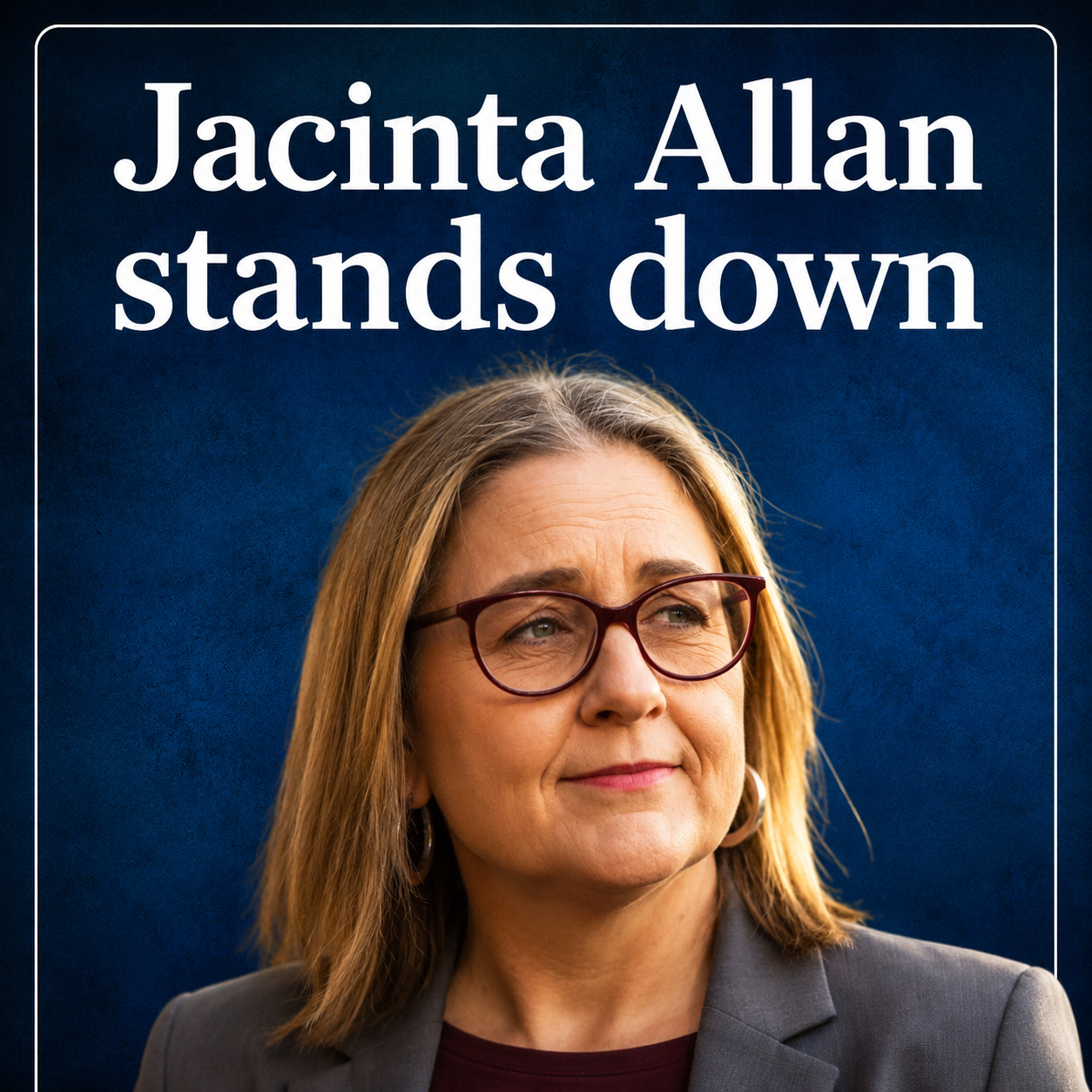
The leadership transition unfolded rapidly after Premier Jacinta Allan resigned only minutes before she was expected to face a caucus ballot that many believed would end her leadership.
Rather than forcing Victorian Labor MPs into a bitter internal contest only months before the state election, Ms Allan stepped aside, allowing Deputy Premier Ben Carroll to emerge as the consensus candidate.
Following a turbulent caucus meeting, Carroll secured unanimous backing from Labor MPs and was sworn in later that day by Governor Margaret Gardner, officially becoming Victoria’s 50th Premier.
Appearing before the media for the first time as Premier, Carroll immediately sought to distinguish his leadership from both his predecessor Jacinta Allan and former Premier Daniel Andrews.
“I am not Daniel Andrews. I am not Jacinta Allan,” he declared.
The statement was widely interpreted as a deliberate attempt to convince Victorians that Labor was embarking on a genuine political reset rather than simply replacing one leader with another.
Carroll acknowledged the government had heard voters’ concerns and promised a different style of leadership built around accountability, practical outcomes and restoring public confidence.
His first major policy announcement was a commitment to establish a Royal Commission into Victoria’s construction industry.
The inquiry will examine allegations of corruption, criminal influence and misconduct that have overshadowed sections of the building sector and contributed to months of political pressure on the Allan Government.
Carroll said Victorians deserved confidence that taxpayer-funded infrastructure projects were being delivered with integrity and free from improper influence.
He also committed to appointing a Special Prosecutor and expanding the powers of Victoria’s Independent Broad-based Anti-corruption Commission (IBAC) to strengthen oversight of public money flowing through major government contracts.
The announcement represented one of the clearest policy breaks from the Allan administration.
While Jacinta Allan had resisted repeated calls for a royal commission into the construction sector, arguing that existing investigations were sufficient, Carroll concluded stronger action was necessary to restore public trust.
Political analysts described the move as an effort to demonstrate that Labor recognised the seriousness of community concerns surrounding integrity and governance.
Alongside integrity reform, Carroll outlined three immediate priorities for his government: restoring trust in public institutions, improving community safety and strengthening Victoria’s economy.
He acknowledged households continued to face significant cost-of-living pressures while businesses sought greater certainty after several years of economic disruption.
The new Premier said his government would focus on practical policies that improve everyday life rather than becoming distracted by internal political disputes.
“People want a government focused on them,” Carroll said, promising to concentrate on delivering essential services and responsible economic management.
The rapid change in leadership followed weeks of mounting pressure inside Victorian Labor.
Declining opinion polling, criticism over the state’s finances, allegations linked to the Big Build program and concerns about Labor’s prospects at the November election combined to undermine support for Jacinta Allan within the parliamentary caucus.
A delegation of senior ministers and MPs informed Ms Allan that she no longer commanded majority support, prompting Deputy Premier Ben Carroll to announce he would nominate for the leadership.
Although Allan initially insisted she would contest any leadership ballot and later said she believed she could have won, she ultimately chose to resign in order to avoid further damaging divisions inside the party.
Her resignation ended a premiership that began in September 2023 following Daniel Andrews’ unexpected departure after almost nine years in office.
As Victoria’s second female Premier, Allan inherited one of Australia’s most politically dominant Labor governments but also one facing growing financial and political challenges.
During her time as Premier, her government continued major investments in transport infrastructure, health and education while defending the multibillion-dollar Big Build program.
However, concerns over rising state debt, project costs, integrity issues and deteriorating polling increasingly overshadowed those achievements and eventually contributed to the leadership crisis.
Ben Carroll brings extensive ministerial experience to the state’s highest office.
First elected to Parliament in 2012, he has served in portfolios including Public Transport, Roads, Education, WorkSafe and Medical Research before becoming Deputy Premier under Jacinta Allan.
Within Labor he has long been regarded as an effective political organiser and communicator, although he has generally maintained a lower public profile than either Andrews or Allan.
His elevation reflects a belief among Labor MPs that a fresh leader offers the party its best chance of recovering before Victorians vote later this year.
The leadership change comes only four months before the scheduled Victorian state election on 28 November, leaving Carroll little time to establish his own political identity.
Recent polling has suggested Labor faces one of its most difficult electoral contests since first returning to government in 2014.
The Liberal–National Coalition has sought to capitalise on concerns over public debt, housing affordability, crime and government accountability, while support for minor parties has also increased in several regions.
Political observers say Carroll’s ability to convince voters that Labor has genuinely changed direction could become one of the defining issues of the campaign.
The Prime Minister, Anthony Albanese, welcomed the orderly leadership transition and congratulated Carroll on becoming Premier.
Within Victoria, senior Labor figures argued the rapid change demonstrated the party was prepared to make difficult decisions when required.
Opposition MPs, however, claimed replacing the leader alone would not resolve broader concerns surrounding the government’s record after more than twelve years in office.
Those competing narratives are expected to dominate political debate throughout the election campaign.
Carroll’s decision to immediately announce a Royal Commission has already signalled that his administration intends to pursue a noticeably different political strategy.
Supporters believe the inquiry could help restore confidence by demonstrating that allegations of misconduct will be investigated independently.
Critics, meanwhile, argue that launching such an inquiry also serves as an acknowledgment that previous responses to integrity concerns were insufficient.
Whatever the political interpretation, the announcement ensured Carroll’s first day as Premier was defined not only by a leadership change but also by a significant policy shift.
For Victorians, the coming months will determine whether Labor’s dramatic change at the top is enough to reverse declining electoral fortunes.
Carroll has deliberately invited voters to judge him independently of both Daniel Andrews and Jacinta Allan.
By promising stronger integrity measures, renewed economic focus and a different style of leadership, he hopes to convince the electorate that Labor can still offer a fresh vision despite having governed Victoria for more than a decade.
Whether that argument resonates with voters will become clear when Victorians head to the polls on 28 November, in what is shaping as one of the state’s most consequential elections in recent years.






