Ben Carroll has officially become Victoria’s 50th Premier after one of the most dramatic leadership upheavals in the state’s political history, taking control of the Labor government just four months before voters head to the polls in what is shaping as one of the party’s toughest election campaigns in more than a decade.
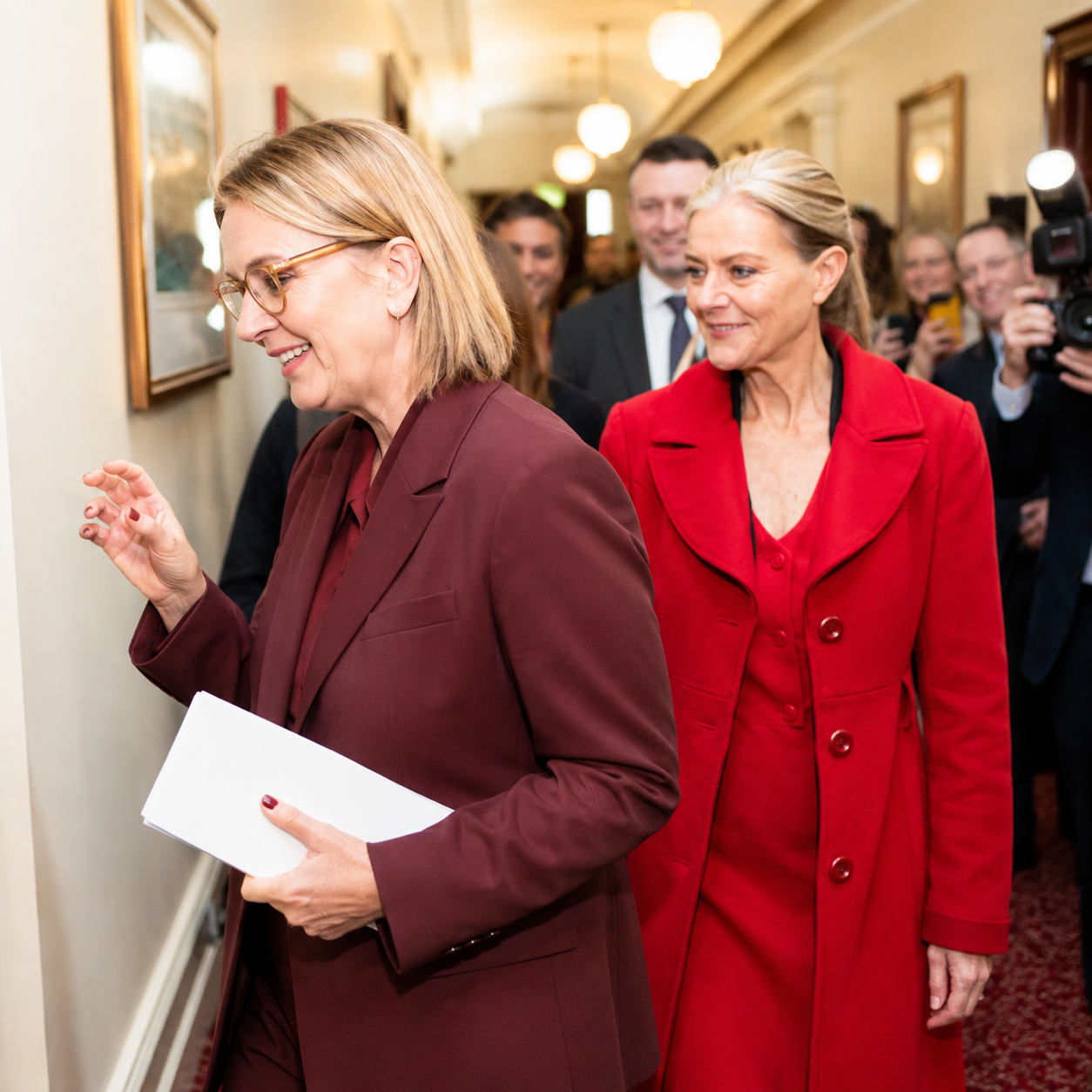
The extraordinary transfer of power came after Premier Jacinta Allan resigned only minutes before she was expected to face a bitter leadership spill, ending weeks of speculation over her political future and avoiding what threatened to become a deeply divisive caucus battle.
Within hours, Victorian Labor MPs unanimously endorsed Deputy Premier Ben Carroll as the party’s new leader, allowing him to be sworn in as Premier later the same day.
Speaking shortly after taking office, Mr Carroll immediately sought to distance himself from both his immediate predecessor and former long-serving Premier Daniel Andrews.
“I’m not Dan Andrews. I’m not Jacinta Allan,” he declared, signalling that Victorians should expect a different governing style as Labor attempts to rebuild public confidence before the 28 November election.
The statement represented one of the clearest acknowledgements yet from a senior Labor figure that the government believes voters are looking for more than simply a change of leader—they want evidence of a broader political reset.
Carroll’s elevation followed an extraordinary 24 hours inside Victorian Labor.
After a delegation of ministers and MPs informed Ms Allan she no longer commanded majority support within the parliamentary caucus, pressure mounted rapidly for her to step aside.
Although Ms Allan initially insisted she was prepared to contest any leadership ballot—and later said she believed she could have won such a contest—she ultimately concluded that forcing Labor through an internal election only months before polling day would inflict greater political damage than resigning voluntarily.
Her decision prevented what many expected would become one of the most bruising internal leadership battles in Victorian Labor’s modern history.
Instead of proceeding to a formal spill vote against the sitting Premier, the parliamentary party quickly united behind Mr Carroll after Attorney-General Sonya Kilkenny briefly entered the race before withdrawing, clearing the path for an uncontested leadership endorsement.
In her resignation announcement, Ms Allan acknowledged the enormous political pressures confronting the government but defended her record after almost three years as Premier.
She said she remained convinced she could have defeated Mr Carroll in a caucus ballot but argued Labor’s electoral prospects were more important than her personal ambitions.
Her decision, she said, was designed to give the party the best possible opportunity to contest November’s election without prolonged internal conflict.
Carroll now inherits a government facing significant political headwinds.
Recent opinion polling has suggested Labor trails the Liberal-National Coalition by a substantial margin after more than twelve consecutive years in office.
The government has also faced sustained criticism over Victoria’s rising debt, cost-of-living pressures, delays and escalating costs associated with major infrastructure projects, and allegations of misconduct linked to parts of the construction industry.
Those issues steadily eroded public confidence during Ms Allan’s premiership and became central factors behind the internal push for leadership change.
Seeking to demonstrate immediate change, Premier Carroll wasted little time announcing a significantly different agenda.
Among his first major commitments was a promise to establish a Royal Commission into Victoria’s construction sector—something the Allan Government had repeatedly resisted despite mounting political pressure.
He also pledged to appoint a special prosecutor, strengthen anti-corruption measures and place renewed emphasis on restoring integrity across government administration.
Those announcements were widely interpreted as an effort to reassure voters that Labor had recognised concerns surrounding governance and accountability.
Alongside integrity reform, Carroll identified community safety and economic management as his government’s immediate priorities.
He acknowledged that many Victorians remain concerned about rising household costs, housing affordability, crime and confidence in public institutions.
The new Premier argued Labor must demonstrate it understands those concerns if it hopes to secure a fourth consecutive term in office.
“We have listened,” he told reporters, promising a government that would focus on practical outcomes rather than internal politics.
Carroll’s rise marks the culmination of a long political career within Victorian Labor.
First elected to Parliament in 2012 as the Member for Niddrie, he has served in several senior ministerial portfolios, including Education, Public Transport, Roads, WorkSafe and Medical Research.
Following Daniel Andrews’ resignation in 2023, Carroll became Deputy Premier after negotiations between Labor’s Left and Right factions produced a compromise leadership arrangement with Jacinta Allan.
Although widely regarded inside Labor as an effective political organiser and communicator, Carroll has maintained a much lower public profile than either Andrews or Allan.
His first challenge as Premier will therefore be introducing himself to voters while simultaneously convincing them that his government represents genuine renewal rather than simply another face leading the same administration.
Political analysts note that leadership changes so close to an election can occasionally produce a short-term improvement in polling if voters believe the incoming leader genuinely intends to alter the government’s direction.
However, they also caution that such transitions can reinforce perceptions of instability if the public concludes the governing party is reacting to poor polling rather than implementing substantive policy change.
The resignation also brought Jacinta Allan’s premiership to an end after less than three years in the state’s highest office.
She became Victoria’s second female Premier when she succeeded Daniel Andrews in September 2023, inheriting both a commanding parliamentary majority and significant long-term challenges including infrastructure spending, budget pressures and increasing voter fatigue after Labor’s extended period in government.
While supporters credit her administration with continuing major investments in transport, education and healthcare, critics argued the government struggled to respond convincingly to concerns about debt, integrity and living costs.
Those competing assessments are likely to shape historical judgments of her time as Premier.
For Labor, the timing of the leadership transition leaves little room for error.
With the election campaign approaching rapidly, Carroll must not only unite the parliamentary party but also persuade voters that his government offers a credible plan for Victoria’s future.
The opposition is expected to focus heavily on Labor’s economic record, state debt and the controversies that ultimately contributed to Allan’s downfall.
Meanwhile, Carroll hopes his emphasis on accountability, economic management and practical governance will convince undecided voters that the government has learned from recent political setbacks.
The coming months will therefore determine whether Labor’s dramatic leadership change succeeds in resetting the political contest—or whether the events that removed Jacinta Allan ultimately prove too late to reverse growing voter dissatisfaction.
For now, Ben Carroll begins his premiership with a clear message that he intends to chart his own course.
By declaring he is “not Dan Andrews” and “not Jacinta Allan”, he has deliberately invited Victorians to judge his government on its own merits rather than those of the leaders who came before him.
Whether that argument resonates at the ballot box will become one of the defining political questions of Victoria’s 2026 election campaign.






