Australia’s richest person, mining billionaire Gina Rinehart, has announced a substantial bonus scheme for Australian swimmers competing at the 2026 Commonwealth Games in Glasgow, offering cash rewards of up to A$30,000 to recognise medal-winning performances and world-record achievements.
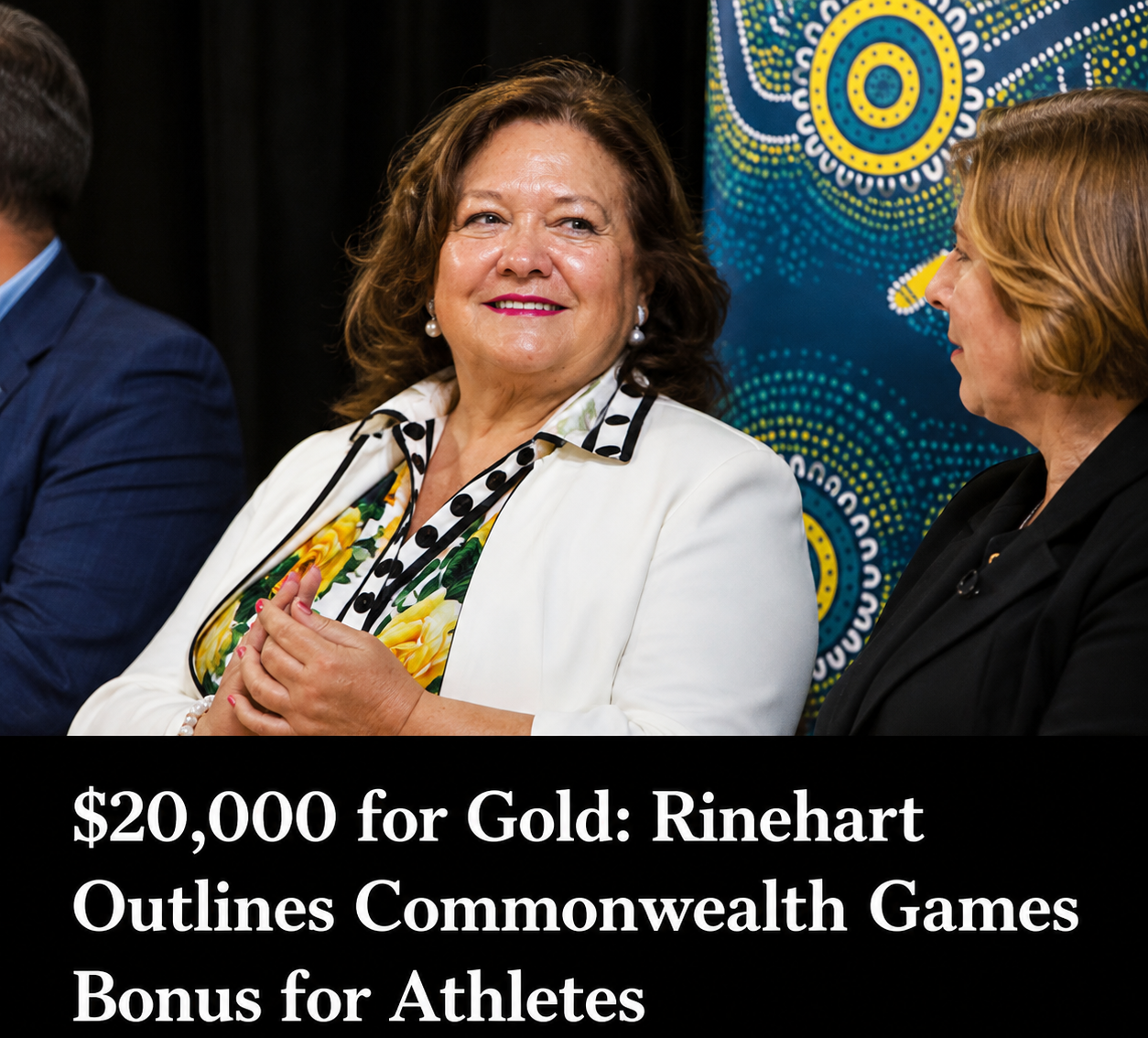
The privately funded incentive program extends Rinehart’s long-running financial support of Australian swimming and is designed to reward athletes for success at one of the country’s most important international sporting events outside the Olympic Games.
Under the scheme, swimmers who win an individual gold medal in Glasgow will receive a bonus of A$20,000, while silver medallists will earn A$15,000 and bronze medallists A$10,000. Athletes who break a world record during the Games will receive an even larger reward of A$30,000. Relay team members are also eligible for bonuses ranging from A$2,500 to A$5,000 depending on the medal won, with additional payments available for world-record performances.
The incentive package was announced through Swimming Queensland and Hancock Prospecting, continuing a sponsorship relationship that has seen Rinehart invest heavily in elite Australian swimming over many years.
In announcing the bonuses, Rinehart said Australia’s athletes dedicate enormous amounts of time and personal sacrifice to representing the nation and deserve meaningful recognition for their achievements.
She described the payments as a practical way of thanking swimmers for the pride they bring to Australia through their performances on the international stage.
“Our swimmers inspire Australians through their dedication, discipline and determination,” Rinehart said, adding that the Commonwealth Games remain an important stepping stone towards Olympic success.
The bonus structure mirrors arrangements Rinehart has previously introduced for major international swimming competitions, reinforcing her reputation as one of Australian sport’s most significant private benefactors.
Unlike many professional team sports, elite swimming offers relatively limited prize money outside international championships, meaning sponsorship and private financial support often play an important role in helping athletes continue training at the highest level.
For many swimmers, particularly younger athletes preparing for the 2028 Los Angeles Olympic Games, additional financial assistance can help cover coaching fees, travel expenses, accommodation, nutrition, sports science services and time away from employment while training full-time.
Australia enters the Glasgow Commonwealth Games as one of the world’s dominant swimming nations.
The national team includes Olympic and world champions such as Mollie O’Callaghan, Cameron McEvoy, Lani Pallister and Kyle Chalmers, many of whom are expected to challenge for multiple medals during the competition.
Because the incentive payments apply to every medal won rather than a single overall reward, leading swimmers competing across several events could potentially earn six-figure bonus payments if they enjoy particularly successful campaigns.
Relay specialists also stand to benefit.
Under the announced schedule, each member of a medal-winning relay team will receive an individual payment rather than sharing a single prize pool, recognising the contribution of every swimmer involved in the performance.
The inclusion of para-swimming athletes within the broader incentive program has also been welcomed as another sign of growing recognition for Australia’s elite para-athletes.
While the announcement has been widely praised by many within the swimming community, it has also generated an unexpected controversy.
Commonwealth Games Australia instructed members of the Australian swim team not to publicly thank Rinehart or acknowledge the privately funded bonuses while the Games are underway.
The directive forms part of the organisation’s commercial “blackout period”, which prevents athletes from promoting individuals or companies that are not official Australian Team partners during the Games.
The policy is designed to protect the rights of official sponsors who financially support Australia’s Commonwealth Games campaign.
The restriction does not prevent swimmers from accepting the bonuses themselves.
Instead, it limits public comments recognising the payments until after the Games conclude.
The approach has attracted criticism from some former athletes and commentators, who argue competitors should be free to acknowledge private benefactors who make significant contributions to their sporting careers.
Former Commonwealth Games medallist Jane Flemming said athletes should be allowed to thank individuals who directly support their preparation, arguing such generosity plays a vital role in high-performance sport.
Olympic champion Kyle Chalmers also highlighted the practical importance of financial incentives in modern elite sport.
He noted that while Australia enjoys one of the world’s strongest swimming programs, many athletes still balance intensive training with work or study and receive relatively modest financial returns compared with competitors in major professional sports.
Additional bonuses, he said, provide valuable recognition for years of commitment that often extend well beyond competition itself.
Rinehart’s involvement in Australian swimming is not new.
Through Hancock Prospecting, she has provided sponsorship to Swimming Australia and supported elite athletes, junior development programs and high-performance initiatives for many years.
Her investment has coincided with one of the most successful periods in Australian swimming history, during which the Dolphins have dominated world championships and Olympic competition.
Supporters argue that private funding has helped fill important gaps not always covered by government grants or sporting bodies.
Critics, however, caution that elite sport should not become overly dependent on the financial support of individual philanthropists or corporations, arguing stronger long-term public funding models would provide greater certainty for athletes across all sports.
The Commonwealth Games themselves continue to play a significant role within Australia’s high-performance sporting pathway.
Although the event has a smaller field than the Olympic Games, Swimming Australia frequently uses the competition to provide emerging athletes with valuable international championship experience while allowing established stars to fine-tune preparations for future Olympic and World Championship campaigns.
Rinehart has pointed to this history when explaining her decision to fund the incentive scheme, noting that a large majority of Australia’s Olympic medallists previously competed at Commonwealth Games level before achieving success on the world’s biggest sporting stage.
The bonus program also reflects broader discussion about athlete remuneration in Olympic sports.
Unlike athletes in professional football, cricket or basketball, many Olympic competitors rely on sponsorship, grants and private support while training full-time.
Swimming Australia receives government funding through the Australian Sports Commission, but individual athletes often continue facing substantial personal expenses throughout each Olympic cycle.
For that reason, privately funded incentive schemes have become increasingly common among high-profile benefactors seeking to reward excellence and encourage continued participation in elite sport.
With Australia expected to challenge for the top position on the swimming medal table in Glasgow, Rinehart’s incentive program could ultimately distribute hundreds of thousands of dollars if the Dolphins deliver another dominant international campaign.
Regardless of the total amount paid, the initiative has once again highlighted the significant role private philanthropy now plays in Australian high-performance sport.
As competition continues in Glasgow, swimmers remain focused on chasing medals, national pride and world-class performances.
If they succeed, many will also receive substantial financial recognition—although, for now at least, they will need to wait until the Games are over before publicly thanking the woman providing those rewards.






