One Nation leader Pauline Hanson has suffered another major legal setback after the Full Federal Court unanimously upheld a landmark ruling that found she breached Australia’s Racial Discrimination Act 1975 by telling Greens senator Mehreen Faruqi to “pack your bags and piss off back to Pakistan” in a social media post.
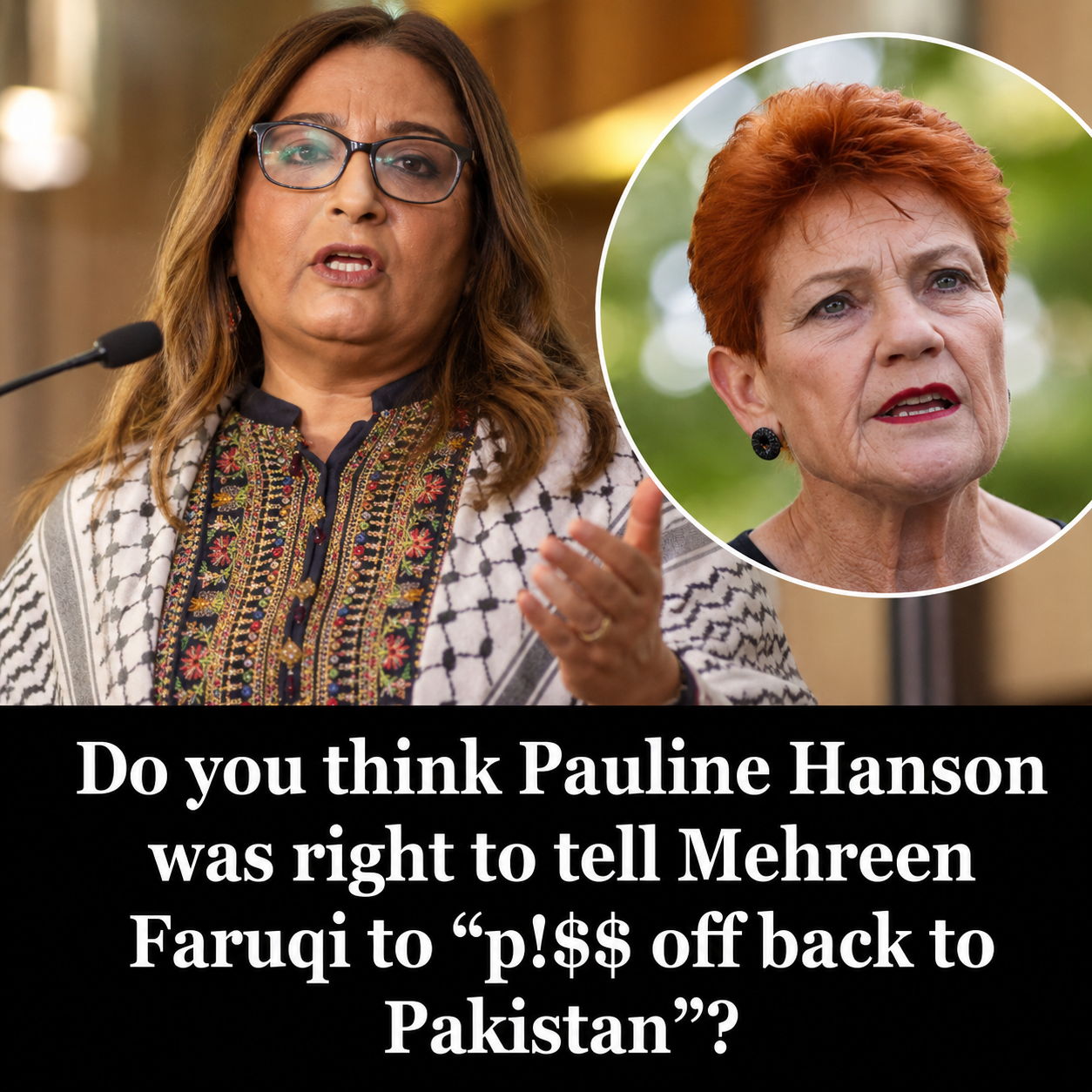
The judgment confirms a decision first delivered by Federal Court Justice Angus Stewart in November 2024, who concluded Senator Hanson’s remarks constituted unlawful racial discrimination under Section 18C of the Act. After hearing Senator Hanson’s appeal, a three-judge bench comprising Justices Melissa Perry, Geoffrey Kennett and Elizabeth Bennett unanimously dismissed every ground of appeal, leaving the original ruling intact.
The litigation has become one of Australia’s most significant legal disputes concerning the limits of political speech and the operation of the country’s anti-discrimination laws.
The case originated in September 2022 following the death of Queen Elizabeth II.
On the day the monarch died, Senator Mehreen Faruqi posted on social media that while she recognised many Australians would mourn Queen Elizabeth, she could not grieve “the leader of a racist empire built on stolen lives, land and wealth of colonised peoples.”
The comments generated widespread political debate and prompted a forceful response from Senator Hanson.
Replying publicly on X, formerly Twitter, Senator Hanson criticised Senator Faruqi for condemning Australia’s constitutional Head of State and questioned why she remained in Australia if she held those views.
Her response included the now infamous statement:
“Your attitude appals and disgusts me. When you immigrated to Australia you took every advantage of this country. You took citizenship, bought multiple homes, and a job in parliament. It’s clear you’re not happy, so pack your bags and piss off back to Pakistan.”
Senator Faruqi subsequently commenced proceedings under the Racial Discrimination Act, arguing the comments were directed at her race and national origin rather than her political opinions.
In November 2024, Justice Angus Stewart found in Senator Faruqi’s favour.
The judge ruled the social media post was reasonably likely to “offend, insult, humiliate and intimidate” Senator Faruqi as well as broader groups including migrants and people of colour living in Australia.
Justice Stewart concluded the statement represented a “strong form of racism” because it invoked a long-recognised racist trope suggesting Australians from migrant backgrounds remain outsiders who should leave the country whenever they express controversial opinions.
The judgment further found the comments carried anti-Muslim and Islamophobic characteristics and rejected Senator Hanson’s argument that the post represented fair comment made reasonably and in good faith on a matter of public interest.
Justice Stewart ordered Senator Hanson to delete the offending social media post from her X account and to pay Senator Faruqi’s legal costs arising from the proceedings.
Rather than accepting the ruling, Senator Hanson appealed to the Full Federal Court.
Her legal team argued that the original decision interpreted Section 18C too broadly and failed to give sufficient weight to Australia’s implied constitutional freedom of political communication.
Counsel submitted that while Senator Hanson’s language may have been offensive, it did not amount to unlawful racial discrimination and instead formed part of legitimate political debate concerning immigration, national identity and the monarchy.
The Full Federal Court rejected those arguments.
In delivering the unanimous judgment, the court concluded Justice Stewart had correctly applied the law and that Australia’s anti-discrimination legislation remained constitutionally valid when applied to Senator Hanson’s conduct.
The judges reaffirmed that Australia’s implied freedom of political communication does not provide an unrestricted right to make racially discriminatory public statements, even where those statements arise during heated political debate.
The decision represents one of the clearest recent judicial statements on the relationship between political expression and anti-discrimination protections under Australian law.
Following the original 2024 ruling, Senator Faruqi described the judgment as a “landmark” victory.
Outside court she said it represented an important day not only for herself but for multicultural Australians who had experienced similar racist abuse.
“Today is a good day for people of colour, for Muslims and all of us who have been working so hard to build an anti-racist society,” she said.
She added that the ruling was a victory for “every single person who has been told to go back to where they came from”, arguing that such remarks have long functioned as one of Australia’s most recognisable racist insults.
Senator Hanson, however, remained steadfast in defending both her comments and the broader principles she says are at stake.
When announcing her appeal after the original judgment, she described Justice Stewart’s decision as “deeply disappointing” and argued it reflected an overly expansive interpretation of Section 18C.
She also claimed Australians increasingly fear expressing personal opinions because of potential legal consequences.
“The thought police are out there,” Senator Hanson said at the time.
“It’s not the country that I grew up in.”
She maintained the litigation was never solely about her personal circumstances but about preserving the right of Australians to express opinions on matters of national importance without fearing legal action.
Senator Hanson has repeatedly argued that Section 18C should be repealed or substantially amended, claiming the provision unnecessarily restricts free speech.
The legal proceedings have also carried a significant financial burden.
Senator Hanson previously estimated the total cost of defending the case and pursuing the appeal could approach A$900,000, prompting her to establish a public legal defence fund to assist with legal expenses.
Supporters contributed substantial donations throughout the appeal process as Senator Hanson vowed to continue challenging the judgment.
The case has reignited longstanding political debate surrounding Section 18C of the Racial Discrimination Act.
The provision makes it unlawful to engage publicly in conduct reasonably likely to offend, insult, humiliate or intimidate another person because of their race, colour or national or ethnic origin.
Critics argue the threshold captures speech that should remain protected in a democratic society, while supporters contend the legislation provides an essential safeguard against racial hatred and discrimination.
Australia’s constitutional framework differs significantly from jurisdictions such as the United States.
Rather than guaranteeing unrestricted freedom of speech, Australia’s Constitution recognises only an implied freedom of political communication that protects democratic government while allowing Parliament to enact proportionate laws pursuing legitimate public objectives.
The Full Federal Court concluded Section 18C remains compatible with those constitutional principles and that its application in Senator Hanson’s case was legally justified.
The Australian Human Rights Commission welcomed the outcome, with Race Discrimination Commissioner Giridharan Sivaraman describing the judgment as an important reaffirmation that Australia’s anti-discrimination laws continue to protect individuals and communities from racist public conduct while preserving robust democratic debate.
Attention now turns to Senator Hanson’s next legal move.
She has confirmed that her legal team will carefully review the Full Federal Court’s reasons before deciding whether to seek special leave to appeal to the High Court of Australia.
Any further appeal would require the High Court’s permission, which is granted only in a relatively small number of cases involving issues of broader legal or constitutional significance.
Unless special leave is granted and a future appeal succeeds, the Full Federal Court’s unanimous judgment will remain the authoritative legal position, confirming that telling an Australian citizen and parliamentarian to “go back” to another country because of their racial or ethnic background can amount to unlawful racial discrimination under Australian law.






