One Nation leader Pauline Hanson has pledged to continue her legal fight after the Full Federal Court unanimously dismissed her appeal against a landmark ruling that found she unlawfully racially vilified Greens deputy leader Mehreen Faruqi.
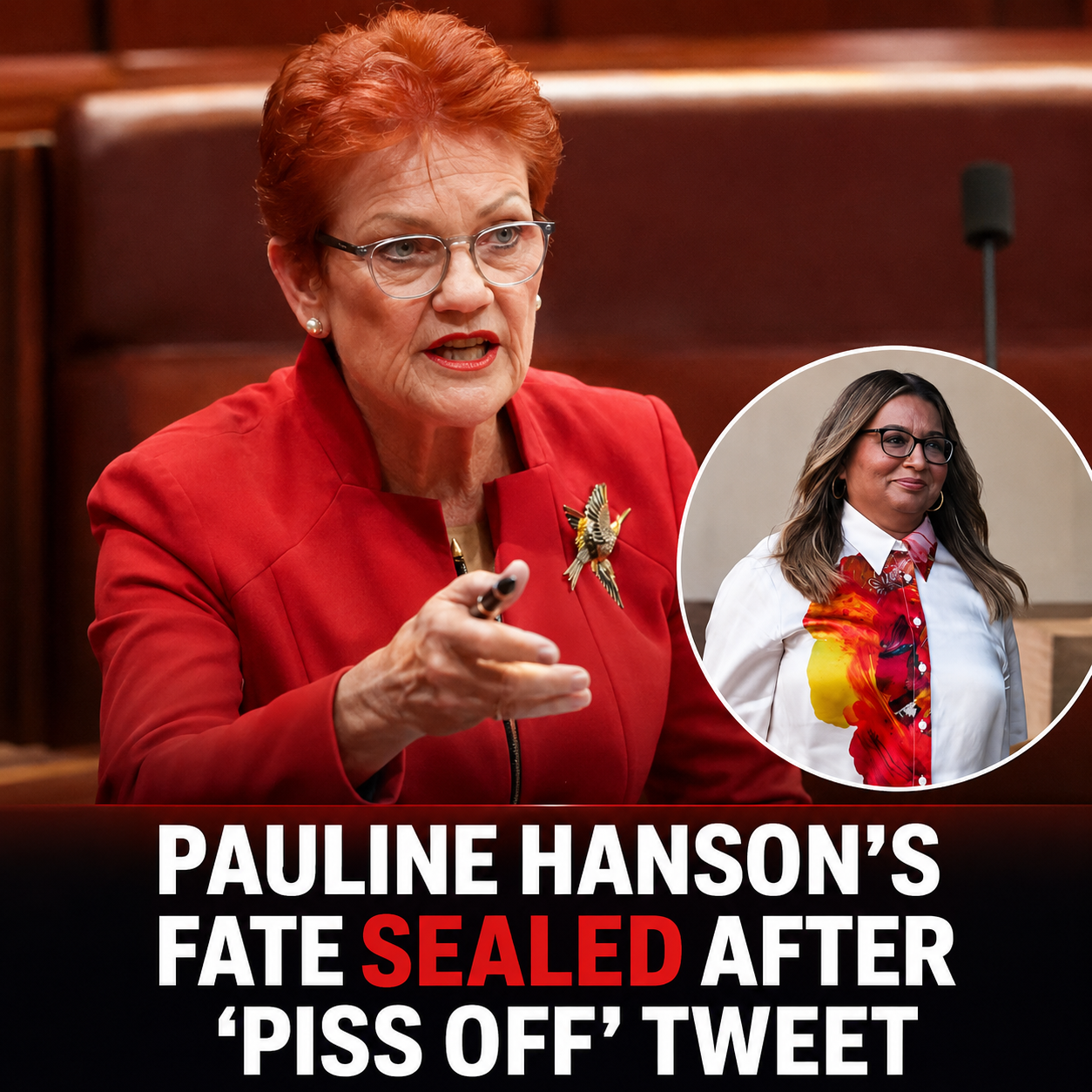
The latest judgment leaves intact a 2024 Federal Court decision that found Senator Hanson breached Section 18C of Australia’s Racial Discrimination Act after telling Senator Faruqi to “pack your bags and piss off back to Pakistan” in a social media post following the death of Queen Elizabeth II in September 2022.
Although Senator Hanson has now lost her appeal before a unanimous bench of the Full Federal Court, she has made it clear the legal battle is not over. Shortly after the judgment was delivered, she announced her intention to seek special leave to appeal to the High Court of Australia, arguing the case raises important questions about political communication and freedom of expression.
The dispute began after Senator Faruqi posted a message on social media expressing sympathy for those mourning Queen Elizabeth II while also criticising the legacy of the British Empire, describing it as a “racist empire built on stolen lives, land and wealth of colonised peoples.”
Senator Hanson responded publicly with a message telling Senator Faruqi to “pack your bags and piss off back to Pakistan” if she disliked Australia.
The exchange quickly escalated into one of Australia’s highest-profile racial discrimination cases involving serving federal parliamentarians.
In November 2024, Federal Court Justice Angus Stewart ruled that Senator Hanson’s comments amounted to unlawful racial vilification under Section 18C of the Racial Discrimination Act. The judge found the remarks were not simply robust political criticism but constituted an angry personal attack connected to Senator Faruqi’s race, national origin and Muslim identity.
Justice Stewart concluded that telling an Australian citizen and elected senator to “go back” to another country relied upon a long-recognised racist stereotype suggesting migrants can never truly belong in Australia regardless of their citizenship or public service.
Senator Hanson subsequently appealed the ruling, arguing that the trial judge had erred in applying Australia’s anti-discrimination laws and that her comments formed part of political discourse protected by the Constitution’s implied freedom of political communication.
Her legal team contended that elected representatives must be able to engage in vigorous political debate without facing legal penalties simply because their language causes offence.
However, the Full Federal Court unanimously rejected those arguments.
Justice Melissa Perry delivered the court’s judgment on behalf of the three-member bench, confirming that Justice Stewart had made no legal error in concluding Senator Hanson breached the legislation.
The court also rejected submissions that Section 18C was constitutionally invalid as applied in this case, finding Australia’s racial discrimination laws remain compatible with the implied constitutional freedom of political communication.
The ruling reinforces a principle that has developed through previous High Court authority: political speech enjoys significant protection, but that protection is not unlimited and does not automatically override legislation aimed at preventing racial discrimination.
Following the decision, Senator Faruqi described the judgment as a victory not only for herself but for multicultural Australia.
She said the unanimous dismissal of the appeal demonstrated that racism and Islamophobia have consequences under Australian law.
“Justice has prevailed,” Senator Faruqi told reporters outside court, adding that the decision sent an important message to Australians from migrant and minority communities that the legal system would uphold protections against racial hatred.
Senator Hanson, meanwhile, expressed disappointment with the outcome and maintained that her comments represented political opinion rather than unlawful racial discrimination.
She confirmed she intends to seek special leave from the High Court, Australia’s highest judicial authority. Unlike appeals to lower courts, cases do not automatically proceed to the High Court. Applicants must first persuade the court that their case raises issues of national legal significance or important questions requiring clarification.
Only a relatively small proportion of special leave applications are ultimately granted each year.
If the High Court declines to hear the matter, the Full Federal Court’s judgment will remain the final legal determination.
The litigation has attracted widespread attention because it goes beyond a dispute between two politicians. It has become a test of where Australian courts draw the line between legitimate political debate and unlawful racial vilification.
Supporters of Senator Hanson argue the case demonstrates an increasingly narrow space for controversial political speech and fear anti-discrimination legislation may discourage robust democratic debate.
Conversely, supporters of Senator Faruqi argue the case confirms that elected representatives should be held to the same legal standards as every other Australian and that freedom of political communication cannot be used as a shield for racist abuse.
Section 18C of the Racial Discrimination Act 1975 makes it unlawful to engage publicly in conduct reasonably likely to offend, insult, humiliate or intimidate another person because of their race, colour or national or ethnic origin.
The provision has remained politically contentious for decades.
Several Coalition governments have previously considered amending or repealing Section 18C, arguing it may unnecessarily restrict freedom of speech. Those proposals have consistently faced opposition from community organisations, legal experts and multicultural groups, who argue the legislation provides important protection against racial hatred.
The Hanson-Faruqi litigation has once again placed those competing principles at the centre of Australia’s national political conversation.
Legal experts also note the decision reinforces an important distinction within Australia’s constitutional framework.
Unlike the United States, Australia has no explicit constitutional guarantee of unrestricted free speech. Instead, Australian courts recognise only an implied freedom of political communication designed to preserve Australia’s representative system of government.
That implied freedom is not an individual right. Rather, it operates as a limit on legislative power and does not automatically invalidate laws that serve legitimate public purposes, including laws prohibiting racial discrimination.
The Full Federal Court concluded Section 18C continues to operate consistently with those constitutional principles in the circumstances of this case.
The proceedings have also highlighted the growing legal consequences of political communication conducted through social media.
What began as a single post on X, formerly Twitter, evolved into years of litigation involving extensive constitutional arguments, Federal Court hearings and now a proposed High Court challenge.
Beyond the legal questions, the dispute has become symbolic of broader political debates surrounding immigration, multiculturalism, race relations and the limits of acceptable public discourse in Australia.
Attention will now shift to whether Senator Hanson formally lodges her application for special leave and, if she does, whether the High Court considers the issues sufficiently important to justify another appeal.
Until then, the unanimous Full Federal Court judgment remains one of the clearest judicial statements to date that Australia’s anti-discrimination laws apply equally to political leaders and that racially discriminatory public comments are not automatically protected simply because they occur during political debate.






