For 36 consecutive days, Victorian Opposition Leader Jess Wilson did something few senior Australian politicians attempt in the middle of an election campaign.
Rather than relying primarily on rallies, television interviews and staged announcements, Wilson spent more than a month walking through shopping strips, cafés, hospitals, sporting clubs and community centres across every one of Victoria’s 88 lower house electorates.
Her objective was straightforward but ambitious: convince voters she is ready to become Victoria’s next Premier while dramatically increasing her public recognition before polling day on 28 November.
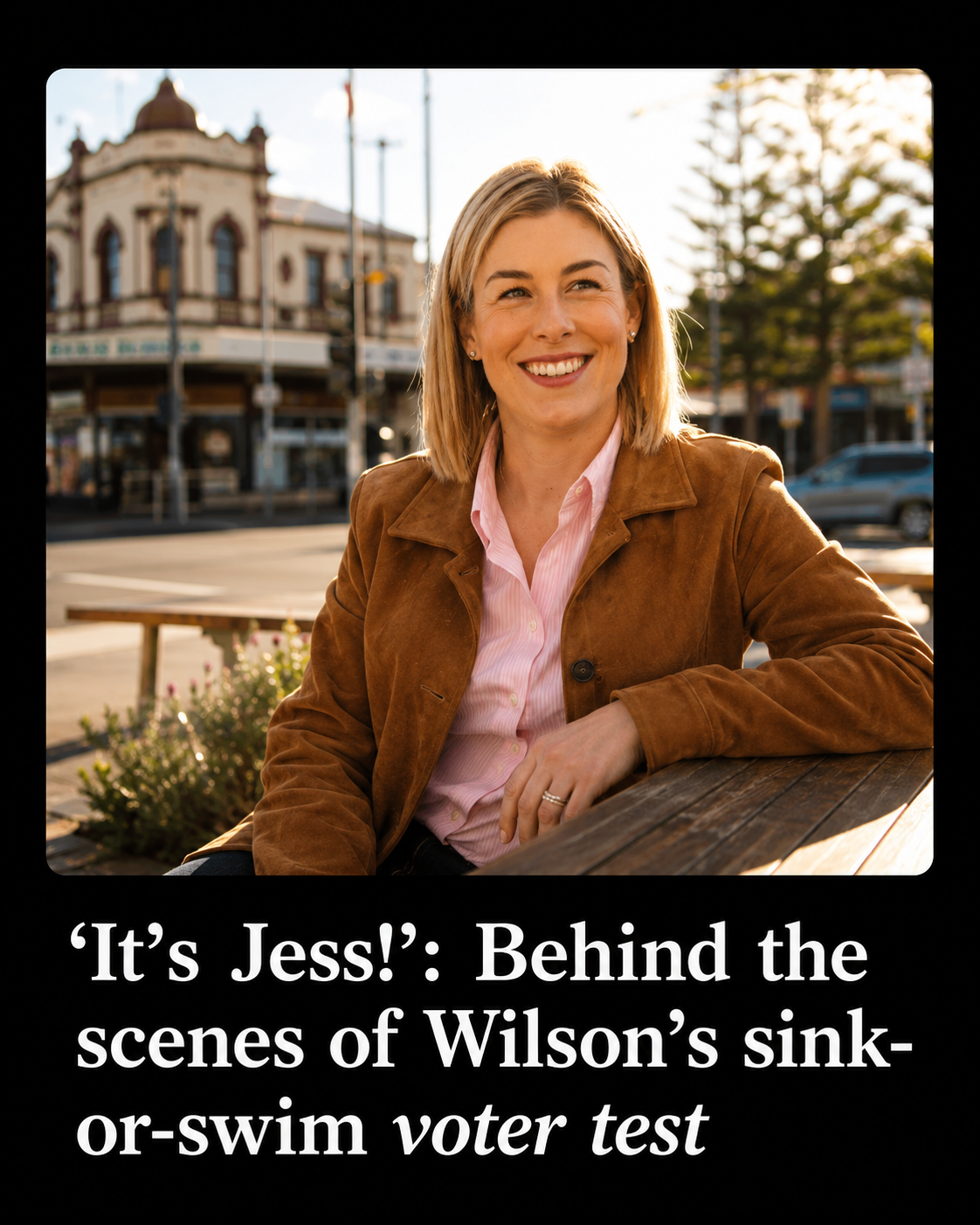
The Liberal leader’s advisers privately describe the statewide “Fresh Start” tour as something Premier Jacinta Allan would struggle to replicate.
Unlike carefully controlled public appearances, Wilson’s campaign deliberately exposed her to unscripted conversations with ordinary Victorians, creating what supporters viewed as an opportunity to present a more approachable alternative after more than a decade of Labor government.
The journey became, in effect, a political stress test.
Could a relatively new Opposition Leader persuade enough voters that she deserved a chance to govern? And perhaps even more fundamentally, did enough Victorians actually know who she was?
Those questions are particularly significant because Wilson has led the Victorian Liberal Party for less than a year.
Although respected within political circles, she entered the leadership without the statewide profile enjoyed by long-serving premiers or opposition leaders. Building recognition therefore became almost as important as promoting policy.
Throughout the tour, that recognition appeared to evolve in real time.
Some people immediately recognised her as she walked through shopping centres and country towns.
Others paused briefly before remembering where they had seen her.
Many admitted they knew little about her but were willing to stop and talk.
Those encounters provided Wilson with something modern political campaigns increasingly struggle to obtain: lengthy, unfiltered conversations with undecided voters outside carefully managed campaign events.
According to reports from the tour, the same concerns surfaced repeatedly regardless of whether Wilson was visiting Melbourne’s outer suburbs or regional Victoria.
Crime dominated many discussions.
Business owners described repeated break-ins, shoplifting and anti-social behaviour, while residents questioned whether enough police resources were being directed towards community safety.
Cost-of-living pressures proved almost equally prominent.
Homeowners raised concerns about land tax increases, mortgage repayments and rising household expenses.
Small business operators spoke about higher operating costs, while families worried about healthcare access and everyday affordability.
Infrastructure also featured heavily.
Complaints ranged from deteriorating local roads and potholes to hospital waiting times and concerns about the management of Victoria’s multi-billion-dollar Big Build infrastructure program.
Those conversations largely reflected the themes Wilson has chosen to emphasise throughout her leadership.
Her campaign argues Victoria needs lower taxes, stronger action on crime, disciplined financial management and greater scrutiny of major government infrastructure spending.
She has also pledged to investigate allegations surrounding aspects of the Big Build program through a royal commission if elected, while promising to serve as both Premier and Treasurer to oversee the state’s financial recovery.
The symbolism of the tour mattered almost as much as the policy announcements themselves.
Rather than concentrating exclusively on marginal electorates, Wilson visited all 88 lower house seats, including districts considered safe for both Labor and the Coalition.
The strategy reinforced the message that every community deserved direct engagement, while also allowing the Liberal leader to gather first-hand impressions of issues affecting different parts of the state.
Some of the most politically revealing conversations occurred in electorates the Coalition must win if it hopes to form government.
In Bass, one of Victoria’s key battleground seats, Wilson encountered former Labor supporters who said rising taxes, living costs and frustration with government administration had prompted them to reconsider their political loyalties.
In Pakenham, another crucial marginal electorate, voters repeatedly raised concerns about crime, road maintenance and public spending.
Those interactions reinforced Coalition hopes that dissatisfaction with the Allan Government extends beyond traditional Liberal strongholds.
Not every conversation was positive.
Some voters challenged Wilson’s policies directly.
Others questioned whether the Liberal Party genuinely represented meaningful change after years of internal instability.
Several residents openly identified themselves as Greens or Labor supporters while engaging respectfully with the Opposition Leader.
Wilson has argued that such exchanges represent an essential part of democratic politics.
Rather than avoiding criticism, she says understanding why voters disagree is as important as hearing from supporters.
“The job is to get on the ground and understand people’s concerns,” she told reporters during the tour.
The challenge facing Wilson remains considerable.
Labor has governed Victoria since 2014 and continues to hold a parliamentary majority despite declining opinion polls.
To form government, the Liberal–National Coalition must retain all of its existing lower house seats while achieving substantial gains across metropolitan Melbourne and regional Victoria.
That electoral arithmetic makes voter recognition especially important.
Polling throughout 2026 has consistently suggested Wilson performs better than Premier Jacinta Allan on preferred premier measures, but Labor’s entrenched electoral base means personal popularity alone will not determine the outcome.
The campaign also unfolds within a more fragmented political environment than previous Victorian elections.
Support for minor parties, including One Nation, has increased in several opinion polls, creating uncertainty about preference flows and the distribution of votes across key electorates.
Wilson therefore faces the dual challenge of persuading traditional Labor voters to switch directly while also retaining conservative voters attracted to smaller parties.
Political analysts note that statewide listening tours have become increasingly common internationally but remain relatively unusual in Australian state politics.
Such campaigns can humanise political leaders and generate valuable local media coverage, yet they also expose candidates to unpredictable public interactions and the risk of uncomfortable questions.
Wilson appears to have accepted that trade-off.
Travelling with only a small campaign team for much of the journey, she deliberately avoided large entourages, aiming to project accessibility rather than political theatre.
The timing of the tour is equally significant.
Victoria enters the election facing continuing debate over public debt, housing affordability, healthcare capacity, crime and major infrastructure spending.
After 12 years in office, Labor confronts the natural political pressures that often accompany long periods of government, while the Coalition seeks to convince voters it represents a credible alternative rather than simply an opposition.
Wilson’s advisers believe direct voter engagement offers the best opportunity to overcome the Coalition’s historical challenges in Melbourne’s growth corridors and outer suburbs.
Whether that strategy succeeds will become clear only on election day.
What the tour has already demonstrated, however, is that many Victorians remain eager to discuss politics when approached directly.
The conversations may not always favour one side or the other, but they reveal an electorate deeply concerned about practical issues affecting everyday life—crime, taxes, hospitals, roads, housing and the cost of living—rather than political personalities alone.
For Jess Wilson, that may ultimately be the most important lesson from 36 days on the road.
Recognition is only the first hurdle.
Winning government will depend on persuading enough Victorians that the concerns voiced on footpaths, in cafés and outside suburban shopping centres can be translated into policies capable of ending Labor’s 12-year hold on Spring Street.
As Victoria moves closer to the November election, the “Fresh Start” tour has become more than a campaign exercise. It has become a measure of whether one of Australia’s newest opposition leaders can transform growing voter frustration into the electoral momentum required to change government.






