The Albanese Government’s multi-million-dollar journalism support package has become the latest flashpoint in Australia’s debate over media policy, with critics arguing taxpayers are funding some of the country’s largest commercial media companies without sufficient transparency or accountability.
The criticism intensified after columnist Peter van Onselen described the program as a “Canberra-made rort” that rewards “double-dipping”, claiming major broadcasters and publishers are receiving public money while continuing to benefit from other government-backed support mechanisms and commercial arrangements.
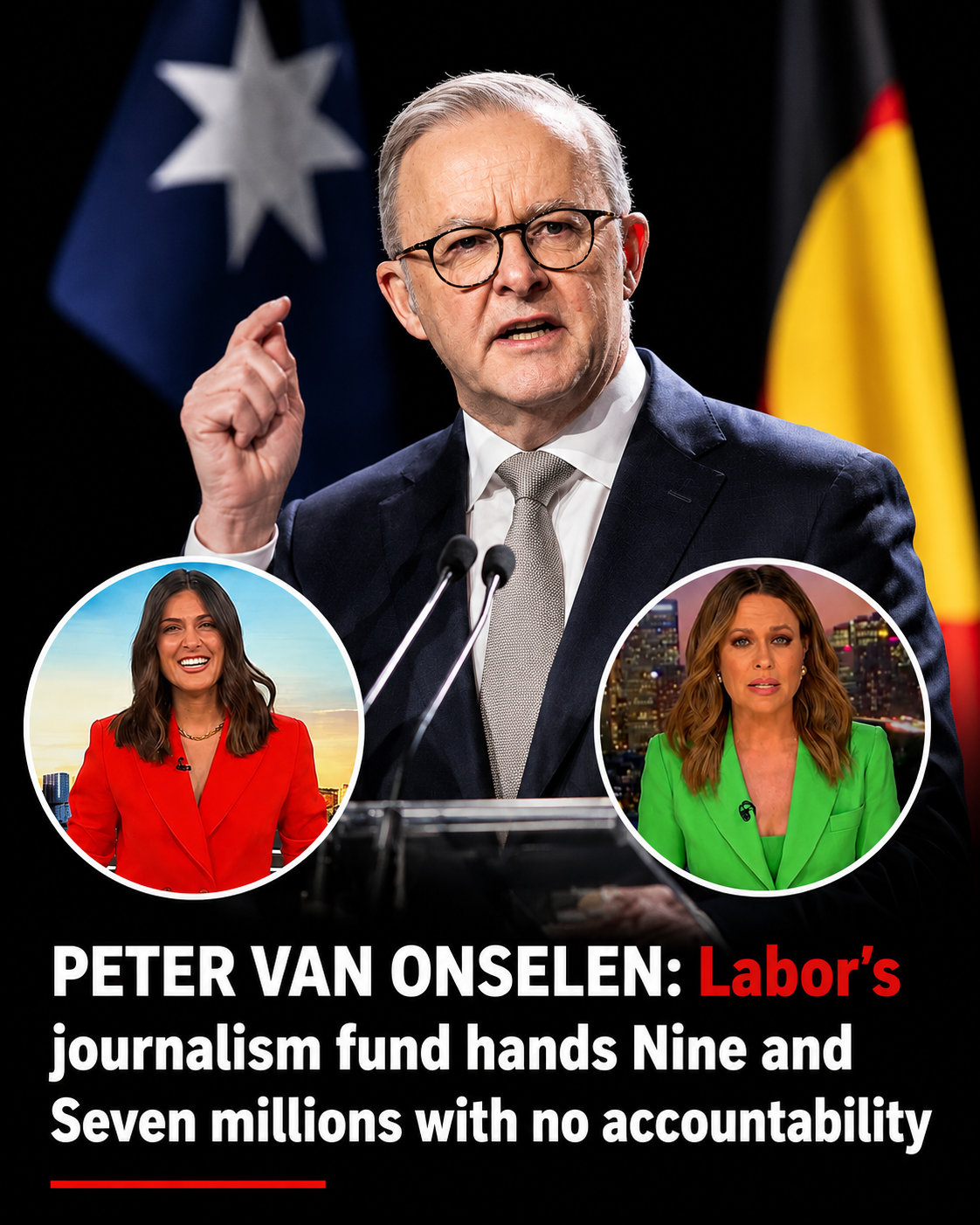
At the centre of the controversy is Labor’s Journalism Support Program, established as part of the government’s broader strategy to strengthen public-interest journalism as traditional news business models continue to face pressure from digital disruption.
The initiative was introduced against the backdrop of a media industry that has undergone profound structural change over the past two decades.
Advertising revenue that once sustained newspapers and commercial broadcasters has increasingly shifted to global digital platforms, while newsroom employment has declined across metropolitan, regional and local media organisations.
Successive Australian governments have acknowledged that these changes pose risks not only to media businesses but also to democratic accountability, particularly in regional communities where local journalism has contracted significantly.
Labor has argued that targeted financial assistance can help preserve reporting capacity, maintain public-interest journalism and ensure Australians continue receiving reliable local news coverage during a period of rapid technological transformation.
Under the scheme, eligible media organisations receive funding based on criteria established by the Commonwealth, with the government stating the program is designed to support journalism rather than reward shareholders.
However, the allocation of funds has generated growing political debate.
Large commercial media companies—including Nine Entertainment and Seven West Media—have received millions of dollars through the program despite remaining substantial listed corporations with diversified revenue streams.
Critics argue that while regional and independent publishers may genuinely require assistance, directing significant taxpayer funding towards Australia’s largest media businesses requires a much higher standard of public accountability.
One of the central criticisms is the absence of detailed public reporting on how the money is ultimately used.
Opponents contend that recipients are not required to demonstrate precisely how government funding translates into additional journalists, expanded local reporting or measurable improvements in public-interest news coverage.
Without such reporting, they argue, taxpayers have limited ability to assess whether the program achieves its intended objectives.
Another issue raised by critics concerns what has been described as “double-dipping”.
Australia’s major commercial media companies already participate in several policy frameworks intended to support the news industry.
These include benefits flowing from the News Media Bargaining Code, commercial advertising revenue, subscription income and, in some cases, other forms of government advertising or communication spending.
Critics argue that layering additional taxpayer-funded grants on top of those arrangements risks creating uneven competitive conditions between major corporations and smaller independent publishers.
The government rejects suggestions that the program lacks purpose.
Labor ministers have consistently argued that quality journalism produces public benefits extending beyond commercial profitability.
Investigative reporting, court coverage, local government scrutiny and emergency information often require substantial resources while generating relatively limited commercial returns.
From that perspective, supporters contend government assistance helps preserve democratic institutions rather than subsidising individual companies.
The debate reflects a challenge confronting governments around the world.
Traditional news organisations have experienced sustained declines in print circulation and advertising income as audiences increasingly consume information through search engines, social media and digital platforms.
Although online readership has expanded dramatically, digital advertising revenue has become concentrated among a small number of global technology companies.
Australia attempted to address part of that imbalance through the News Media Bargaining Code, which encouraged commercial agreements between technology platforms and eligible news organisations.
Those agreements initially delivered hundreds of millions of dollars to Australian publishers, but the long-term stability of those arrangements has become less certain as technology companies continue adjusting their commercial strategies.
Supporters of public funding therefore argue additional government assistance provides greater certainty for journalism organisations facing continued market disruption.
Critics counter that such assistance should come with far stronger conditions.
Several media policy analysts have argued that recipients should publish detailed annual reports explaining how taxpayer funding has been spent, including measurable indicators such as newsroom staffing levels, regional coverage, investigative projects and editorial outcomes.
Others have suggested funding should prioritise smaller independent outlets that lack the financial resilience of major listed corporations.
The question of editorial independence has also entered the discussion.
Although there is no evidence that the Journalism Support Program permits government influence over editorial decisions, some observers caution that direct financial relationships between governments and commercial news organisations inevitably create perceptions that require careful management.
International experience demonstrates that publicly funded journalism can coexist with strong editorial independence, provided funding decisions are administered transparently through independent mechanisms rather than political discretion.
Australia’s national broadcaster, the ABC, operates under such a model, although commercial publishers occupy a fundamentally different position because they compete directly for advertising, subscriptions and audience share.
The controversy has also reignited broader questions about the future sustainability of journalism.
Artificial intelligence, changing audience habits and ongoing declines in traditional advertising continue reshaping the economics of news production.
Regional newspapers have closed, local radio services have consolidated and newsroom employment has fallen across multiple sectors over the past decade.
Against that backdrop, few policymakers dispute that journalism faces significant financial pressures.
The disagreement centres instead on how governments should respond.
One approach favours targeted public investment to preserve reporting capacity where market forces alone may be insufficient.
Another argues governments should minimise direct financial involvement, instead encouraging competition, innovation and regulatory reform while allowing commercial markets to determine which businesses succeed.
The Albanese Government maintains its program strikes the appropriate balance between supporting journalism and respecting editorial independence.
Opposition figures and some commentators remain unconvinced, arguing that any use of taxpayer money should be accompanied by significantly stronger reporting requirements and greater public transparency.
The debate ultimately extends beyond the fortunes of individual media companies.
It raises fundamental questions about the role journalism plays in Australian democracy, how that journalism should be funded in the digital era and what obligations should accompany public financial support.
As governments continue searching for ways to sustain public-interest reporting amid rapid technological disruption, the scrutiny surrounding Labor’s journalism fund illustrates how difficult that balance has become.
Whether the current model evolves or remains unchanged, demands for clearer accountability are likely to remain central to Australia’s media policy debate in the years ahead.






