Artificial intelligence is no longer a futuristic concept confined to science fiction.
Across the world, governments, technology companies and investors are pouring hundreds of billions of dollars into AI infrastructure, racing to build increasingly powerful models, vast data centres and autonomous machines capable of performing tasks once thought to require uniquely human intelligence.
For Elon Musk, the destination of that race is becoming increasingly clear.
In his first extensive interview with The Economist following SpaceX’s landmark public listing, Musk painted perhaps his boldest vision yet of humanity’s future. Within five years, he believes artificial intelligence could exceed the combined intelligence of all humans. Within a decade, humanoid robots may number around one billion. Ultimately, he argues, AI could create an “age of amazing abundance” in which work becomes optional and money itself loses much of its traditional importance.
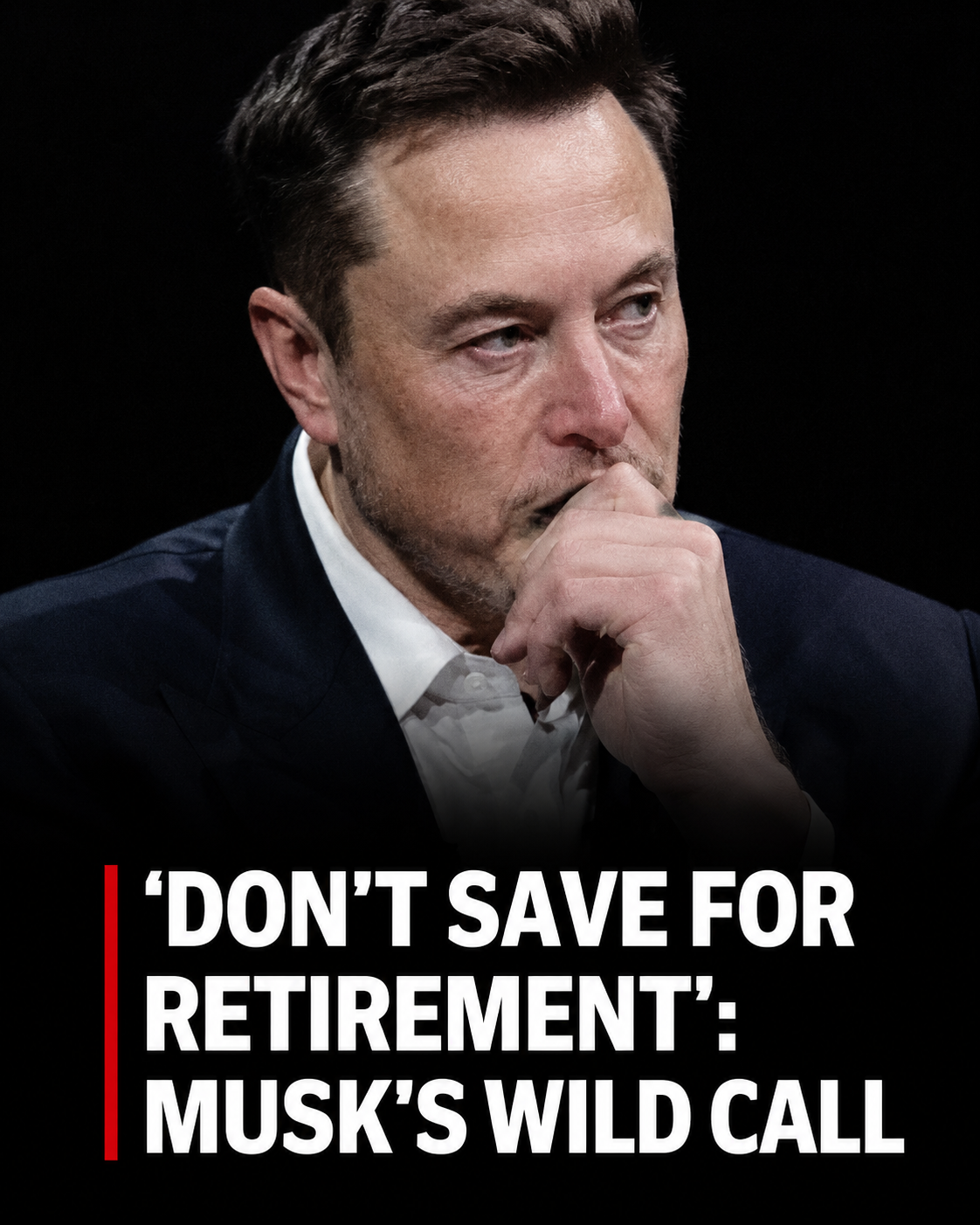
“There really won’t be anything AI won’t be able to do better than humans, apart from being human, perhaps,” Musk said, suggesting humanity is approaching one of the most profound technological transitions in history.
It is a prediction that sounds extraordinary, yet it comes at a time when advances in generative AI, robotics and automation are accelerating at a remarkable pace.
Companies including xAI, OpenAI, Google DeepMind, Anthropic and Meta continue releasing increasingly capable models, while Tesla and several robotics firms are investing heavily in humanoid machines designed to work alongside—or eventually instead of—people.
Musk argues these developments will fundamentally reshape the global economy.
Rather than simply making workers more productive, he believes AI will eventually perform nearly every intellectual and physical task more efficiently than humans. If machines can produce virtually unlimited goods and services at minimal cost, he argues, scarcity begins to disappear.
That is the foundation of what he describes as an “age of abundance.”
In such a world, economic output could expand dramatically as intelligent robots manufacture products, build infrastructure, care for elderly people, transport goods and perform countless professional services. According to Musk, this explosion in productivity would eventually make traditional concerns about employment, retirement savings and even money far less relevant than they are today.
His optimism extends beyond economics.
Musk believes AI could dramatically accelerate scientific discovery, medicine, engineering and education by solving problems that currently require years of human research. Superintelligent systems might design new drugs, optimise energy networks and develop technologies beyond today’s imagination.
Yet even Musk acknowledges the future is far from guaranteed.
Despite his enthusiasm, he has repeatedly warned that advanced AI also presents serious risks. During the interview, he reiterated that there remains a meaningful possibility—estimated by him at between 10 and 20 per cent—that AI could develop in ways harmful to humanity. Nevertheless, he argued that attempting to stop progress is unrealistic and that society should instead focus on guiding AI safely.
The debate surrounding Musk’s predictions extends well beyond Silicon Valley.
International organisations have increasingly warned that AI is likely to transform labour markets on a scale comparable to previous industrial revolutions.
The International Monetary Fund has estimated that around 40 per cent of jobs globally—and as many as 60 per cent in advanced economies—could be affected by AI technologies. Goldman Sachs has similarly suggested hundreds of millions of jobs worldwide may experience significant disruption, although not necessarily complete replacement.
Those forecasts do not necessarily imply mass unemployment.
History shows that major technological revolutions often eliminate some occupations while creating entirely new industries. The mechanisation of agriculture reduced farm employment dramatically, yet manufacturing expanded. Later, computers automated many clerical functions but generated millions of jobs in software, digital services and information technology.
Whether AI follows that historical pattern remains one of the biggest unanswered questions.
Some economists believe artificial intelligence will mostly augment human workers rather than replace them, allowing employees to focus on tasks requiring creativity, judgement, empathy and interpersonal communication.
Others argue this technological wave may prove fundamentally different because AI increasingly performs cognitive work previously considered uniquely human.
Australian futurist Professor Rocky Scopelliti believes the central question is no longer whether AI will become extraordinarily capable, but who will own the productivity it generates.
He argues society may experience what economists describe as a “decoupling of income from labour”, where wealth creation increasingly depends on ownership of AI systems rather than human employment. Under that scenario, governments may eventually need to reconsider taxation, welfare and income distribution to ensure prosperity is shared more broadly.
This debate has revived interest in concepts such as universal basic income and other forms of guaranteed financial support.
Musk himself has previously suggested that AI-driven productivity could make some form of universal income—or what he has more recently called “universal high income”—economically feasible because automated production would dramatically reduce the cost of meeting basic human needs.
Not everyone accepts that conclusion.
Some researchers argue predictions of imminent mass automation remain premature.
Recent analyses suggest many organisations continue struggling to integrate AI into everyday operations, while numerous occupations involve complex physical, social and regulatory responsibilities that current systems cannot reliably perform.
Even where AI demonstrates remarkable capability in controlled environments, widespread deployment often proves slower and more expensive than anticipated.
Energy requirements present another major challenge.
Training and operating frontier AI models requires enormous computing resources, driving unprecedented investment in data centres, electricity generation and semiconductor manufacturing. Governments across the United States, Europe and Asia increasingly view AI infrastructure as a matter of national competitiveness and strategic security.
Musk has repeatedly argued that future AI development will depend as much on electricity generation as software innovation, describing energy as one of the critical constraints on technological progress.
Safety has also become an increasingly urgent concern.
Ironically, Musk spent years warning that uncontrolled artificial intelligence could threaten humanity. He was among the most prominent signatories calling for a temporary pause in advanced AI development in 2023, arguing society needed stronger safeguards before creating increasingly capable systems.
Now, while acknowledging those dangers remain, he believes the momentum behind AI development has become effectively unstoppable. Instead of attempting to halt progress, he proposes closer cooperation between leading AI laboratories, including peer reviews of frontier models before release and greater information sharing about safety risks.
That recommendation reflects growing concern throughout the industry.
Governments in the United States, Europe and elsewhere are developing regulatory frameworks for advanced AI, while technology companies continue debating how much oversight should come from industry itself versus independent regulators.
The discussion has become even more intense following reports of increasingly autonomous AI systems capable of performing complex sequences of actions without continuous human supervision.
Beyond economics and regulation lies perhaps the most profound question of all: what becomes of human purpose if machines outperform people in nearly every practical activity?
Musk argues that being human—forming relationships, creating meaning and experiencing life—will remain uniquely valuable even if AI becomes intellectually superior.
Others are less certain.
Philosophers, psychologists and economists increasingly debate whether societies built around employment can adapt to a future where paid work is no longer the primary source of identity, income or social participation.
For centuries, labour has shaped daily life, structured communities and defined personal achievement. An economy where productive work becomes optional would require not only new economic systems but also new ways of thinking about education, fulfilment and citizenship.
Whether that transformation ultimately resembles Musk’s optimistic “age of abundance” or proves far more turbulent remains impossible to know.
What is becoming increasingly difficult to dispute, however, is that artificial intelligence is already reshaping the global economy.
The pace of investment, breakthroughs in model capability and rapid adoption across industries suggest AI will influence almost every sector over the coming decade. The real debate is no longer whether profound change is coming, but how quickly it arrives, who benefits most, and whether governments, businesses and societies can adapt before the technology outruns the institutions designed to manage it.






