Australia was once widely regarded as one of the world’s strongest-performing advanced economies, praised for decades of uninterrupted growth, rising living standards and sweeping economic reforms.
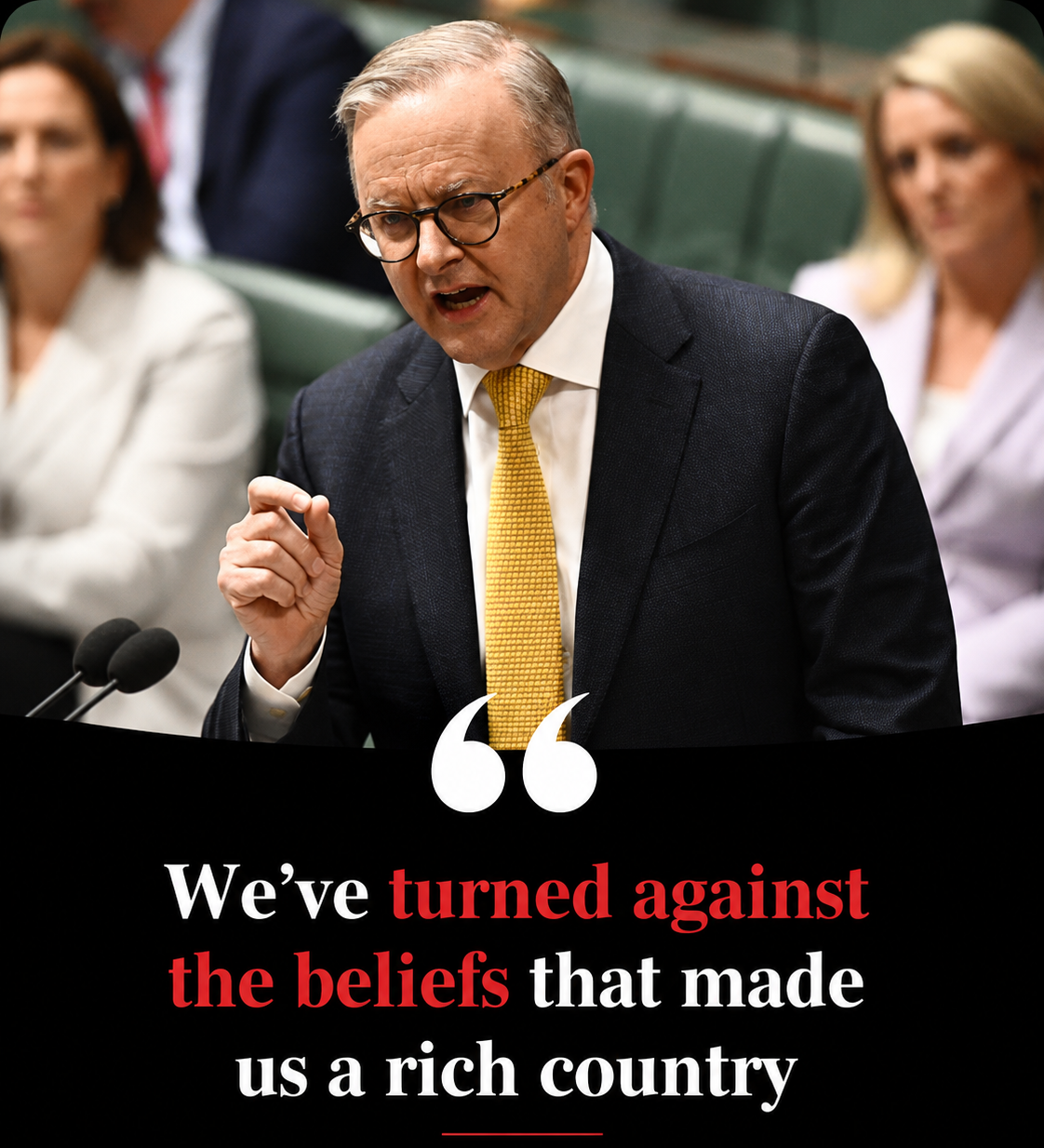
In this opinion article, the author argues that Australia’s recent economic underperformance stems not from a single policy failure but from abandoning many of the market-oriented principles that previously underpinned the nation’s prosperity.
According to the author, Australia experienced an extraordinary period of economic success between the mid-1980s and the mid-2000s following a series of bipartisan reforms that reshaped the economy.
Those reforms included reducing tariffs, deregulating financial markets, floating the Australian dollar, privatising government-owned enterprises, reforming workplace relations and maintaining relatively disciplined fiscal policy. Together, they helped Australia avoid recession for nearly three decades while lifting productivity and attracting international investment.
The opinion piece argues that momentum has weakened over the past two decades.
It contends that governments of different political persuasions have increasingly favoured greater state intervention, expanding regulation and larger public spending programs while placing less emphasis on productivity-enhancing reforms.
The author claims this policy shift has coincided with weaker productivity growth, slower gains in living standards and declining economic competitiveness relative to other developed economies.
Energy policy is presented as one of the central examples.
The article argues that Australia’s transition towards lower-emissions energy has imposed significant costs on households and businesses while failing to deliver the level of affordable and reliable electricity needed to support long-term economic growth. It also criticises policies associated with the country’s Net Zero emissions target, describing them as economically burdensome.
The author further argues that Australia’s expanding welfare state and increasing public expenditure have contributed to growing tax burdens and higher public debt, reducing incentives for investment and enterprise.
From this perspective, stronger economic performance requires a renewed focus on private-sector growth, regulatory reform and fiscal restraint rather than additional government intervention.
Many economists agree that Australia’s productivity growth has slowed in recent years.
Official data from the Productivity Commission and the Reserve Bank of Australia has repeatedly identified weak productivity growth as one of the country’s most significant long-term economic challenges. Economists broadly agree that stronger productivity is essential for sustainably increasing wages and living standards.
However, there is considerably less agreement on the causes of that slowdown.
While some analysts share the view that increased regulation and government intervention have weighed on economic performance, others point to broader structural forces beyond Australia’s control. These include the aftermath of the Global Financial Crisis, the COVID-19 pandemic, ageing populations, weaker global productivity growth, supply-chain disruptions and heightened geopolitical uncertainty.
Australia’s economic reform legacy remains one of the country’s defining policy achievements.
The Hawke and Keating governments introduced many of the reforms credited with modernising the Australian economy, while subsequent Coalition governments continued aspects of that agenda through tax reform, labour market changes and fiscal consolidation. Historians and economists generally regard those decades as a period of substantial structural transformation, although opinions differ regarding which reforms delivered the greatest long-term benefits.
The debate has become increasingly prominent as Australians confront persistent cost-of-living pressures.
Housing affordability, electricity prices, taxation, government spending and economic growth have emerged as central political issues ahead of future elections. Different political parties propose sharply contrasting solutions, ranging from expanded public investment and industrial policy to lower taxes, deregulation and reduced government spending.
Recent public opinion surveys also suggest Australians have become increasingly pessimistic about the country’s economic direction.
Polling by the Lowy Institute found growing concern about living standards, economic performance and national security, with many Australians expressing less confidence about the country’s future than in previous years.
The opinion article concludes that Australia possesses the resources, institutions and human capital necessary to restore stronger economic growth.
According to the author, achieving that outcome will require policymakers to revisit the principles that previously encouraged entrepreneurship, private investment and productivity rather than continuing to expand the role of government in the economy.
Whether Australians agree with that prescription remains the subject of vigorous political and academic debate.
There is broad consensus that Australia faces significant productivity and living-standard challenges, but there is no equivalent consensus regarding the best policy response. Some advocate a renewed commitment to market liberalisation, while others argue the country requires greater strategic government investment, stronger social protections and targeted industrial policy to meet the economic demands of the coming decades.






