Prime Minister Anthony Albanese has rejected claims that Labor suppressed internal debate over the war in Gaza, insisting the Australian Labor Party remains “transparent” after former minister Ed Husic’s proposed motion failed to reach the floor of the party’s National Conference.
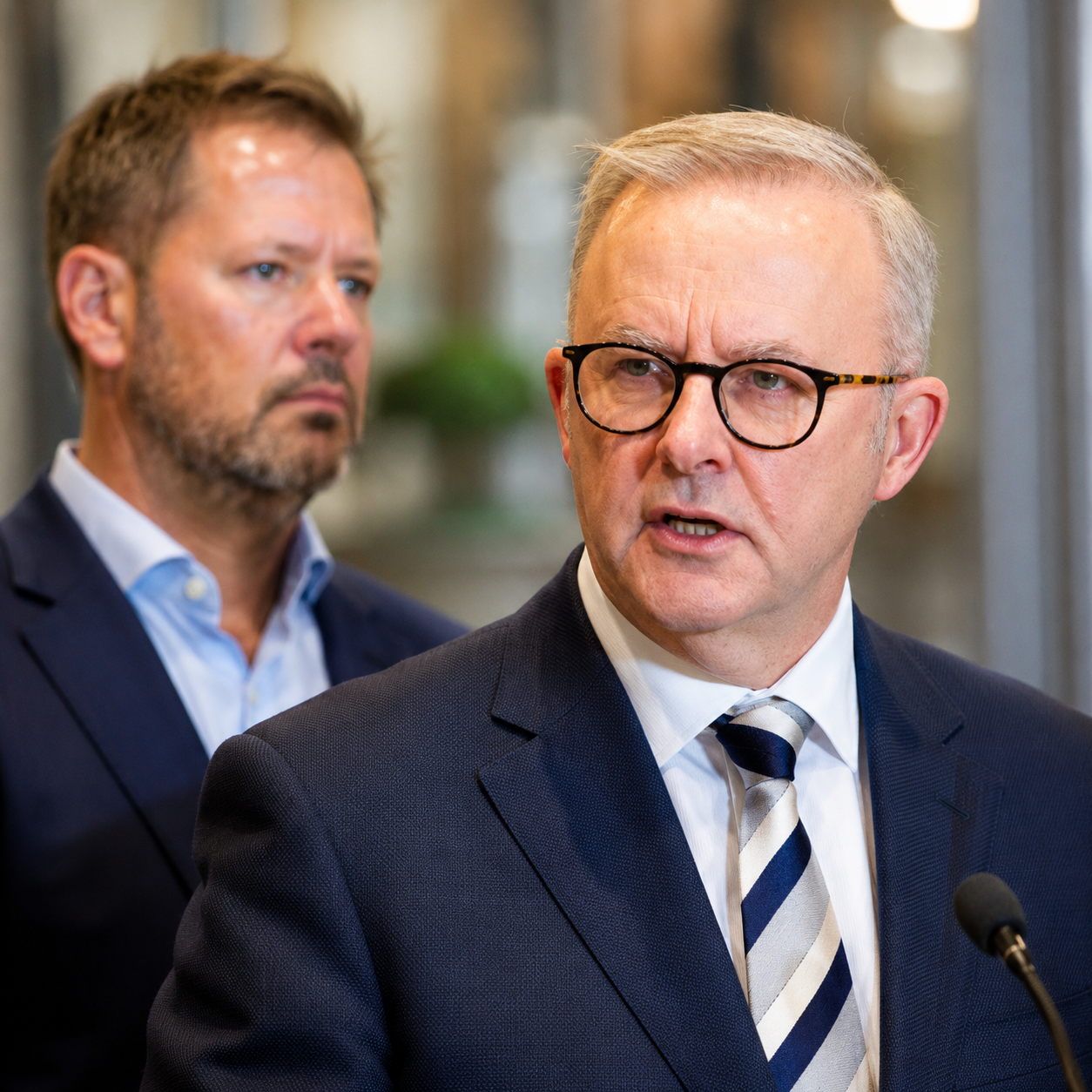
The controversy emerged during Labor’s National Conference in Adelaide after Husic’s proposed amendment on Australia’s approach to the Israel–Palestine conflict collapsed before delegates had the opportunity to vote on it.
Husic, the federal member for Chifley and a former cabinet minister, had sought stronger language on Gaza, including recognition of claims of genocide and a more forceful policy position on Palestinian statehood and Australia’s response to the conflict. However, the motion required a seconder before it could proceed. Following negotiations between party factions, the seconder withdrew support, preventing the proposal from being debated on the conference floor.
After the motion failed, Husic launched an unusually blunt attack on Labor’s internal processes.
“They can put me in a freezer, I don’t give a sh*t,” he told reporters, making clear he intended to continue speaking publicly on the issue despite losing his place in the ministry after Labor’s election victory. Husic argued that robust internal discussion should not be discouraged and warned against a party culture where disagreement is viewed negatively.
Asked about the criticism, Albanese dismissed suggestions that Labor had acted behind closed doors to silence debate.
The Prime Minister said the conference had been conducted openly and described Labor as “a transparent party”, arguing that delegates had spent several days debating a wide range of policy matters before overwhelmingly endorsing the party platform. He also described the conference as one of the most united and purposeful gatherings he had attended.
The disagreement reflects broader tensions within Labor over Australia’s position on the Israel–Hamas war.
Since the conflict intensified following Hamas’ attacks on Israel in October 2023, different factions within the party have argued for varying approaches to issues including recognition of Palestinian statehood, humanitarian assistance, sanctions, settlement policy and Australia’s diplomatic relationship with Israel.
While Labor’s parliamentary leadership has consistently condemned Hamas and supported a two-state solution, some MPs and grassroots members have called for stronger criticism of Israel’s military campaign in Gaza and greater recognition of Palestinian concerns.
The conference ultimately adopted a revised foreign policy platform after extensive negotiations between senior factional leaders.
The final document reaffirmed Labor’s support for a two-state solution and humanitarian assistance for civilians while reflecting updated language on the conflict. However, some earlier references calling for Hamas to disarm and for reforms within the Palestinian Authority were removed during negotiations, attracting criticism from some pro-Israel groups while other Labor members argued the revised wording better reflected current circumstances.
Foreign Minister Penny Wong played a central role in negotiating the compromise that ultimately secured broad support across Labor’s factions.
Party leaders argued the revised platform balanced Australia’s longstanding support for Israel’s security with growing concern over the humanitarian consequences of the war in Gaza. They also maintained that Australia’s foreign policy continues to oppose terrorism while supporting efforts toward a negotiated two-state solution.
Husic nevertheless argued the process itself had become the issue.
Rather than focusing solely on the wording of the platform, he criticised what he described as an increasingly centralised culture within Labor that discourages open disagreement. He suggested allowing delegates to openly debate difficult issues would strengthen rather than weaken the party.
Senior Labor figures disputed that characterisation.
Party sources argued there had been no deliberate effort to silence Husic, maintaining instead that his proposal simply failed to attract sufficient procedural support to proceed. They also noted that negotiations over conference motions are a longstanding feature of Labor’s internal decision-making and occur across a wide range of policy areas.
The dispute has drawn attention because Labor conferences traditionally play a significant role in shaping the party’s long-term policy platform.
Although conference resolutions do not automatically become government policy, they provide guidance for the parliamentary party and often signal the direction of future policy development. As a result, debates over amendments can carry considerable political significance, particularly on sensitive international issues.
The Gaza conflict has proven especially challenging for Labor.
The Albanese Government has repeatedly condemned Hamas’ attacks, called for the release of Israeli hostages, supported increased humanitarian assistance to Palestinian civilians and advocated a negotiated two-state solution. At the same time, ministers have faced pressure from different parts of the community to either adopt a tougher stance towards Israel or provide stronger diplomatic backing for its security concerns.
The disagreement at the conference illustrates the diversity of views that continue to exist within Labor on one of the world’s most divisive foreign policy issues.
While Husic’s motion did not proceed to a formal vote, the debate surrounding it demonstrated that questions about Australia’s response to the Israel–Palestine conflict remain politically sensitive both inside Parliament and within Labor’s own membership.
For Albanese, emphasising unity after the conference is important as the government shifts its attention back to domestic priorities, including cost-of-living pressures, housing and economic management. For Husic, the episode reinforces his willingness to publicly challenge internal party processes despite no longer serving in cabinet.
Whether the disagreement has lasting political consequences remains to be seen. What is clear is that Labor has emerged from its National Conference with an agreed policy platform, but also with ongoing internal discussion over how Australia’s Middle East policy should evolve as the conflict in Gaza continues.






