The Albanese Government has announced a new A$25 million assistance package for Gaza and Palestinian governance, triggering renewed political debate over Australia’s aid policy amid ongoing concerns about Hamas and the Palestinian Authority.
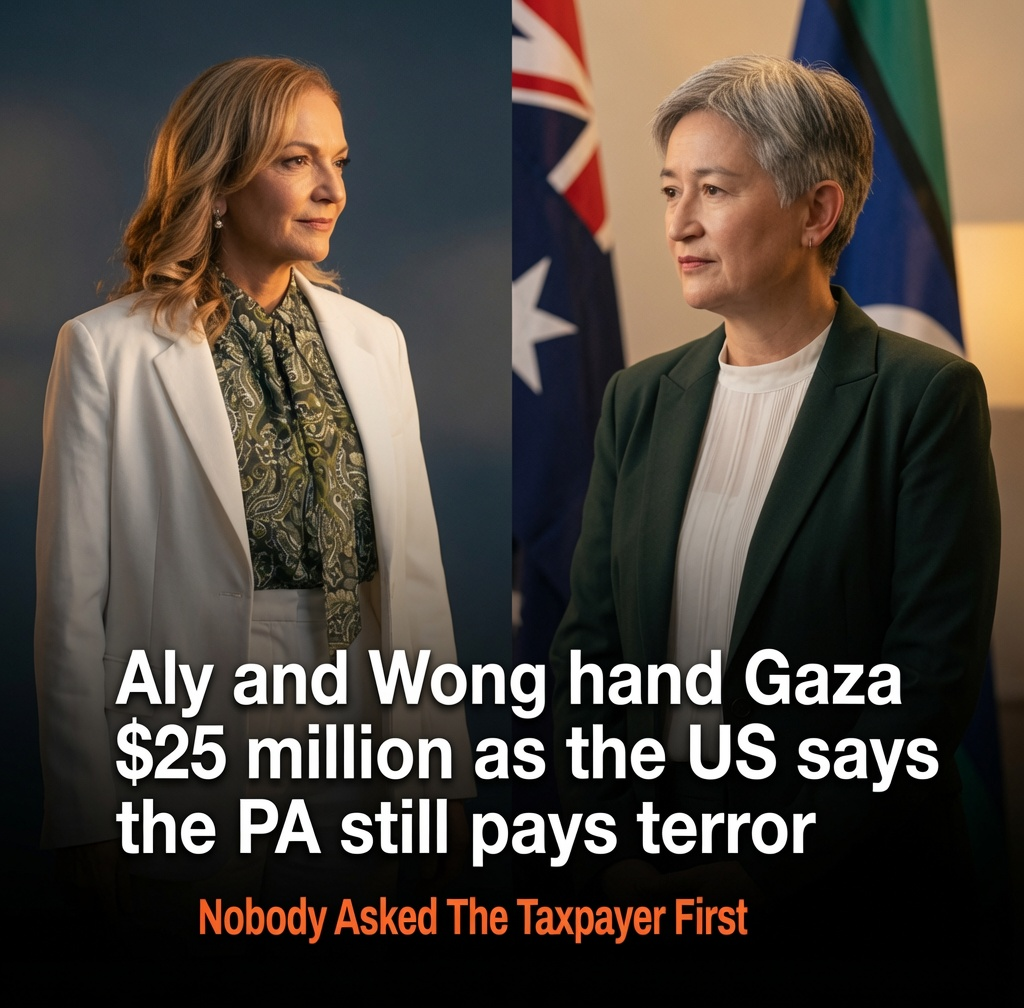
Foreign Minister Penny Wong and Minister for International Development Anne Aly jointly announced the package on 21 July, describing it as part of Australia’s broader commitment to supporting humanitarian recovery in Gaza while strengthening the institutional foundations of a future Palestinian state.
Under the package, A$15 million will be contributed to the UN Horizon Fund, which supports early recovery and reconstruction projects in Gaza following the ceasefire. A further A$10 million will be channelled through the World Bank’s Palestinian Fund for Reconstruction and Development (PFRD), a multi-donor trust fund designed to improve the Palestinian Authority’s financial management, governance and institutional capacity. Australia says both programs are administered through international organisations rather than provided directly to Hamas or the Palestinian Authority as unrestricted budget support.
Announcing the package, Wong said Australia’s objective was to support practical recovery while helping create conditions for a lasting peace.
“Hamas can play no role in the State of Palestine,” she said, adding that long-term stability requires “legitimate governance, economic opportunity and security for both Palestinians and Israelis.” Anne Aly said the humanitarian needs in Gaza remained immense and that rebuilding institutions would complement Australia’s existing humanitarian assistance.
The announcement, however, has quickly become politically contentious.
Critics argue Australian taxpayers deserve stronger assurances that international funding cannot indirectly benefit Hamas or support institutions accused of maintaining financial arrangements for individuals convicted of terrorism-related offences.
The criticism follows recent statements from the United States questioning whether the Palestinian Authority has fully implemented reforms to end its long-disputed prisoner payment system, sometimes referred to by critics as the “pay-for-slay” program. Earlier this year, the US State Department indicated it remained unconvinced that the system had been comprehensively dismantled despite previous reform commitments.
The Palestinian Authority has consistently argued that the payments form part of a broader social welfare system supporting families affected by imprisonment and conflict, while Israel and several Western governments have long contended that aspects of the program create incentives for politically motivated violence.
The issue has remained controversial internationally for years.
Australia itself altered its approach to Palestinian assistance in 2018 after concerns were raised that direct funding through the World Bank could potentially free up Palestinian Authority resources for controversial prisoner payments. At that time, the Morrison Government redirected funding away from direct budget support and instead channelled assistance through United Nations humanitarian programs.
The Albanese Government says the new funding structure reflects lessons from those earlier decisions.
According to the joint ministerial statement, the World Bank-managed fund includes governance, financial oversight and accountability mechanisms designed to strengthen public financial management rather than provide unrestricted funding. The UN Horizon Fund similarly operates through internationally supervised reconstruction programs involving multiple donor governments, including France, Germany, Italy, Norway, Sweden, Switzerland, the Netherlands and the United Kingdom.
The latest commitment comes on top of Australia’s substantial humanitarian assistance since the Gaza conflict began following Hamas’ 7 October 2023 attacks on Israel.
Successive funding packages have supported emergency food supplies, medical services, shelter, reconstruction and humanitarian operations. The government says Australia’s assistance is delivered through trusted international agencies and partners rather than directly through Hamas.
Australia has simultaneously maintained strong public condemnation of Hamas.
Since the October 2023 attacks, the Albanese Government has repeatedly called for the release of Israeli hostages, condemned Hamas’ actions and stated that the organisation should have no future governing role in Gaza. At the same time, ministers have advocated for a negotiated two-state solution and increased humanitarian assistance for Palestinian civilians affected by the conflict.
The latest funding announcement has therefore become part of a much broader international debate over how reconstruction in Gaza should proceed.
Supporters argue that rebuilding civilian infrastructure, strengthening legitimate public institutions and improving governance are essential if Gaza is to recover after years of conflict. They contend that withholding assistance risks worsening humanitarian conditions and undermining prospects for long-term stability.
Opponents counter that donor governments must be able to demonstrate robust safeguards ensuring aid cannot be diverted or indirectly support organisations involved in terrorism. They argue confidence in international assistance depends not only on humanitarian outcomes but also on transparent oversight and accountability.
Those competing arguments continue to shape policy discussions well beyond Australia.
Governments across Europe and North America have adopted varying approaches to Palestinian assistance, balancing humanitarian obligations against security concerns and domestic political scrutiny. Many have introduced enhanced auditing requirements or channelled funding exclusively through multilateral organisations to reduce the risk of misuse.
For Australia, the latest package highlights the difficult balance policymakers face between responding to an ongoing humanitarian crisis and maintaining public confidence that taxpayer-funded assistance is appropriately monitored.
While critics continue to question whether existing safeguards are sufficient, the Albanese Government maintains that the funding is designed specifically to support internationally supervised recovery efforts, strengthen governance reforms and advance conditions for a future Palestinian state in which Hamas has no governing role.






