Pauline Hanson has accused Prime Minister Anthony Albanese of applying “double standards” after he repeatedly declined to directly answer questions about attending a controversial fundraising dinner hosted by the son of a Chinese-born billionaire whose family has been embroiled in a high-profile Australian Taxation Office dispute.
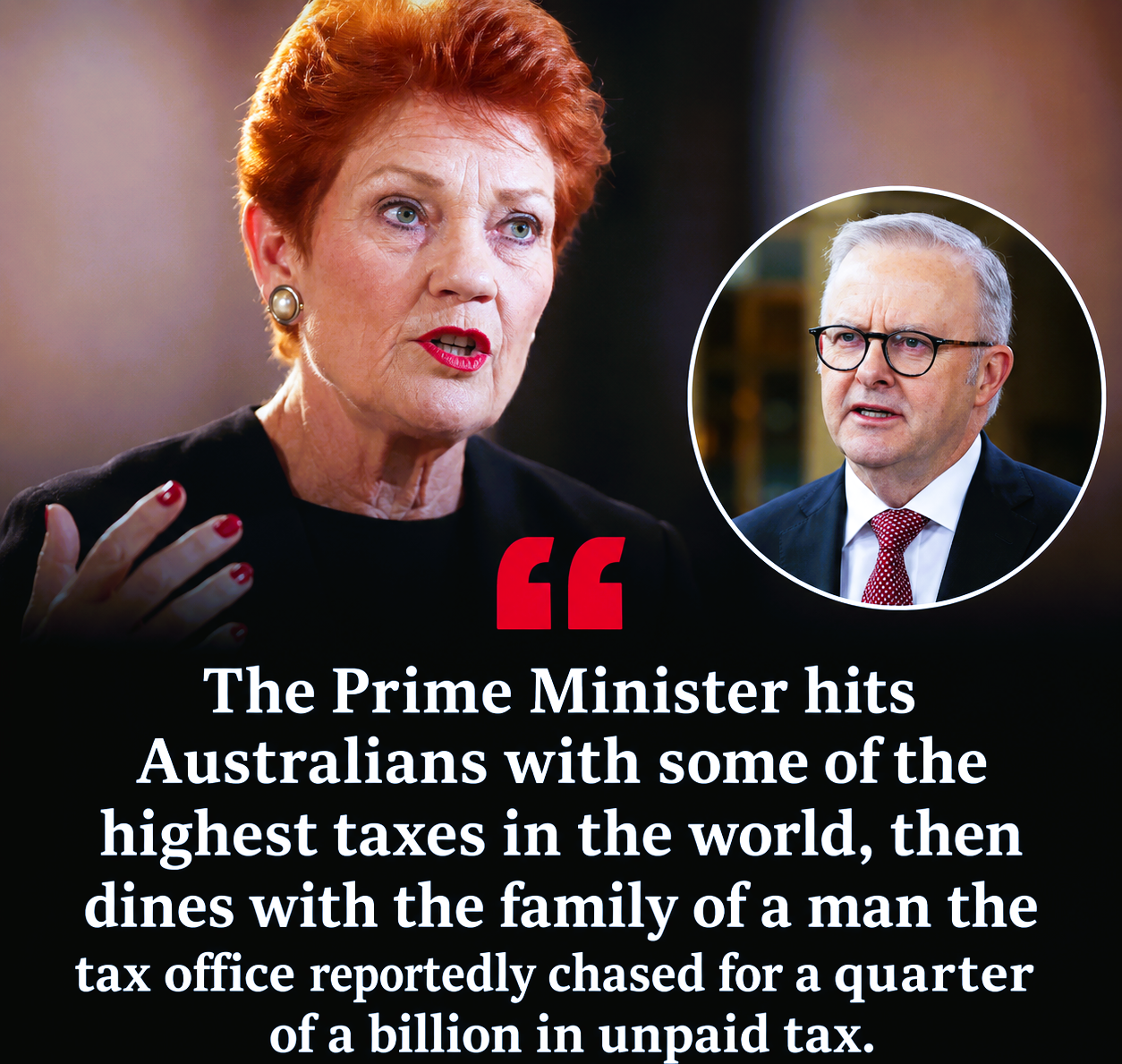
The One Nation leader said the Prime Minister could not credibly criticise her political relationships while refusing to fully explain his own attendance at an exclusive dinner that has become one of the most closely scrutinised political fundraising events of recent weeks.
The political controversy centres on a private gathering held at the Point Piper waterfront mansion of Felix Lee, the son of businessman Phillip Dong Fang Lee. Reports have placed Anthony Albanese among a small group of invited guests at the event, which has attracted widespread attention following revelations about the Lee family’s long-running tax dispute with the Australian Taxation Office (ATO).
Speaking after the issue gained national attention, Senator Hanson argued that Labor was holding political opponents to a different standard than it expected from itself.
“The Prime Minister can’t have it both ways,” Hanson said, arguing that Labor had been quick to attack her association with mining billionaire Gina Rinehart while downplaying questions surrounding its own fundraising activities.
Her comments follow several days of intense questioning directed at Mr Albanese over the dinner, with Opposition politicians demanding greater transparency about who attended, what was discussed and whether any political influence accompanied donations connected with the event.
The controversy intensified after reports suggested the event had initially been linked to expectations of a donation worth up to $1 million for the Labor Party. Later reports indicated the total amount raised may have been substantially lower, with Labor figures disputing earlier claims about the size of the pledged contribution.
When questioned publicly, the Prime Minister repeatedly declined to discuss the dinner in detail.
During media interviews, Albanese responded by saying he attends numerous dinners and private events as part of his responsibilities as Prime Minister, while maintaining that all political donations are disclosed under Australia’s electoral laws.
He also indicated he was not aware of allegations surrounding Phillip Dong Fang Lee at the time of attending the event and insisted the Labor Party complies with Australia’s political donation disclosure requirements.
His reluctance to elaborate further has become a central point of criticism from political opponents.
Hanson argued Australians deserved consistent standards regardless of which political party was involved.
She suggested that if public scrutiny was considered appropriate over One Nation’s links with wealthy supporters, the same level of examination should apply whenever Labor accepted donations or attended exclusive fundraising functions hosted by prominent business figures.
The comments also reflect a broader political dispute that has developed over billionaire donors and political influence.
Earlier this month, Labor figures criticised Hanson over her relationship with mining magnate Gina Rinehart following photographs of the pair travelling together in Europe. Questions were also raised about Hanson accepting significant support from Australia’s richest woman, including previous financial backing for One Nation initiatives.
Hanson has defended that relationship, arguing there is nothing improper about receiving support from individuals who openly back political causes.
She has repeatedly maintained that any political support she receives is properly declared and that Australians should be free to support political movements they believe represent their interests.
The Prime Minister’s attendance at the Point Piper dinner has reignited broader debate about political fundraising in Australia.
While fundraising dinners are common across all major political parties, critics argue exclusive events involving wealthy donors risk creating perceptions of privileged access to senior decision-makers.
Supporters of tighter donation laws have long argued that transparency alone may not eliminate concerns about influence, particularly where high-value fundraising events involve a relatively small number of wealthy attendees.
The Albanese Government has previously promoted reforms aimed at increasing transparency around political donations, including faster disclosure requirements and caps on donation amounts. Labor ministers have pointed to those reforms in defending the government’s approach during the current controversy.
Social Services Minister Tanya Plibersek has argued that the government’s reforms represent some of the strongest transparency measures introduced in recent years and has defended the Prime Minister against allegations of wrongdoing.
She has also suggested that political scrutiny should be applied consistently across all parties rather than selectively targeting Labor.
Nevertheless, Opposition politicians continue to argue the Prime Minister should provide a fuller explanation of his attendance at the event.
Nationals senator Matt Canavan has called for Labor to reject any donations associated with the dinner if questions surrounding the donor family’s tax affairs remain unresolved.
Other Coalition figures have similarly questioned whether political leaders should attend fundraising events hosted by families facing significant legal or regulatory scrutiny, regardless of whether any wrongdoing has been proven.
The controversy also highlights the distinction between allegations and established findings.
Although documents relating to Phillip Dong Fang Lee’s dealings with the ATO have become public through court processes and media reporting, allegations surrounding the family’s financial affairs remain contested, and no findings against Felix Lee himself have been suggested in relation to the fundraising dinner.
Political analysts note that controversies surrounding donor access are unlikely to disappear regardless of which party forms government.
Both Labor and Coalition governments have faced repeated questions over fundraising practices, access to ministers and the influence of wealthy supporters.
Calls for further reform of Australia’s political donation system have resurfaced regularly over the past decade, with proposals ranging from lower donation caps through to real-time disclosure requirements and tighter restrictions on fundraising events involving ministers.
For Hanson, however, the immediate issue is political consistency.
She argues that Labor cannot continue criticising One Nation’s association with Gina Rinehart while dismissing questions surrounding its own fundraising activities.
Whether the controversy results in lasting political damage remains uncertain, but it has once again placed political donations, transparency and public trust at the centre of Australia’s national political debate.






