The Albanese Government has announced a significant expansion of its Commonwealth Prac Payment program, extending weekly financial support to thousands more university students undertaking mandatory placements as part of their degrees.
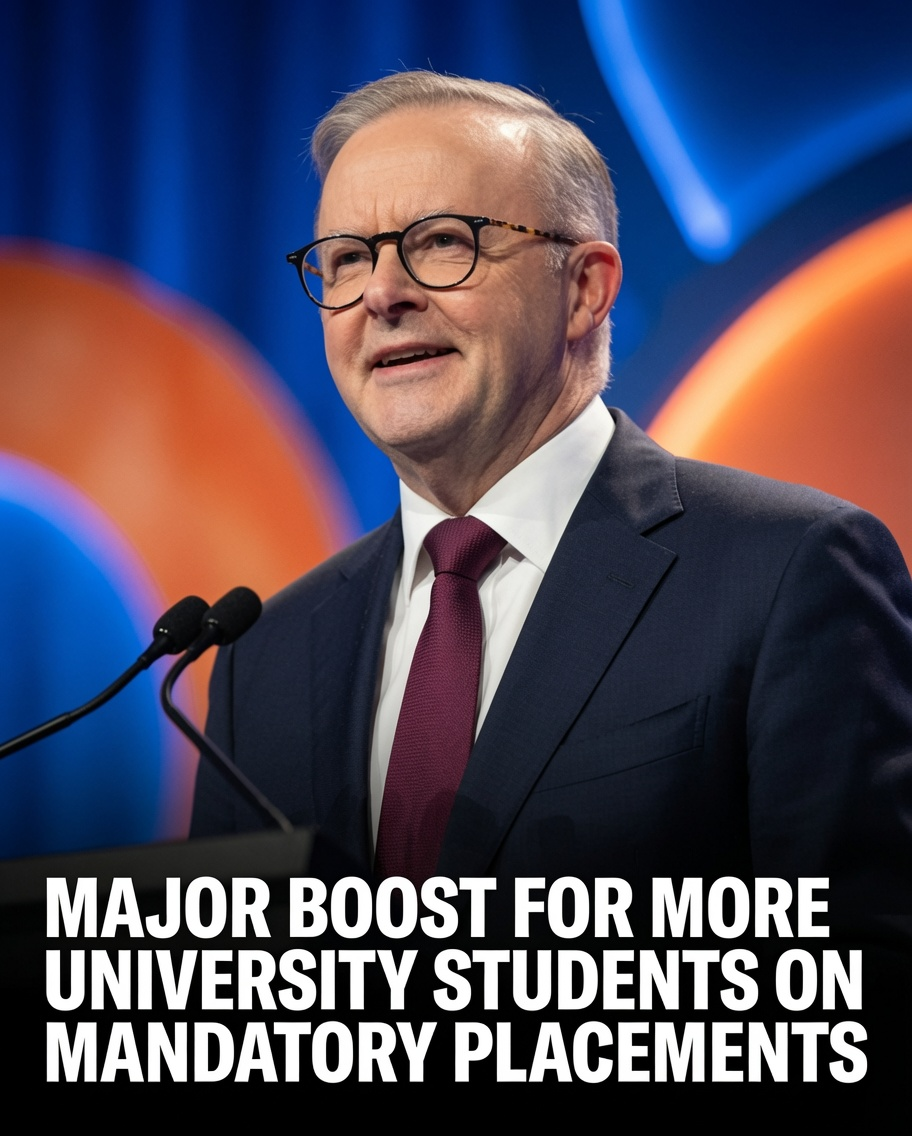
Prime Minister Anthony Albanese unveiled the policy while opening Labor’s National Conference in Adelaide, describing the measure as an investment in Australia’s future health workforce as the nation grapples with growing demand for healthcare professionals.
From 1 July 2027, eligible students completing mandatory placements in ten additional allied health disciplines will be able to receive the Commonwealth Prac Payment of $338.60 per week, subject to income and eligibility requirements.
The expansion builds on the existing program introduced for teaching, nursing, midwifery and social work students, who currently receive financial assistance while undertaking unpaid compulsory placements.
Under the expanded scheme, the newly eligible disciplines are:
- Clinical psychology
- Physiotherapy
- Occupational therapy
- Speech pathology
- Paramedicine
- Radiography
- Pharmacy
- Rehabilitation therapies
- Audiology
- Podiatry
The government says the measure recognises that students in many healthcare courses are required to complete lengthy full-time placements that often leave little opportunity to maintain paid employment.
Prime Minister Albanese said the expanded support would ease cost-of-living pressures while helping Australia train more frontline health professionals.
“Paid prac is already making a real difference — it’s helping students with cost of living while they train and that’s why we’re expanding it,” he said.
“This is an investment in our future healthcare workforce. We need more of them and this will help more Australians get the qualifications our nation needs.”
Helping students through expensive placements
Mandatory placements are an essential component of many university degrees in Australia.
Unlike internships in some industries, these placements are generally unpaid and often require students to work full-time in hospitals, schools, aged-care facilities or community organisations for several weeks or months.
Many students report struggling to balance placement requirements with part-time employment, leading to financial hardship during their studies.
Education Minister Jason Clare said the expanded payment would help cover everyday expenses that continue even while students are unable to earn regular income.
“Paid prac helps to pay the bills, pay the rent and pay for things like petrol and parking,” Clare said.
He added that students who are required to relocate for regional or rural placements would particularly benefit from the additional financial support.
How the payment works
The Commonwealth Prac Payment is benchmarked to the single Austudy rate and is indexed annually.
The payment is means-tested, meaning eligibility depends on students meeting income and asset requirements rather than being automatically available to everyone enrolled in an eligible degree.
The government says targeting assistance in this way ensures support reaches students facing the greatest financial pressure during compulsory placements.
According to Labor, the expansion is expected to cost approximately $745 million over the remainder of the decade.
Addressing workforce shortages
Beyond providing cost-of-living relief, the government argues the policy is designed to strengthen Australia’s future healthcare workforce.
Many allied health professions continue to report workforce shortages, particularly in regional and rural Australia.
Physiotherapists, speech pathologists, occupational therapists, psychologists and paramedics all play increasingly important roles as Australia’s population ages and demand for chronic disease management, rehabilitation and mental health services grows.
Government ministers argue reducing financial barriers during university training may encourage more students to complete their qualifications and remain in these professions after graduation.
Who is still excluded?
While the announcement has been welcomed by many student groups, it has also prompted criticism from organisations representing students who remain outside the scheme.
One notable omission is medical students.
The Australian Medical Students’ Association said many medical students complete extensive unpaid placements lasting months, often making it extremely difficult to support themselves financially.
The association described the decision as disappointing and questioned why medicine was excluded despite Australia’s ongoing doctor shortages.
Veterinary students have also expressed frustration.
The Australian Veterinary Association said veterinary degrees require some of the longest mandatory placement periods in higher education, yet students remain ineligible for the Commonwealth Prac Payment.
The association argues veterinarians play critical roles in biosecurity, food production, animal welfare and rural communities and should receive similar assistance.
Part of Labor’s broader education agenda
The paid placement expansion forms part of a broader package of higher education reforms promoted by the Albanese Government.
In recent years Labor has introduced measures including reductions in student debt through changes to indexation, increased university funding in priority areas and reforms aimed at improving access to tertiary education.
At the Labor National Conference, Albanese presented the expanded Paid Prac scheme as an example of what he described as “practical” policies designed to address everyday pressures facing Australians rather than simply responding to political frustration.
What happens next?
The expanded eligibility is scheduled to commence on 1 July 2027, with detailed implementation arrangements and application processes expected to be released before the scheme begins.
Universities and student organisations are likely to continue lobbying for further expansion to include additional disciplines that also require extensive unpaid placements.
For now, however, the announcement represents one of the largest increases in financial support for allied health students in recent years.
If implemented as planned, thousands of students studying physiotherapy, psychology, pharmacy, paramedicine and other allied health professions will receive weekly financial assistance while completing compulsory placements—support the government says will ease financial pressure today while helping secure Australia’s healthcare workforce for the future.






