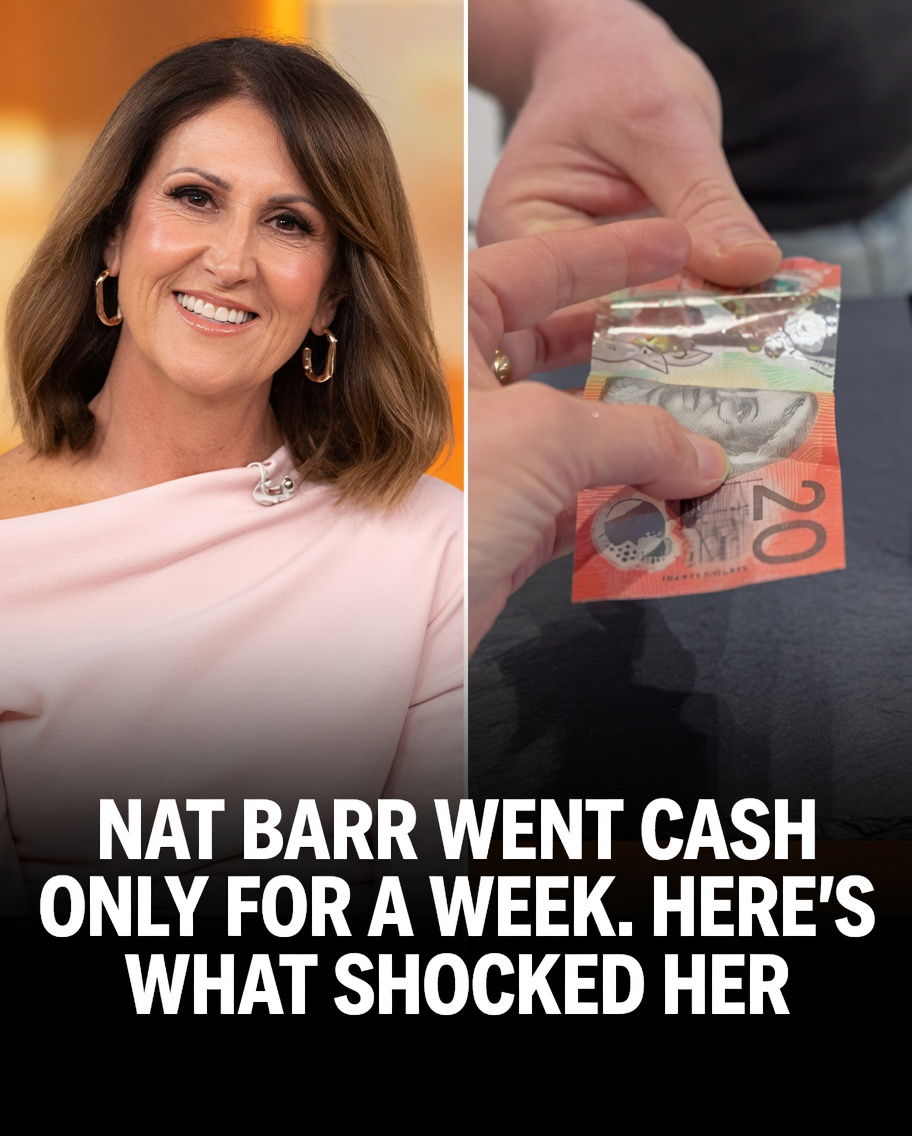
Sunrise presenter Nat Barr says a simple week-long experiment has permanently changed the way she thinks about spending money, after swapping bank cards and digital payments for cash alone.
What began as a light-hearted television challenge quickly turned into an unexpected lesson about consumer behaviour, budgeting and the role cash still plays in Australia’s increasingly digital economy.
Barr accepted the cash-only challenge after convincing co-host Matt “Shirvo” Shirvington to give up his smartphone for a basic flip phone for a week, joking that the exercise was a little “payback”. But while she expected to struggle in what is often described as a cashless society, her experience turned out to be the complete opposite.
“No one blinked an eye. No shop owner said I don’t want it,” Barr said after completing the challenge.
Instead, many retailers told her they were seeing more customers paying with notes and coins than they had a year earlier.
“So many shop owners said more and more people are using cash nowadays,” she explained.
Although Australia remains one of the world’s most advanced digital payments markets, Barr said conversations with business owners suggested some consumers are deliberately returning to cash for practical financial reasons rather than nostalgia.
Why cash is making a comeback
According to the retailers Barr spoke with, two themes emerged repeatedly.
First, many shoppers are trying to avoid card payment surcharges, which have become increasingly visible as more businesses pass merchant processing costs directly onto customers.
Second, people are using physical cash as a budgeting tool during a period of ongoing cost-of-living pressure.
“They don’t like the fees that they’re charged, and they’re also trying to budget,” Barr said.
The observations reflect a broader trend identified by payments researchers. While electronic transactions continue to dominate everyday spending, surveys by the Reserve Bank of Australia have shown cash remains important for many households, particularly as a budgeting method and as a backup payment option during technology outages.
Cash usage fell sharply during the COVID-19 pandemic as contactless payments became the norm, but subsequent years have seen renewed interest among some Australians seeking greater control over discretionary spending and wishing to minimise additional transaction costs.
A different relationship with spending
For Barr, the biggest surprise was not finding businesses willing to accept cash—it was discovering how differently she behaved when handing over physical money.
Unlike tapping a phone or bank card in seconds, paying with notes forced her to pause and think about every purchase.
She said the physical act of counting money created a stronger awareness of where her income was going.
“I’m going to keep doing this. It really made me think about what I’m spending,” Barr said.
Behavioural economists have long argued that consumers often experience what is known as the “pain of paying” more intensely when using cash than when making electronic transactions. Because cash is tangible and visibly decreases in a person’s wallet, some people naturally become more cautious about impulse purchases.
Digital payments, while offering speed and convenience, can make spending feel less immediate because no physical exchange takes place.
Not a solution for everyone
Barr acknowledged the approach would not necessarily suit every Australian.
Parents juggling school drop-offs, sporting commitments, grocery shopping and work may find digital payments far more practical than carrying enough cash for multiple purchases throughout the day.
She nevertheless said the experiment fitted comfortably into her own lifestyle and could easily become part of her normal financial routine.
Rather than abandoning electronic payments entirely, Barr suggested cash could simply become another budgeting tool available when people wanted greater awareness of their everyday expenses.
The only real inconvenience? Coins.
The challenge did have one downside.
Both Barr and Shirvington laughed about accumulating handfuls of loose change throughout the week—a familiar experience many Australians had almost forgotten in the era of digital wallets.
Shirvington joked that constantly carrying coins reminded him of the old days before tap-and-go payments became commonplace.
“The thing I think that kind of gave me memories is constantly having coins, though,” he observed.
Barr laughed, saying what Australians affectionately call “shrapnel” was hardly a serious inconvenience.
She suggested simply dropping spare coins into a jar at home rather than viewing them as a nuisance.
“I don’t think that’s probably the worst thing that you can deal with in life,” she said.
Australia’s payment landscape continues to evolve
Australia has experienced one of the fastest transitions towards electronic payments anywhere in the world.
Tap-and-go cards, smartphone wallets and wearable payment devices have become routine for millions of consumers, while many younger Australians rarely carry cash at all.
At the same time, governments, banks and consumer groups continue debating the long-term role of physical currency.
Advocates argue cash remains essential for financial inclusion, emergency preparedness and consumer choice, particularly for older Australians, regional communities and people without reliable access to banking technology.
Small business owners also face ongoing decisions about balancing customer convenience against the costs associated with accepting different payment methods. Merchant service fees, cash handling expenses and banking costs all influence how businesses prefer customers to pay.
In recent years, governments have also examined measures aimed at ensuring Australians retain reasonable access to cash services, recognising that despite declining transaction volumes, physical currency continues to play an important role for many households.
A simple experiment with lasting effects
For Barr, the challenge was never intended as a statement against digital banking or modern technology.
Instead, it became an unexpected reminder that changing the way people pay can also change the way they think about money.
While she expects to continue using electronic payments for convenience, the week convinced her there is still value in occasionally returning to notes and coins—particularly when trying to stay within a budget or become more mindful of everyday spending.
As Australian shoppers continue balancing convenience, rising living costs and payment fees, Barr’s experience suggests that despite the country’s rapid move towards cashless transactions, cash still has a meaningful place in many wallets.






