One Nation leader Pauline Hanson has defended her controversial call for Australia to become a “monocultural” nation, insisting her comments have been widely misunderstood and were never intended as a rejection of the country’s diverse migrant communities.
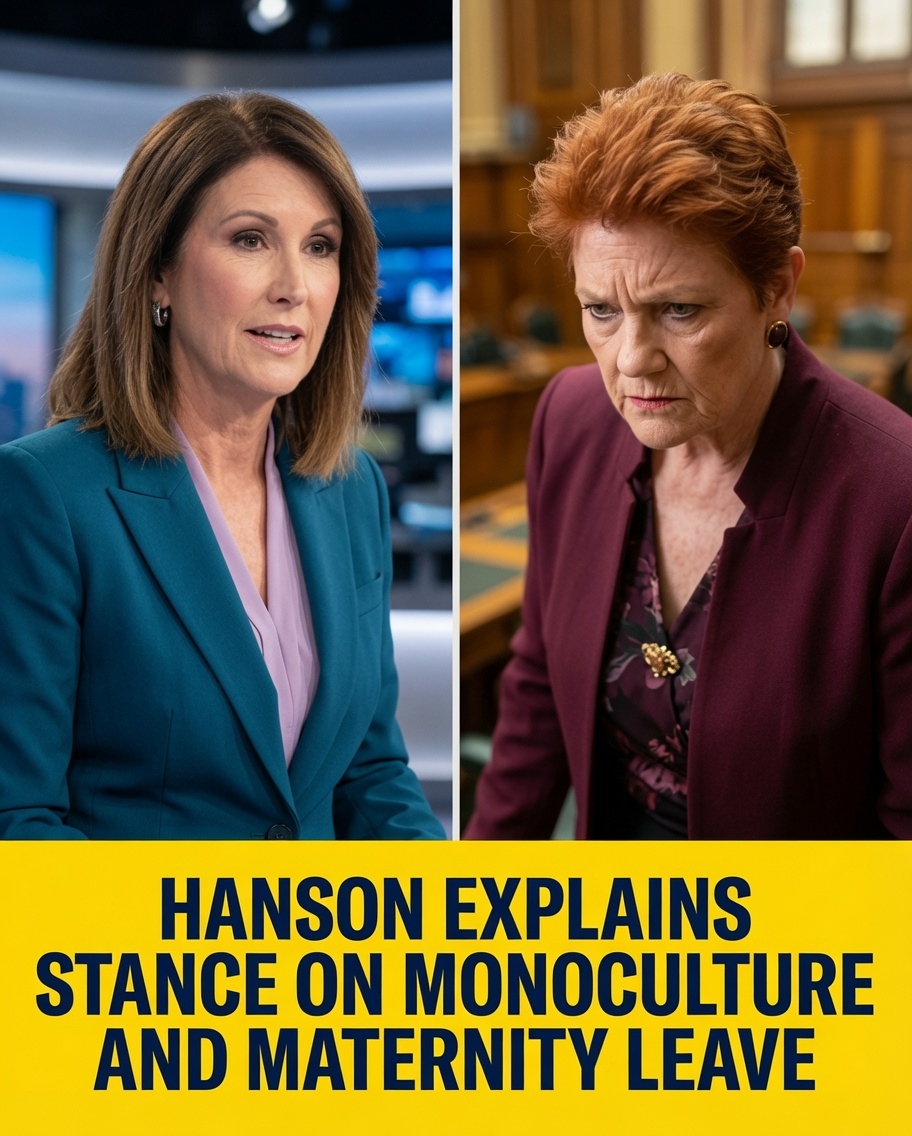
Speaking on Sunrise following intense public debate over her National Press Club address, Hanson said her vision for Australia centred on national unity rather than cultural uniformity. She argued Australians from all backgrounds should share a common civic identity, obey the same laws and embrace what she described as Australian values while remaining free to celebrate their own heritage.
The Queensland senator’s remarks come at a politically significant moment for One Nation, with recent polling reshaping the debate over the balance of power on the conservative side of Australian politics. Hanson has also indicated she would be open to discussions with the Liberal and National parties should the Coalition seek closer cooperation in future.
Her comments have reignited long-running arguments about multiculturalism, migration, social cohesion and Australia’s national identity—issues that have defined much of Hanson’s political career since she first entered federal politics nearly three decades ago.
What Hanson says she means by “monocultural”
Hanson rejected suggestions that she wants migrants to abandon their languages, traditions or family heritage.
Instead, she said Australia should remain a multiracial nation while placing greater emphasis on assimilation into a shared national culture.
“Nothing would really change, we’d still have our culture, we’d still have our laws,” Hanson said during the television interview.
According to Hanson, the issue is not ethnic diversity but the emergence of what she believes are increasingly separate communities operating under different social expectations.
She argued every Australian should ultimately be subject to one legal system and one national identity.
“It’s about being united under the one culture, and everyone should be treated the same under one law. I’m not saying forget where you came from or your cultural background by no means,” she said.
To illustrate her point, Hanson questioned whether Australians wanted legal or cultural practices that she believes conflict with Australian law and values, including references to Sharia law, polygamy and youth gang violence.
She argued these examples reflected concerns about social fragmentation rather than opposition to immigration itself.
Assimilation remains central to One Nation’s position
Hanson maintained that migrants who choose Australia should fully participate in Australian society.
She said learning English remains one of the most important elements of successful integration, claiming hundreds of thousands of Australians still have limited English-language proficiency.
“People must learn to speak English to actually assimilate into a society,” Hanson said.
She also questioned whether people unable to understand English could make fully informed electoral decisions, arguing language proficiency is closely linked to civic participation.
Her comments echo long-standing One Nation policy advocating stronger English-language expectations for permanent migrants and a greater emphasis on Australian civic education.
Critics, however, argue Australia has successfully combined cultural diversity with shared democratic institutions for decades and say multiculturalism does not prevent people from respecting Australian laws or contributing to national life.
Olympics comparison and national identity
Hanson pointed to international sporting events as an example of the unity she believes Australia should embrace.
She said Australians compete under a single national flag regardless of their ethnic or cultural backgrounds, arguing this demonstrates the importance of a common national identity.
Drawing comparisons with Japan, Hanson suggested countries can maintain strong national cultures while remaining modern and prosperous.
She insisted Australia should focus more heavily on being Australian first, while continuing to recognise people’s individual cultural heritage.
Maternity leave remarks revisited
Hanson also sought to clarify another issue that generated significant attention following her National Press Club appearance.
She rejected claims that she wanted Australia’s paid parental leave scheme abolished, saying media reporting had removed her earlier comments from their full context.
“There’s no way, shape or form that I am saying to get rid of it,” Hanson said.
She described the Commonwealth-funded Paid Parental Leave scheme as beneficial for women returning to the workforce and said government support should continue.
From 1 July, eligible Australian parents are entitled to 26 weeks of government-funded Paid Parental Leave paid at the national minimum wage under the expanded federal scheme.
Hanson said her concern instead related to proposals that could require small businesses to fund additional employer-paid parental leave beyond government obligations.
She argued many smaller employers simply lack the financial capacity to absorb further employment costs.
“You put another pressure on small businesses to pay for maternity leave, they’ll actually fold,” she said.
Coalition partnership back on the agenda
Beyond policy, Hanson’s interview also fuelled speculation about One Nation’s future relationship with the Coalition.
Asked whether cooperation with the Liberal and National parties could become possible, Hanson stopped short of ruling it out, saying any discussions would depend on future political circumstances.
The comments follow months of fluctuating opinion polling that has repeatedly shown One Nation attracting historically strong support before later easing, placing renewed pressure on conservative parties to consider how they respond to the party’s growing influence.
Although no formal alliance has been announced, political observers note that preferences and issue-by-issue parliamentary cooperation could become increasingly significant if Australia’s political landscape remains fragmented.
A familiar debate returns
Questions surrounding multiculturalism have followed Pauline Hanson since her maiden parliamentary speech in 1996 and remain among the defining features of One Nation’s political platform.
Supporters argue Hanson is raising legitimate concerns about national identity, integration and social cohesion that major parties have been reluctant to address.
Opponents counter that Australia’s multicultural model has been a major contributor to the country’s economic success and social stability, warning that rhetoric around “monoculture” risks alienating migrant communities despite Hanson’s assurances that she supports cultural diversity within a common legal framework.
With immigration, housing affordability, cost-of-living pressures and national security expected to remain central issues in Australian politics, Hanson’s latest remarks are likely to ensure debates over assimilation, multiculturalism and national identity continue well beyond this parliamentary term.






