A television interview conducted during Pauline Hanson’s recent visit to the United Kingdom has sparked a wider debate about political language, immigration and media framing after British politician Rupert Lowe rejected suggestions that his repeated use of the term “Anglo-Saxon countries” could be interpreted as promoting white supremacy.
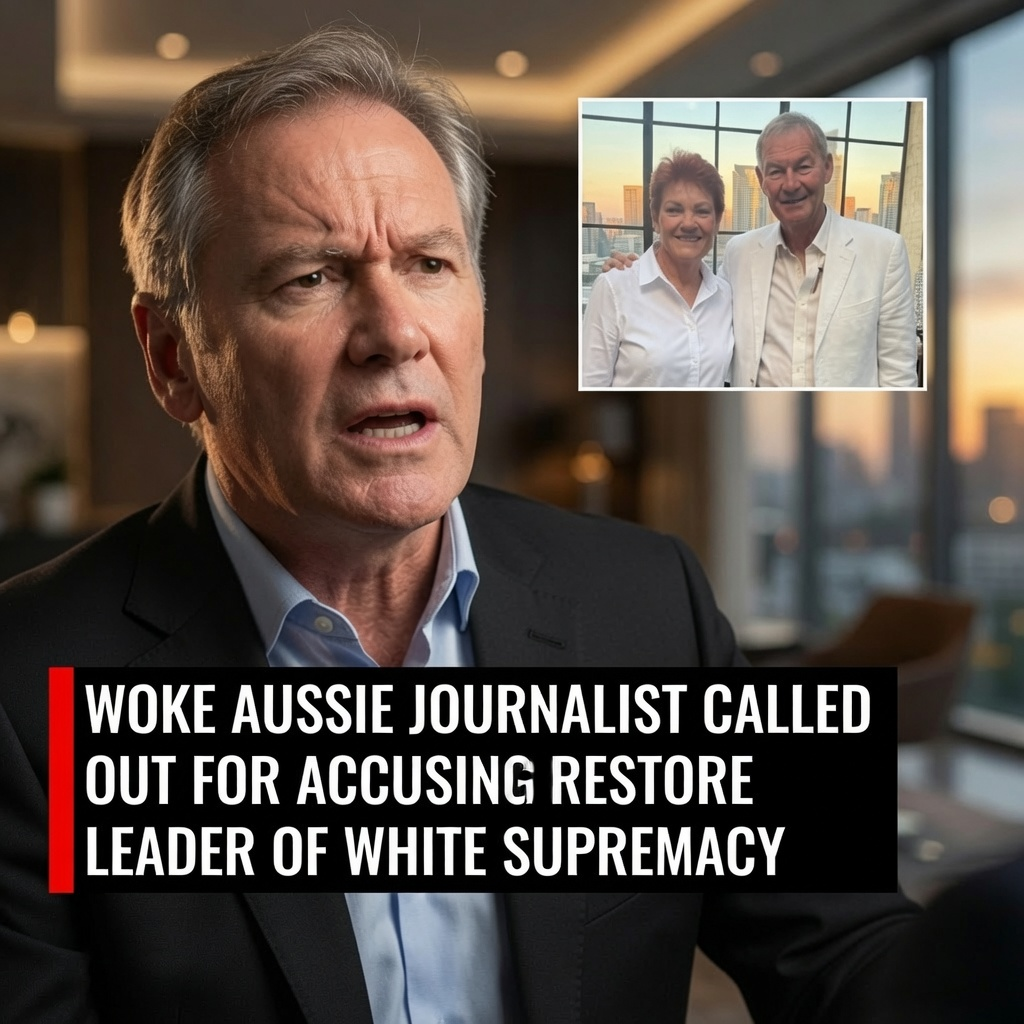
The exchange took place during a 7NEWS Spotlight documentary that followed Hanson on her controversial British tour, where she met several prominent anti-immigration figures and discussed migration policies with conservative politicians.
During the interview, veteran Australian journalist Liam Bartlett asked Lowe why he believed One Nation had experienced a surge in support in Australia.
Lowe responded by saying he believed Hanson was offering what he described as “common-sense” solutions to issues facing “a lot of Anglo-Saxon countries”.
It was that phrase that prompted Bartlett’s follow-up question.
Referring to Lowe’s repeated use of the expression “Anglo-Saxon”, Bartlett suggested some people could interpret the language as being associated with white supremacy.
“I notice you use that expression quite often, Anglo-Saxon. A lot of people could interpret that as almost, if you’ll pardon the expression, white supremacy,” Bartlett said during the interview.
Lowe immediately rejected that characterisation.
He began responding that he did not believe the phrase amounted to white supremacy before Bartlett continued the discussion by observing that language carries particular significance in modern political debate.
Lowe replied that he no longer believed politicians should constantly modify their language out of concern over how others might interpret particular words.
“We just say we don’t care anymore. We’ve had enough of all that nonsense. People can say what they want—we don’t care,” he said.
After the program aired, a short clip of the exchange circulated widely across social media platforms, where supporters and critics offered sharply different interpretations of both Bartlett’s questioning and Lowe’s response.
Lowe later shared his own version of the exchange online, describing the suggestion that the phrase “Anglo-Saxon” implied white supremacy as “endless nonsense”.
The interview formed part of a broader Spotlight investigation into Pauline Hanson’s UK visit.
Originally promoted as a documentary examining immigration and demographic change in Britain, the program ultimately focused heavily on Hanson’s meetings with controversial figures including Restore Britain leader Rupert Lowe and anti-immigration activist Tommy Robinson, as well as challenging Hanson over her political positions and leadership ambitions.
Following the broadcast, Hanson and senior One Nation figures accused Seven of producing what they described as a “stitch-up”.
They released an earlier production proposal from the program which they argued showed the original concept was intended to focus primarily on immigration before evolving into a broader examination of Hanson herself and her political associations.
Seven Network rejected those criticisms, stating the documentary represented balanced journalism developed over several months as events unfolded.
The network said editorial decisions reflected developments that occurred during production and defended the final program as fair and comprehensive.
The controversy has also reignited discussion about the historical meaning of the term “Anglo-Saxon”.
In historical scholarship, the expression traditionally refers to the Germanic peoples who settled much of England during the early medieval period and, by extension, to aspects of England’s legal, linguistic and cultural heritage.
In contemporary political debate, however, the phrase has sometimes become contentious because some extremist groups have used it in discussions about ethnicity, identity or nationalism.
Many historians note that the historical term itself is not inherently synonymous with white supremacist ideology, although its meaning can depend heavily on context and the way it is used.
That distinction lay at the heart of Bartlett’s questioning.
Rather than directly accusing Lowe of holding white supremacist beliefs, the interviewer suggested some audiences might interpret repeated references to “Anglo-Saxon” countries in that way.
Lowe rejected the suggestion outright and maintained he was referring to countries with shared historical, legal and political traditions rather than race.
The exchange illustrates the increasingly sensitive nature of political language in debates over immigration and national identity.
Supporters of politicians such as Lowe and Hanson argue that terms relating to history, culture and national heritage are too readily portrayed as controversial.
Critics argue that because certain historical expressions have been adopted by extremist movements in some contexts, journalists are justified in asking public figures how they intend those words to be understood.
The interview also took place during a period of heightened political discussion about immigration in both Britain and Australia.
Restore Britain has campaigned for substantially lower migration, stricter border enforcement and large-scale deportations of people without legal permission to remain in the United Kingdom.
Pauline Hanson has expressed support for many of the party’s positions during her UK visit while arguing Australia should avoid what she believes are Britain’s migration mistakes.
Meanwhile, journalists covering these debates continue to face scrutiny over how they question politicians whose views on immigration attract strong public disagreement.
Some observers praised Bartlett for testing Lowe’s language and inviting clarification on terminology that has become politically sensitive.
Others argued the questioning unfairly implied motives that Lowe had not expressed.
The differing reactions reflect a broader challenge confronting modern political journalism: balancing rigorous questioning of public figures with ensuring interview subjects have the opportunity to explain the intended meaning of contested language.
For Rupert Lowe, the interview has become another example of what he argues is an excessive focus on semantics rather than policy.
For his critics, however, the exchange demonstrated why precise language matters when discussing identity, culture and immigration.
The discussion generated by the Spotlight interview therefore extends well beyond a single phrase, highlighting the continuing debate over political rhetoric, media scrutiny and how public figures communicate contentious ideas in an increasingly polarised political environment.






