Prime Minister Anthony Albanese’s keynote address to the Australian Labor Party’s 50th National Conference has become the latest flashpoint in Australia’s increasingly polarised political debate, with supporters praising the speech as a defence of multicultural Australia while conservative commentators argue Labor devoted excessive attention to Pauline Hanson’s One Nation.
Held in Adelaide, the three-day conference served as Labor’s principal policy forum, bringing together delegates from across the country to determine the party’s platform for the coming parliamentary term.
During his address, Albanese promoted Labor’s agenda on workplace relations, economic reform and social cohesion while attacking what he described as divisive politics.
He also criticised One Nation, arguing Australia succeeds when it embraces diversity rather than fear, and rejected recent calls from Pauline Hanson for Australia to become “monocultural”.
The speech immediately prompted a strong response from conservative commentators.
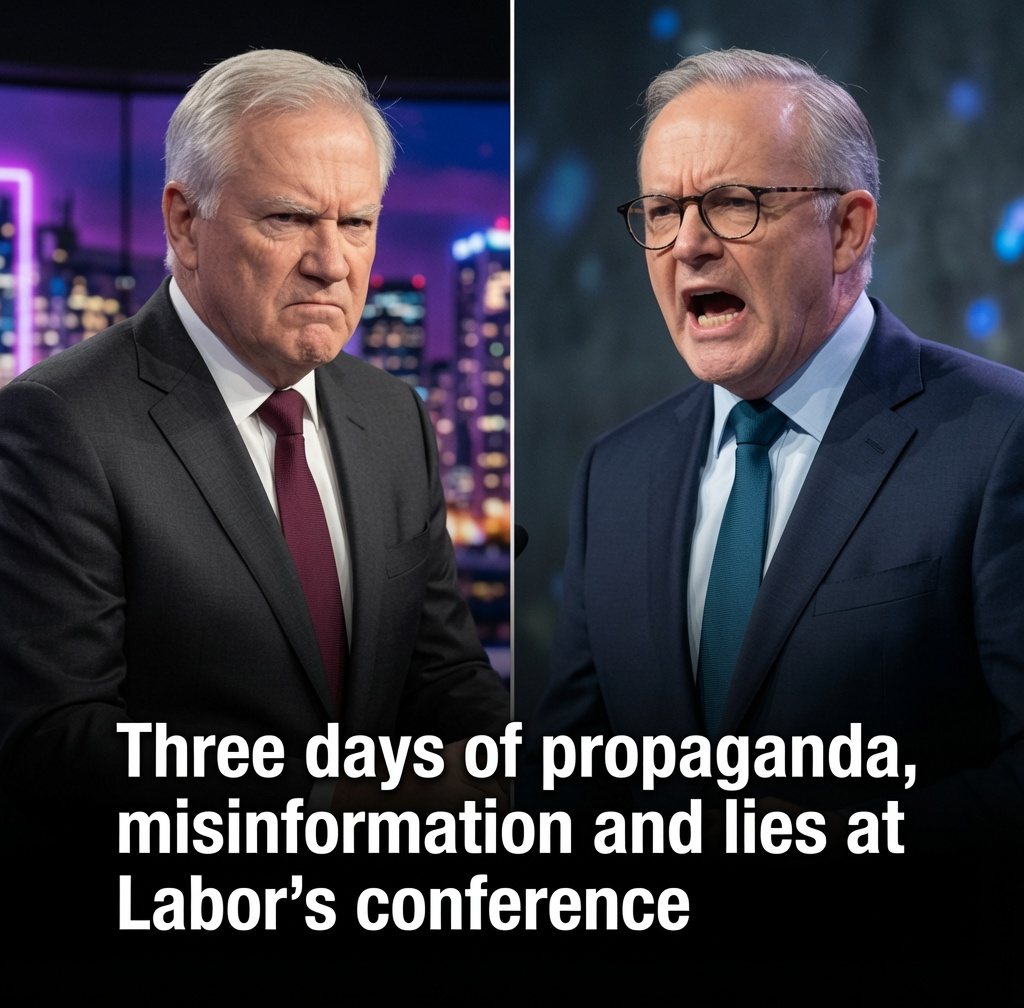
Sky News host Andrew Bolt argued Labor had devoted disproportionate attention to One Nation instead of focusing on the Coalition, suggesting this reflected growing concern inside government about Pauline Hanson’s rising political profile.
Bolt contended that repeatedly attacking One Nation risked elevating the party’s importance in the minds of voters rather than diminishing its appeal.
The article supplied by the source adopts that argument as its central theme, asserting that Labor’s conference demonstrated anxiety about One Nation’s recent electoral momentum.
It also links the conference to broader criticism of the Albanese Government’s economic record, including claims that Australian real wages have fallen by 5.1 per cent since 2021.
That figure has featured prominently in recent political debate after former ACTU secretary Bill Kelty told a parliamentary committee that Australia’s productivity and living standards had become a serious concern, describing the situation as evidence that “something is wrong with this place”. Economists have likewise warned that weak productivity growth and stagnant living standards remain major long-term challenges, although the causes and policy solutions remain contested.
The conference itself covered a considerably broader agenda than the debate over One Nation.
Delegates considered changes to Labor’s national platform on workplace relations, housing, taxation, diversity, anti-racism measures, gambling reform and international affairs, while the Prime Minister announced several policy initiatives including expanded superannuation coverage for younger workers and the creation of a new Fair Work Court designed to streamline workplace disputes.
One of the more contentious moments in Albanese’s speech involved his response to Hanson’s recent comments advocating a “monocultural” Australia.
The Prime Minister argued Australia’s multicultural identity has strengthened the nation and rejected suggestions that cultural diversity is incompatible with national unity.
Labor speakers throughout the conference similarly portrayed multiculturalism as a defining feature of modern Australia, while accusing One Nation of promoting unnecessary division.
The supplied source disputes that characterisation.
It argues that Labor’s emphasis on Welcome to Country ceremonies, anti-racism initiatives and multicultural policies demonstrates a focus on identity politics rather than issues such as wages, housing affordability and electricity prices.
The article also criticises the inclusion of an Acknowledgement of Country and Welcome to Country ceremony during the conference opening, presenting these ceremonies as examples of political priorities with which it disagrees.
Welcome to Country ceremonies, however, have become common at major government, parliamentary, sporting and community events across Australia over recent decades. Supporters view them as recognition of Aboriginal and Torres Strait Islander peoples as the Traditional Custodians of Country, while critics question their increasing frequency or public funding. The issue remains the subject of ongoing political debate rather than settled national consensus.
The conference also highlighted Labor’s broader messaging strategy ahead of the next federal election.
Rather than focusing solely on the Liberal–National Coalition, senior ministers repeatedly challenged One Nation’s recent policy positions on immigration, multiculturalism and national identity.
Political analysts have noted that this reflects One Nation’s growing influence in public debate following a significant increase in support across several opinion polls during recent months, even though Labor continues to maintain an advantage on a two-party-preferred basis in many national surveys.
Whether Labor’s strategy benefits or harms the government politically remains uncertain.
Some commentators argue that directly confronting One Nation helps distinguish Labor’s values and limits the appeal of populist politics.
Others believe repeatedly mentioning the party gives it additional publicity and reinforces the perception that it has become Labor’s principal political challenger.
Those competing interpretations are reflected in the contrasting media coverage surrounding the conference.
Conservative commentators largely framed the event as evidence of a government distracted by cultural debates while living standards remain under pressure.
Government supporters, by contrast, argued the conference demonstrated Labor’s willingness to defend multiculturalism while advancing reforms on employment, workplace rights and economic policy.
Economic performance also remains central to the political contest.
Australia continues to face weak productivity growth, persistent cost-of-living pressures and housing affordability challenges, with economists from a range of perspectives calling for structural reforms to improve long-term living standards. Debate continues over the extent to which recent movements in real wages reflect global inflation, domestic productivity, government policy or broader economic conditions.
The conference therefore became more than an internal Labor gathering.
It evolved into a broader contest over the issues likely to define Australian politics over the next parliamentary term: economic management, migration, national identity, Indigenous recognition and the continuing rise of minor parties.
For Labor, the challenge is to convince voters its policy agenda addresses everyday concerns while maintaining its commitment to multiculturalism and social cohesion.
For One Nation, the attention generated by repeated references from political opponents and commentators alike has reinforced the party’s position as a prominent voice in debates over immigration and Australian identity.
Whether that ultimately translates into electoral gains remains uncertain, but the exchanges during Labor’s national conference illustrate how the political conversation has shifted.
As Australia moves further into the current parliamentary term, the contest is increasingly being fought not only over economic policy but also over competing visions of national identity and the issues that deserve the greatest political attention.






