After three decades in federal politics, Prime Minister Anthony Albanese has offered one of his most candid reflections yet on the events, personalities and policy shifts that have shaped his career, acknowledging that experience has changed many of his views—including his once firmly held positions on immigration and border protection.
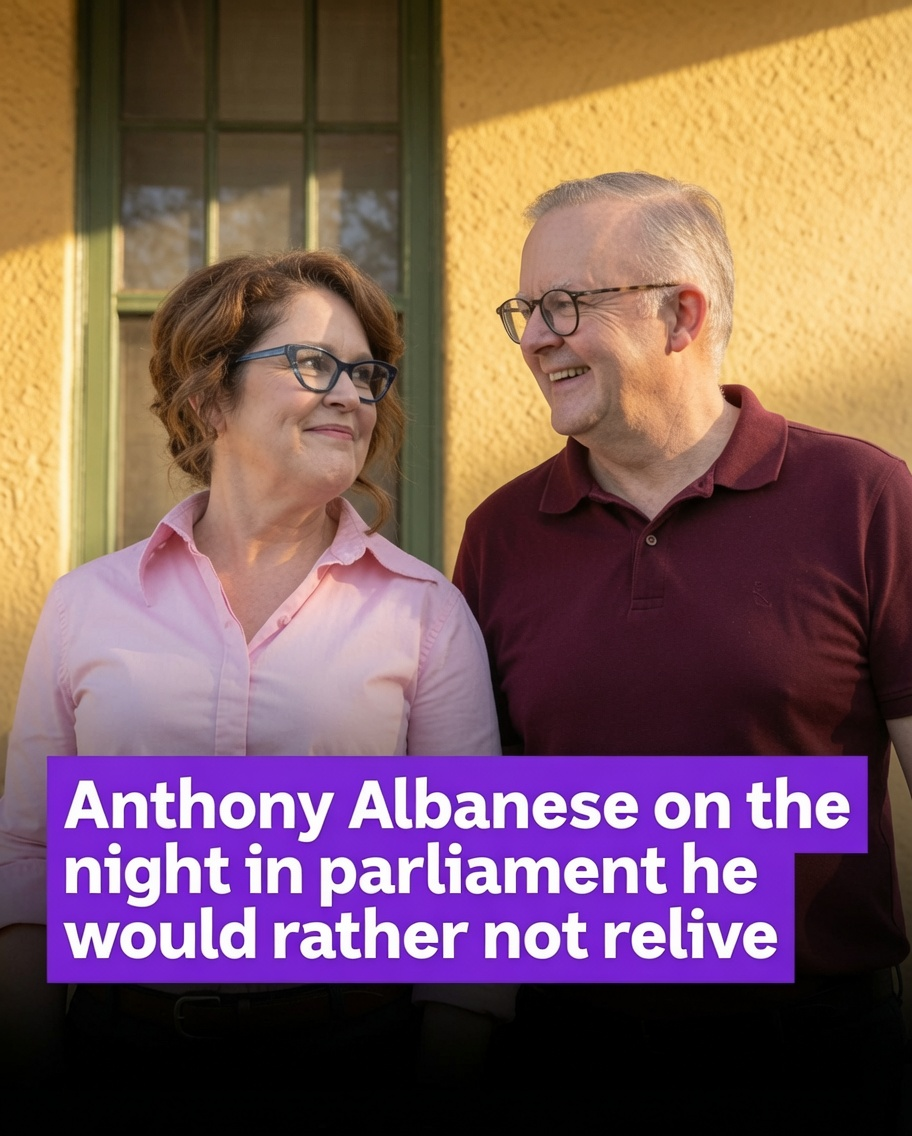
Speaking to ABC presenter Annabel Crabb on Kitchen Cabinet, Albanese looked back on 30 years in Parliament House, describing the 2010 leadership coup that removed Kevin Rudd as prime minister as the single political day he would least like to relive.
The interview provided an unusually personal insight into the prime minister’s political journey, from his early years as a prominent figure on Labor’s Left to leading a government that has embraced stronger border controls and a more centrist governing philosophy.
Asked which moment in politics he would erase if given the chance, Albanese did not hesitate.
He pointed to the dramatic events of June 2010, when Julia Gillard successfully challenged Kevin Rudd for the Labor leadership in one of the most consequential internal party coups in Australian political history.
“Many of the people who were behind the change of leader were elected in 2007,” Albanese said.
He argued that some newer MPs underestimated the privilege and responsibility of governing.
“They didn’t, in my view, value enough the difference of being in government and being in opposition,” he said.
“Being in government, every day, is better than being in opposition. I know because unfortunately I’ve experienced too long in opposition.”
Albanese’s comments carry particular weight given the trajectory of his own career.
First elected to Parliament in 1996 on the day Paul Keating’s Labor government suffered a heavy electoral defeat, Albanese spent the majority of his parliamentary life on the opposition benches before eventually becoming prime minister.
Of his 30 years in Parliament, around 20 were spent in opposition, making him one of Labor’s most experienced surviving parliamentarians and the party’s longest-serving current caucus member.
His election as prime minister in 2022 marked the culmination of decades of political persistence, and his re-election has placed him in rare company.
Only former Liberal prime minister John Howard has both completed a full term and won re-election as prime minister during the 21st century before Albanese achieved the same feat.
That comparison prompted Albanese to offer generous praise for a political opponent with whom he frequently clashed during his years on the opposition frontbench.
Although the pair represented opposing political philosophies, Albanese acknowledged Howard’s political strengths.
“John Howard understood his party. He had control of the caucus,” Albanese said.
He also credited Howard with resisting the constant pressure of the modern news cycle.
“Howard understood that the 24-hour media cycle isn’t what you have to be focused on. Credit where credit’s due: it’s a substantial achievement to govern for 11 years.”
Despite that admiration, Albanese suggested Howard may have remained in office longer than was politically advantageous.
He speculated that had Peter Costello succeeded Howard before the 2007 federal election, Labor’s path back to government could have been considerably more difficult.
The interview also revealed how Albanese’s own political thinking has evolved over three decades.
Long associated with Labor’s Hard Left faction during the early part of his career, the prime minister acknowledged that many of his younger beliefs no longer reflect the positions he holds today.
“If I met my younger self, we’d be having a disagreement—no question about that,” he said.
Rather than viewing those changes as inconsistency, Albanese argued they reflect the realities of experience.
“You learn, and you can change your position,” he told Crabb.
Perhaps the clearest example is immigration policy.
Earlier in his parliamentary career, Albanese opposed several of the tougher border protection measures introduced by Coalition governments, including policies relating to offshore processing and boat turnbacks.
Today, however, his government maintains many of Australia’s strict border protection settings while arguing they are essential to preserving confidence in the migration system.
Explaining that shift, Albanese said an orderly migration program ultimately protects both Australia’s borders and the country’s long-standing commitment to successful multiculturalism.
“If you want to run a migration system that’s respectful of the contribution that migrants make, it has to be orderly,” he said.
He suggested similar lessons were now confronting centre-left parties overseas.
Albanese pointed specifically to Britain’s Labour government and the United States Democratic Party, arguing both had experienced political consequences from failing to adequately address public concerns about immigration.
“That’s the lesson that the British Labor government is dealing with at the moment,” he said.
“It’s a lesson that the US Democrats should have learnt but didn’t. And it’s something that we have.”
At the same time, Albanese rejected suggestions that stronger border controls should come at the expense of respect for migrants.
He insisted the government’s approach remains grounded in Australia’s multicultural values and rejected the divisive rhetoric that has characterised some immigration debates in previous decades.
“Some of the positions are completely consistent, which is always to seek to bring people together,” he said.
The discussion comes as immigration has once again become one of Australia’s defining political issues.
Housing affordability, pressure on infrastructure and record levels of net overseas migration have intensified debate across the political spectrum, with both major parties promising to improve the management of Australia’s migration system.
At the same time, the growing electoral support for Pauline Hanson’s One Nation has renewed public discussion about border security, migration numbers and national identity.
Albanese’s comments suggest Labor believes maintaining firm border controls is now politically and practically essential while continuing to defend Australia’s multicultural framework.
Beyond policy, the interview also offered insight into Albanese’s broader philosophy of leadership.
Reflecting on three decades in Parliament, he argued that successful governments require patience, stability and an understanding that political leadership should not be driven solely by daily headlines.
He has increasingly described his government as occupying the “radical centre”—a phrase intended to capture Labor’s attempt to combine progressive social values with pragmatic economic and national security policies.
Albanese also expressed concern about the increasingly polarised nature of public debate.
He argued that social media algorithms and global political tensions have contributed to a more confrontational political environment, making respectful discussion more difficult than in previous decades.
Throughout the conversation, however, one theme remained constant: the value of political experience.
From rebuilding Labor after the devastating 1996 election defeat to witnessing the internal turmoil of the Rudd-Gillard years and eventually leading the party back into government, Albanese portrayed his career as one shaped as much by setbacks as by victories.
Those experiences, he suggested, explain why he now approaches politics differently from the young activist who first entered Parliament three decades ago.
Rather than seeing changed opinions as a weakness, the prime minister argued they reflect the practical lessons that only long service in public life can provide.
As Labor begins another parliamentary term following its re-election, Albanese’s reflections offer a rare glimpse into how one of Australia’s longest-serving political figures believes leadership, government and even personal convictions can evolve over time without abandoning broader principles.






