Queensland authorities are investigating what could become the state’s first confirmed case of the highly pathogenic H5 bird flu after a dead migratory seabird washed ashore on Moreton Island, raising fresh concerns about the continued spread of the virus along Australia’s coastline.
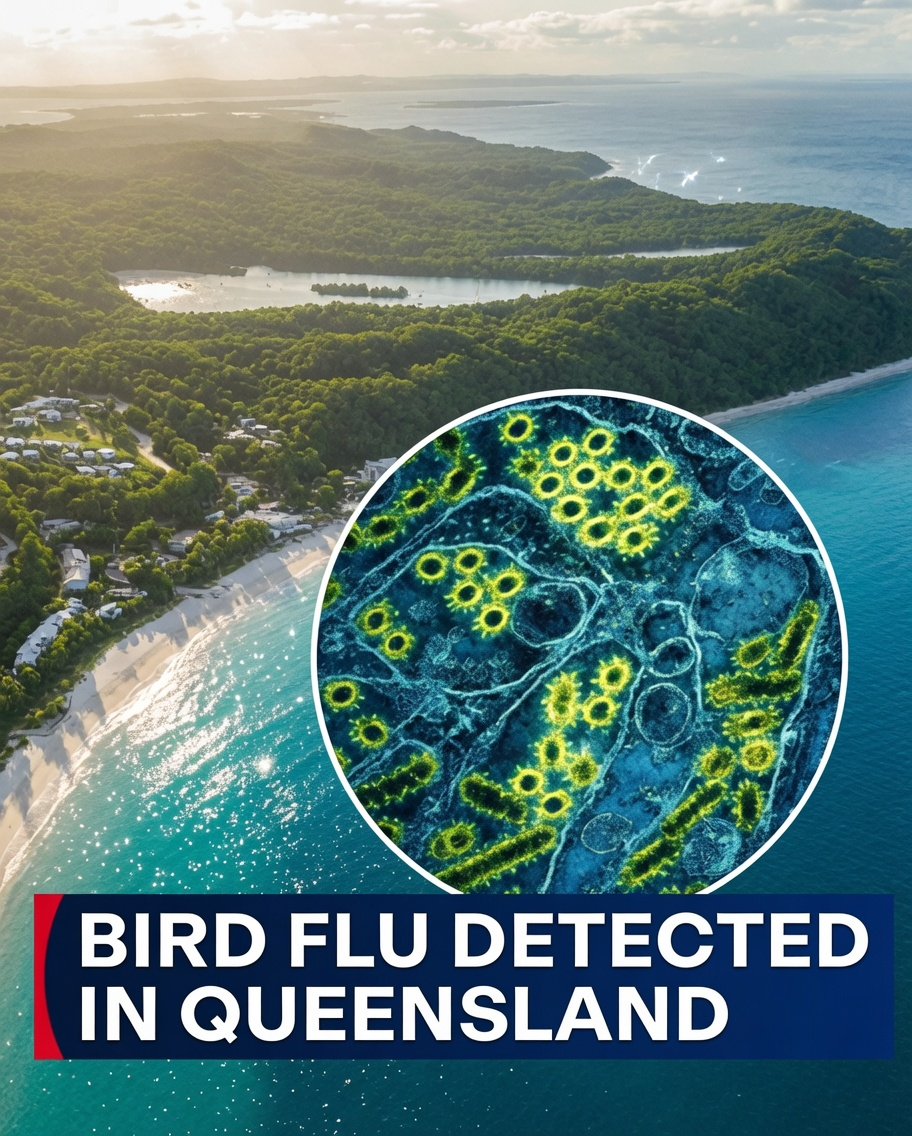
The bird, identified as a petrel, was discovered on Moreton Island off the coast of south-east Queensland. Initial laboratory testing returned a suspected positive result for H5 highly pathogenic avian influenza (HPAI), with samples subsequently sent to the CSIRO’s Australian Centre for Disease Preparedness for confirmatory testing. Queensland officials say the result will not be considered confirmed until that second round of testing has been completed.
If confirmed, the detection would mark Queensland’s first case of H5 bird flu since the virus reached mainland Australia in June 2026. The disease was first detected in migratory seabirds in Western Australia before later being identified in South Australia and New South Wales as infected birds continued their seasonal migration.
Queensland Primary Industries Minister Tony Perrett said authorities were taking the suspected detection seriously but stressed there was no evidence the virus had spread to poultry or native bird populations within the state.
“There are currently no detections in poultry, and the risk to human health remains unchanged,” the minister said, encouraging Queenslanders to remain vigilant while continuing normal consumption of poultry products and eggs, which remain safe when properly handled and cooked.
State Chief Veterinary Officer Dr Allison Crook said the discovery highlighted the importance of Australia’s surveillance program for migratory wildlife. Since H5 bird flu was first detected in Australian wild seabirds, thousands of reports from members of the public have helped authorities monitor the disease’s spread and respond quickly to suspected cases.
Before the Moreton Island detection, Australia had recorded 17 confirmed cases of H5 bird flu in wild seabirds—10 in Western Australia, five in South Australia and two in New South Wales. The Queensland case, if confirmed, would become the nation’s 18th detection. Importantly, authorities continue to report no evidence of infection in commercial poultry or the wider agricultural industry and no signs of large-scale wildlife mortality within Australia.
The H5 strain currently circulating is the highly pathogenic form of avian influenza that has caused unprecedented outbreaks around the world since 2021.
Globally, the virus has devastated wild bird populations across Europe, North America, South America and Antarctica, while also affecting numerous mammal species including seals, sea lions and foxes. Tens of millions of poultry have been culled internationally in efforts to contain outbreaks, making the disease one of the most significant animal health events in recent decades.
Although Australia remained free of this H5 lineage for several years after it spread internationally, scientists warned that its arrival was increasingly likely because migratory seabirds regularly travel between Australia and regions where the virus has become established.
Petrels, shearwaters, skuas and gulls are among the species capable of carrying the virus over long distances, making coastal surveillance a critical component of Australia’s biosecurity response.
The discovery on Moreton Island has renewed concern among wildlife conservation organisations.
The Invasive Species Council says surveillance alone will not be enough to protect Australia’s vulnerable wildlife if the virus becomes established.
Policy Director Dr Carol Booth has called on governments to invest A$200 million in wildlife resilience measures, including habitat restoration, predator control and recovery programs for threatened species.
“We can’t stop this virus, but we can boost the capacity of wildlife to survive and recover from outbreaks,” Dr Booth said.
She warned that overseas experience demonstrated surveillance could identify the virus but could not prevent widespread wildlife losses once infection reached susceptible populations. Millions of wild birds and marine mammals have already died internationally as a result of the current H5 outbreak, she said, highlighting the importance of strengthening Australia’s preparedness before similar impacts occur.
Australian wildlife experts have echoed those concerns, noting that many native seabird colonies contain species with relatively small populations. A significant outbreak among breeding colonies could have long-term conservation consequences, particularly for threatened species with limited reproductive rates.
For now, biosecurity authorities continue to emphasise that the public health risk remains low.
Australia’s Department of Agriculture, Fisheries and Forestry states there is currently no evidence of sustained human-to-human transmission of the H5 virus detected in Australian wildlife. The Australian Centre for Disease Control likewise considers the risk to the general public to be low, although people should avoid direct contact with sick or dead birds.
Members of the public are being urged not to touch dead or visibly sick birds or marine mammals. Instead, suspected cases should be reported immediately to the Emergency Animal Disease Hotline so trained personnel can assess whether testing is required. Reporting suspected cases assists authorities in tracking the spread of the disease and protecting both wildlife and Australia’s poultry industry.
Queensland has spent recent weeks preparing for the possibility that H5 bird flu would eventually reach the state. Biosecurity officers have expanded surveillance efforts, worked with wildlife carers and veterinarians, and reminded poultry producers to maintain strict biosecurity practices to minimise the risk of transmission from wild birds.
The suspected Moreton Island case demonstrates why those preparations have been considered necessary. The island lies along important migration routes used by seabirds travelling between Australia and the Southern Ocean, making it one of several coastal locations where authorities have increased monitoring during the migration season.
Scientists caution that additional detections in wild birds are likely as migration continues, even if Australia avoids outbreaks in poultry.
At present, officials stress there is no evidence that Australia’s commercial poultry industry has been affected and no indication of widespread deaths among native wildlife. Nevertheless, they say early detection remains essential to limiting the impact of the virus should further cases emerge.
CSIRO’s confirmatory testing is expected to determine whether the Moreton Island seabird was infected with H5 high pathogenicity avian influenza. Until those results are available, Queensland authorities are treating the case as a suspected positive while continuing enhanced surveillance across the state.






