Australia has launched a major new education partnership with the Philippines aimed at strengthening teaching quality, expanding workforce-ready skills and preparing young Filipinos for the demands of a rapidly changing global economy.
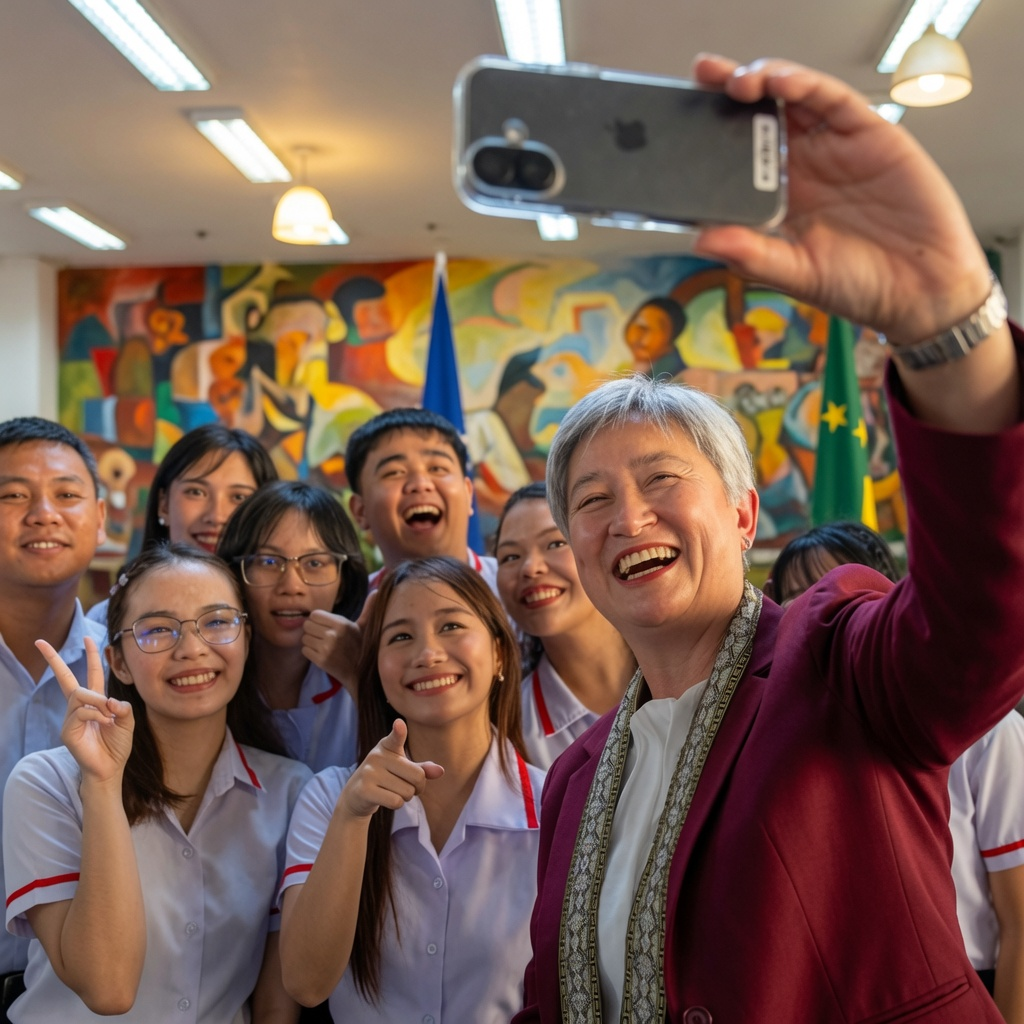
The new initiative, known as Education Quality for Inclusive Prosperity (EQUIP), was officially launched by Australian Foreign Minister Penny Wong during a visit to the Philippines, marking the latest milestone in more than three decades of education cooperation between the two countries.
The five-year program is valued at 1.6 billion Philippine pesos (approximately A$40 million) and is designed to help improve senior secondary education while equipping students with practical skills that better match the needs of an evolving labour market.
Reflecting on the launch, Wong said one of the most rewarding aspects of her role was meeting young people and hearing about their ambitions for the future.
She said Australia and the Philippines shared a common belief that education creates opportunity, strengthens communities and empowers the next generation.
“This week I helped launch Education Quality for Inclusive Prosperity (EQUIP), a new Australia–Philippines education partnership that will support quality teaching and help prepare students for the opportunities of a rapidly changing world,” Wong said.
She added that Australia had partnered with the Philippines on education for more than 30 years and that EQUIP represented the next stage of that enduring relationship.
The program will support reforms led by the Philippine Government, particularly within senior high school education, helping students gain practical workplace skills before they enter employment or continue into higher education.
According to Australia’s Department of Foreign Affairs and Trade, EQUIP is intended to strengthen education quality while improving pathways from school into the workforce. It will support curriculum development, skills training, policy reform and closer collaboration between education providers and industry.
A central objective is ensuring graduates leave school with skills that are relevant to employers in sectors experiencing rapid technological and economic change.
The program will be delivered in partnership with the Philippine Department of Education and other government agencies responsible for technical education and workforce development.
Australian officials say the initiative aligns with the Philippines’ education reform agenda, which aims to improve learning outcomes while making graduates more competitive in both domestic and international labour markets.
Beyond classroom learning, EQUIP will also encourage stronger links between schools, vocational education providers and employers, allowing students to gain practical experience and nationally recognised skills certifications before completing secondary school.
During her visit, Wong also highlighted the contribution of her home state of South Australia in strengthening bilateral education ties.
She noted that South Australian institutions have developed growing partnerships with Philippine education providers in vocational education, skills training and workforce development.
Those collaborations are expected to complement the broader objectives of EQUIP by sharing expertise in technical and vocational education while helping students acquire skills needed in modern industries.
Vocational education has become an increasingly important area of cooperation between Australia and Southeast Asian countries as governments seek to address workforce shortages and improve productivity through better skills development.
Australia has long promoted Technical and Vocational Education and Training (TVET) as a pathway into secure employment, and officials believe elements of that model can support Philippine workforce priorities.
The launch of EQUIP builds on Australia’s long history as one of the Philippines’ largest education development partners.
For decades, Australian assistance has supported teacher training, curriculum reform, disaster-resilient school infrastructure, education leadership programs and scholarships for Filipino students studying in Australia.
Previous initiatives have included the Basic Education Sector Transformation (BEST) program and a range of scholarship and institutional partnership projects designed to strengthen education quality throughout the Philippines.
Education remains one of the strongest pillars of the Australia–Philippines relationship, alongside trade, defence cooperation and regional security.
Thousands of Filipino students have studied in Australia over recent decades, while Australian universities and vocational institutions continue to collaborate with Philippine counterparts on research, teacher development and professional training.
The growing educational relationship has also helped strengthen broader people-to-people links between the two countries, creating alumni networks and professional partnerships that continue long after students complete their studies.
Australian qualifications are widely recognised in the Philippines, particularly in fields such as engineering, health, education and business, contributing to strong demand for Australian education among Filipino students.
The timing of EQUIP reflects broader economic challenges facing many countries in the Indo-Pacific.
Rapid technological change, digital transformation and evolving labour market requirements have increased pressure on education systems to produce graduates equipped with practical, adaptable and transferable skills.
Australian officials say the new partnership is intended to help address those challenges by ensuring students graduate with stronger employability skills while supporting inclusive economic growth across the Philippines.
For Australia, the initiative also reinforces its strategic commitment to Southeast Asia.
Successive Australian governments have identified education as one of the most effective ways of building long-term regional partnerships, strengthening economic resilience and deepening diplomatic relationships.
By investing in education, Australia aims not only to improve learning outcomes but also to foster stronger institutional cooperation and closer ties between future generations of Australians and Filipinos.
Wong said the partnership ultimately represented an investment in both young people and the enduring friendship between the two nations.
As EQUIP begins implementation, educators in both countries will work together on improving teaching quality, strengthening vocational pathways and ensuring students are better prepared for future careers in an increasingly competitive global economy.
The program’s success will be measured not simply by new policies or funding commitments, but by whether more young Filipinos leave school with the knowledge, practical skills and confidence needed to thrive in the workforce of tomorrow.






