One Nation leader Pauline Hanson has come under intense criticism after describing domestic violence as a “two-way street” during a radio interview, prompting a sharp response from Brittany Higgins and renewed debate over how Australian leaders discuss family violence.
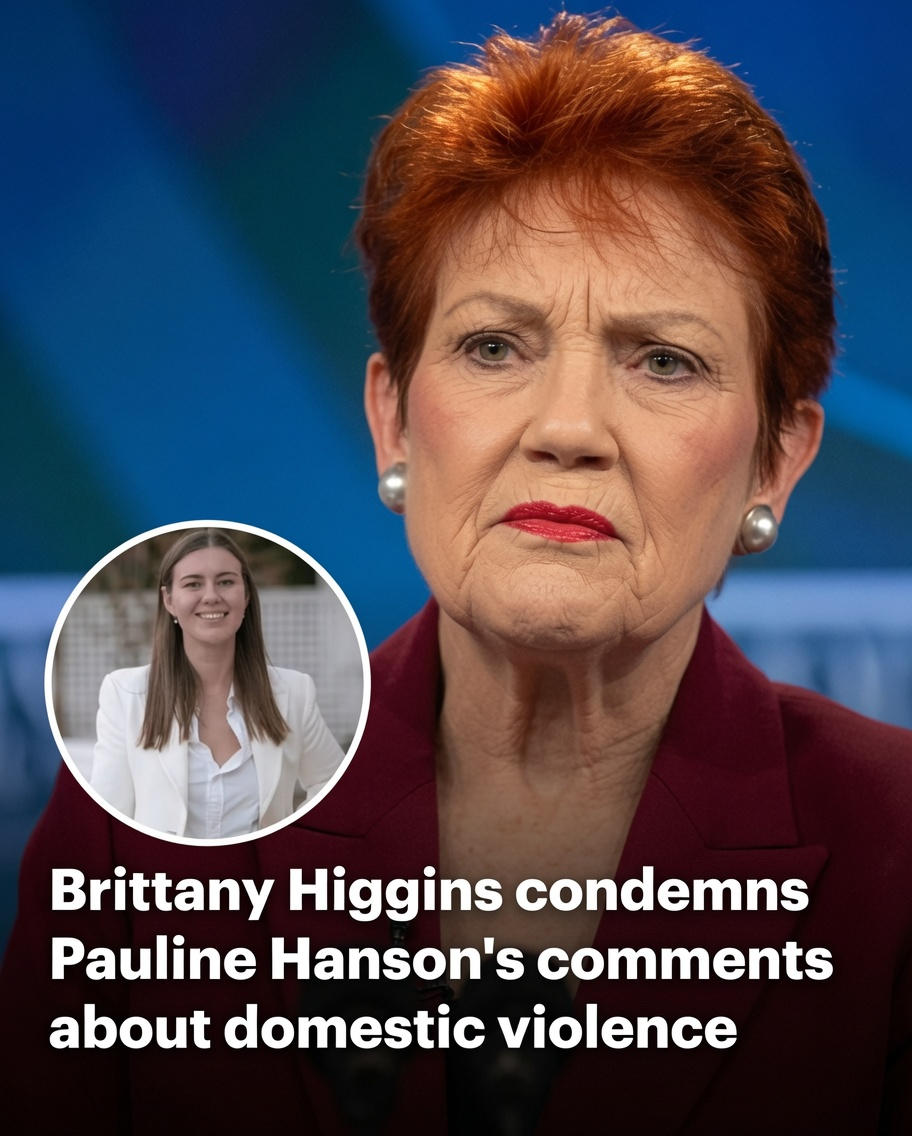
The controversy began during an interview on Brisbane radio station 4BC, where Hanson was asked about men who abuse their partners.
Responding to the question, the Queensland senator said domestic violence was “wrong” but argued it was “also a two-way street”, adding that women could also “lose their cool” under the pressures created by rising living costs, unemployment concerns and financial stress.
Hanson, who has previously spoken publicly about experiencing domestic violence in her own life, went on to encourage women who feel unsafe in abusive relationships not to remain in those situations.
“If these women are getting abused by men out there, then don’t put up with it,” she said, while acknowledging domestic violence remained “a scourge”.
Those comments quickly triggered widespread criticism from domestic violence advocates, political figures and victim-survivors, who argued the remarks oversimplified an issue that is often far more complex and dangerous than simply choosing to leave.
Former Liberal staffer Brittany Higgins was among the first high-profile Australians to publicly respond.
Posting on social media, Higgins accused Hanson of promoting “victim-blaming rhetoric” at a time when Australia continues to grapple with high levels of violence against women.
Higgins wrote that normalising such language was “atrocious”, pointing to the number of women killed this year in alleged acts of gender-based violence and arguing public figures should avoid statements that could shift responsibility away from perpetrators.
Her intervention attracted significant public attention, particularly given Higgins has remained an outspoken advocate on issues relating to violence against women since her own experiences became the subject of national discussion.
The criticism did not come from Higgins alone.
Domestic violence organisations, frontline support services and policy experts argued Hanson’s advice ignored well-established evidence showing that leaving an abusive relationship is frequently the period of greatest danger for victim-survivors.
Advocates said many victims remain with abusive partners not because they accept the violence, but because they fear retaliation, homelessness, financial hardship or losing access to their children.
Several experts stressed that encouraging people to “just leave” fails to recognise the significant planning and specialist support often required to leave safely.
The timing of the controversy also coincided with new research highlighting the growing financial barriers facing Australians attempting to escape family violence.
Anglicare Australia released research showing the estimated cost of leaving a violent relationship has increased by approximately 71 per cent since 2016.
The organisation calculated that expenses including emergency accommodation, rental bonds, transport, childcare and replacing essential household items have pushed the average immediate cost of leaving above $7,000.
Claire Dunlop, Anglicare’s General Manager of Relationships and Wellbeing, said financial pressure was becoming another major obstacle preventing victim-survivors from reaching safety.
She said many people already required enormous courage to leave abusive relationships and that worsening housing affordability and living costs were making those decisions even more difficult.
“People can feel trapped between violence and financial insecurity,” Dunlop said, warning that economic circumstances should not be underestimated when discussing domestic violence responses.
Domestic violence specialists note that separation is statistically one of the highest-risk periods for serious assault or homicide.
Australian support organisations have long advised victim-survivors to seek assistance through police, specialist domestic violence services and safety planning before attempting to leave where possible, particularly when children are involved.
That context formed a central part of the criticism directed at Hanson’s remarks.
Advocates argued that while encouraging victims to seek safety is important, suggesting they simply should not tolerate abuse risks implying responsibility rests with those experiencing violence rather than those committing it.
Several organisations described the senator’s comments as unintentionally reinforcing harmful misconceptions surrounding domestic and family violence.
Hanson later defended herself against the criticism, maintaining that her comments had been taken out of context.
She argued she was condemning domestic violence rather than excusing perpetrators and pointed to her own personal experience as someone who had previously lived through an abusive relationship.
The One Nation leader also reiterated that men can be victims of domestic violence and argued public discussion should acknowledge abuse occurring in both directions, while accepting that women make up the overwhelming majority of victims in severe cases.
The debate soon expanded beyond the original interview.
Media reports resurfaced earlier podcast comments made by Hanson in which she criticised paid domestic violence leave and aspects of Australia’s family violence system, prompting renewed scrutiny of her broader views on the issue.
Those earlier remarks attracted fresh criticism from government ministers, legal experts and advocacy organisations, who argued they reflected a misunderstanding of the realities faced by victim-survivors.
The controversy also created political difficulties for One Nation on another front.
On the same day, senior members of the party sought to distance themselves from comments made by veteran senator Malcolm Roberts after a video resurfaced in which he appeared to suggest COVID-19 deaths had been “staged”. Roberts has previously faced criticism over statements questioning mainstream scientific and public health advice.
The overlapping controversies ensured One Nation remained at the centre of Australia’s political debate throughout the week as the party simultaneously continued to record strong polling in several national surveys.
The domestic violence debate has also highlighted broader questions about political language and public responsibility.
Researchers and victim advocacy groups have consistently argued that the way leaders discuss family violence can influence community attitudes, reporting behaviour and public understanding of coercive control.
While acknowledging that domestic violence can affect people of all genders, Australian government data continues to show women are disproportionately represented among victims of serious intimate partner violence and homicide.
Campaigners therefore argue that public messaging should carefully distinguish between recognising all victims and avoiding language that could unintentionally minimise patterns identified through decades of research.
For Higgins, advocates and many of Hanson’s political opponents, that distinction lay at the heart of the controversy.
For Hanson and her supporters, however, the criticism reflected disagreement over whether discussions about domestic violence should also acknowledge male victims and broader family pressures, including rising financial stress.
The episode has once again demonstrated how discussions surrounding domestic and family violence remain among the most politically and socially sensitive issues in Australia, where language used by public figures is increasingly scrutinised alongside government efforts to reduce violence against women and improve support for victim-survivors.






