The Australian Labor Party has come under renewed scrutiny after figures revealed it received more than $4 million in donations from gambling-related interests over the past five years, even as party members push for stronger measures to reduce gambling harm during Labor’s National Conference in Adelaide.
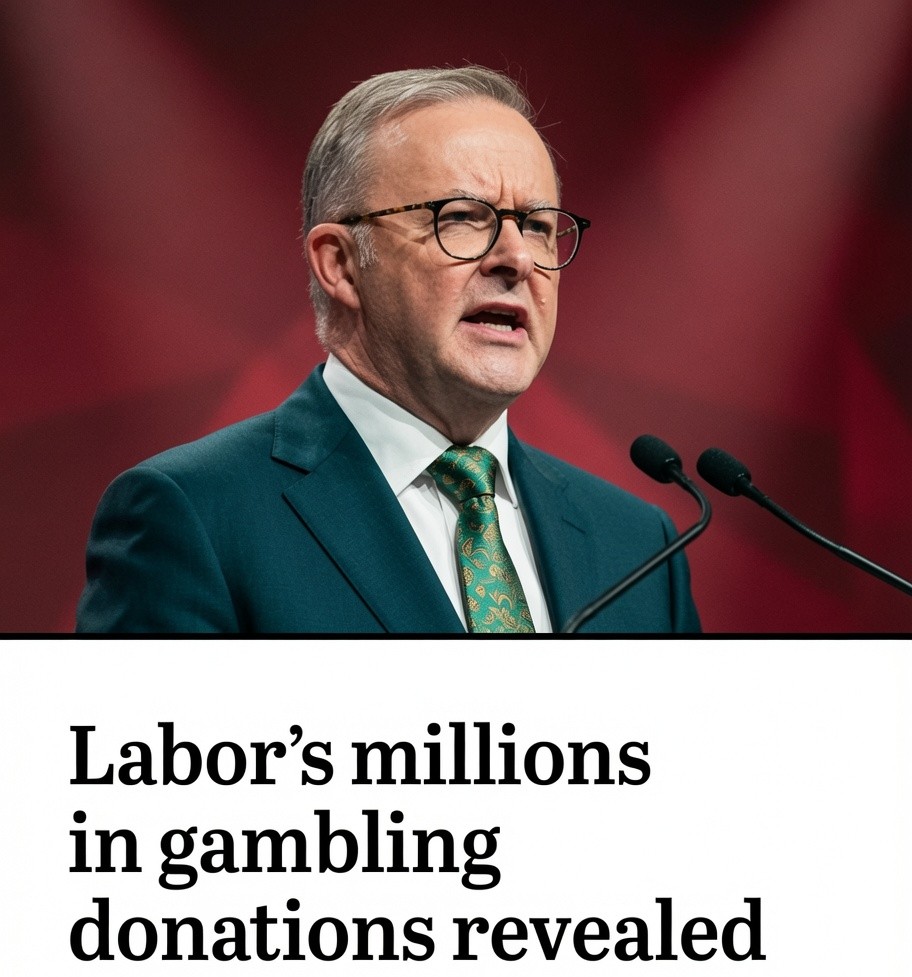
The debate has exposed continuing tensions inside Labor between those advocating tougher restrictions on gambling and others who argue the Albanese Government has already taken meaningful steps through its recently announced advertising reforms.
According to reports based on political donation disclosures, Labor received more than $4 million from gambling-related businesses and organisations between the 2020–21 and 2024–25 financial years. Around $1.5 million of that total was reportedly received in the period surrounding the most recent federal election. The donations came from a range of wagering companies, poker machine operators, hotels, clubs and hospitality businesses with interests in Australia’s gambling industry.
The renewed attention comes as delegates gather for Labor’s 50th National Conference, where the party is setting policy priorities for the next three years.
Members of Labor’s Left faction have been considering whether to push for stronger gambling reform commitments despite the Albanese Government having already introduced legislation that would tighten restrictions on gambling advertising.
While some delegates have argued for adopting the full suite of recommendations made by the late federal MP Peta Murphy, others believe the government’s existing package represents a practical compromise capable of securing parliamentary support.
The issue has become politically sensitive because one of Australia’s largest hospitality and poker machine operators, Endeavour Group, is sponsoring a Labor fundraising event being held alongside the national conference.
Although political donations from gambling businesses are legal under Australia’s disclosure rules, critics argue the timing creates an uncomfortable contrast between Labor’s public commitment to reducing gambling harm and its continued acceptance of financial support from the industry.
Supporters of stronger reform say the debate is not simply about donations but about maintaining public confidence that government policy is developed independently of major industry contributors.
The Albanese Government has repeatedly rejected suggestions that donations influence policy decisions, arguing its gambling reforms demonstrate a willingness to regulate the industry despite criticism from some operators.
Earlier this year the government introduced legislation that would significantly reshape gambling advertising across Australia.
The proposed reforms include limiting gambling advertisements during daytime television, requiring online platforms to provide users with an option to opt out of gambling advertising, and progressively removing gambling branding from sporting stadiums and team jerseys.
The package stops short of imposing a complete ban on gambling advertising, however, marking a significant departure from recommendations contained in the landmark parliamentary inquiry chaired by the late Labor MP Peta Murphy.
Murphy’s 2023 report, You Win Some, You Lose More, became one of the most influential reviews of gambling regulation in Australia.
After hearing evidence from health professionals, researchers, sporting organisations and people affected by gambling addiction, the bipartisan parliamentary committee recommended a comprehensive phased ban on all forms of online gambling advertising, alongside the creation of a national gambling regulator and stronger consumer protection measures.
The report concluded that gambling advertising had become pervasive across Australian sport and media and recommended a broad package of reforms aimed at reducing financial and social harm.
While many public health organisations welcomed the recommendations, implementation has remained politically contentious because of the gambling industry’s economic significance and its close relationship with sporting organisations and media companies.
Inside Labor, the issue has highlighted broader philosophical differences.
Many grassroots members and advocacy groups continue to argue for a complete advertising blackout, saying partial restrictions will do little to reduce gambling exposure, particularly among children and young people.
Others within the party believe an incremental approach is more likely to achieve lasting legislative reform while avoiding unintended consequences for sporting codes and broadcasters that currently rely on gambling sponsorship revenue.
The donations themselves also reflect the broader relationship between Australia’s political parties and the gambling industry.
Disclosure records published by the Australian Electoral Commission have historically shown that both major political parties receive donations from businesses connected to hotels, wagering, gaming machines and hospitality, although the value and sources of contributions vary from year to year. Political donations are publicly disclosed under Australia’s electoral funding laws, with donors above the disclosure threshold required to report contributions.
For Labor, gambling policy has become increasingly difficult to balance.
The party has sought to position itself as committed to reducing gambling harm while also maintaining relationships with sectors that employ hundreds of thousands of Australians through hotels, hospitality venues and licensed clubs.
Industry representatives argue gambling businesses operate under extensive regulation and provide significant employment, tourism and tax revenue. Public health advocates counter that gambling-related harm imposes substantial economic and social costs on families and communities each year.
Those competing arguments have become more prominent as awareness grows of the impact that gambling addiction can have on mental health, financial security and family wellbeing.
The National Conference itself serves as Labor’s highest policy-making body, bringing together delegates from state and territory branches, affiliated unions and the federal parliamentary caucus every three years.
While conference resolutions help shape the party’s platform, they do not automatically become government policy. Cabinet retains responsibility for determining the government’s legislative agenda, although conference outcomes often influence future priorities.
Party insiders expect debate over gambling reform to be less divisive than previously anticipated.
Several reports suggest the government’s decision to introduce advertising legislation before the conference has reduced pressure for a major internal confrontation, with some delegates viewing the existing reforms as an important first step even if they fall short of a total advertising ban.
Outside the conference, however, gambling reform remains a politically active issue.
Public health organisations, anti-gambling campaigners and members of Labor’s own internal advocacy network continue calling for the government to fully implement the recommendations of the Murphy review, including a comprehensive prohibition on gambling advertising across television, radio, online platforms and sporting events.
Meanwhile, gambling operators have warned that further restrictions could affect sponsorship arrangements, sporting organisations and media revenues while arguing that consumer education and responsible gambling measures should remain central to any reform agenda.
As Labor prepares its policy platform for the next electoral cycle, the party finds itself navigating competing pressures from public health advocates, sections of its membership, organised labour, sporting organisations and commercial stakeholders.
The disclosure of more than $4 million in gambling-related donations has intensified that balancing act, ensuring questions about political funding and gambling reform will remain part of the national conversation even as the government argues its current legislation represents meaningful progress toward reducing gambling harm.