A controversial Queensland court sentence handed to an Iraqi refugee who sexually assaulted a 14-year-old girl is set to be scrutinised by the Court of Appeal after the state’s Attorney-General determined the punishment was “manifestly inadequate”, reigniting debate over sentencing principles, victims’ rights and the role immigration consequences should play in criminal justice.
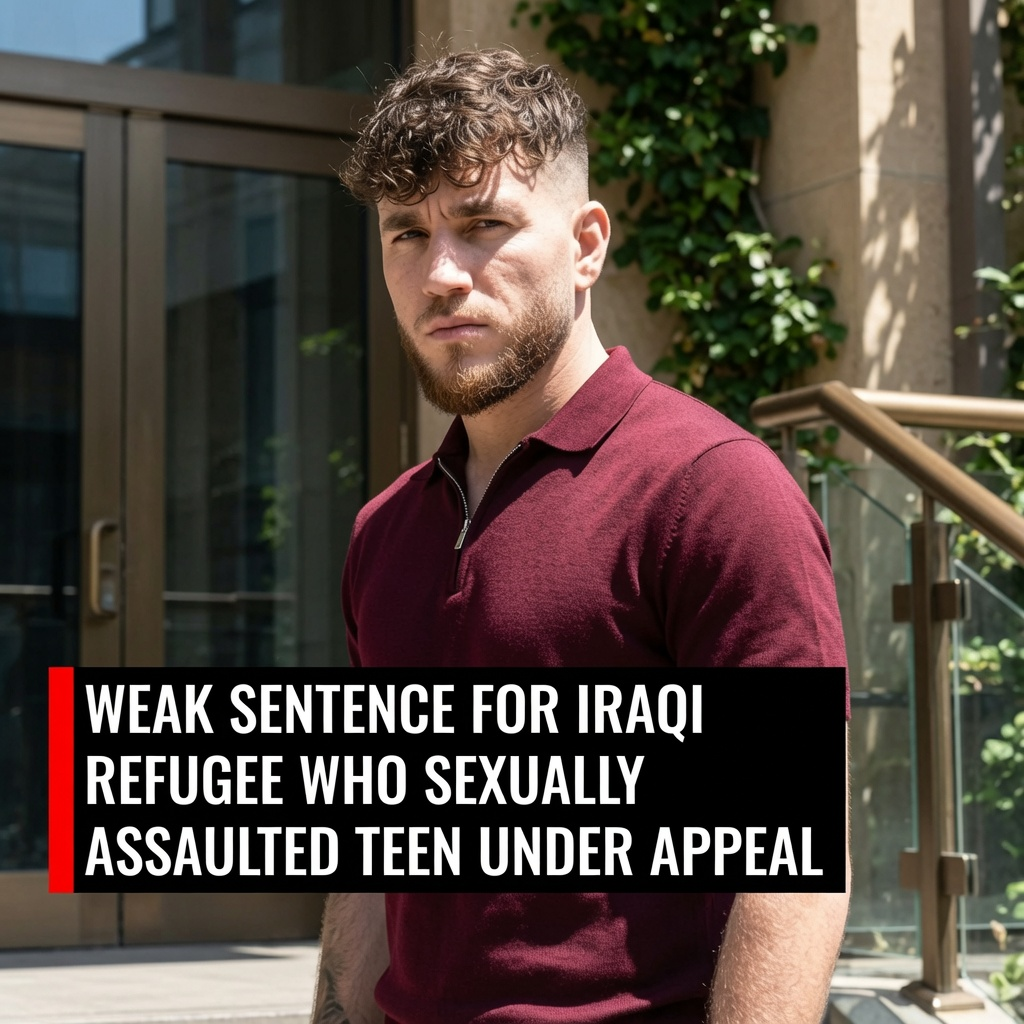
Queensland Attorney-General and Minister for Justice Deb Frecklington announced that she had directed the Office of the Director of Public Prosecutions (DPP) to lodge an appeal against the sentence imposed on Salah Sulaiman Almuhama, 29, following widespread public criticism of the outcome. The government confirmed that a Notice of Appeal has now been filed with the Queensland Court of Appeal.
“I consider the sentence handed down to be manifestly inadequate,” Ms Frecklington said in a ministerial statement.
“My thoughts are with the victim and her family.”
The appeal places renewed focus on how Queensland courts balance mitigating circumstances against the seriousness of child sexual offending, particularly where immigration consequences may flow from a prison sentence.
The offending occurred in early 2023 after Almuhama made contact with the teenage girl through Snapchat while discussing the sale of a vape. According to material presented to the Toowoomba District Court, he collected the girl from a shopping centre while she was still wearing her school uniform.
The victim, who was actually 14 years old but told Almuhama she was 15, was then driven to a secluded lookout near Toowoomba.
Prosecutors told the court that Almuhama attempted unwanted physical contact before carrying out sexual acts on the girl after giving her $50. He later drove her to a local hotel before leaving the area.
Police subsequently arrested Almuhama, who initially faced a rape charge together with additional child sexual offence allegations.
However, following negotiations between prosecutors and defence lawyers, the rape allegation was discontinued. Almuhama ultimately pleaded guilty to two counts of indecent treatment of a child under 16 and one count of supplying a smoking product to a child.
Queensland law treats indecent treatment of a child under 16 as a serious indictable offence carrying substantial maximum penalties depending on the circumstances of the offending.
When sentencing Almuhama in June, District Court Judge Deborah Richards accepted that the offending was serious, telling him he had treated the girl “like a prostitute”, exploited her vulnerability and forced sexual acts upon her.
Despite those findings, the judge imposed a sentence of 12 months’ imprisonment, wholly suspended for two years after taking into account more than six months already spent on remand.
Ordinarily, Queensland’s sentencing framework for child sexual offences places strong emphasis on punishment, denunciation and community protection. However, sentencing judges retain discretion to consider exceptional circumstances when determining the appropriate penalty.
In Almuhama’s case, the court accepted several mitigating factors.
These included his early guilty plea, the absence of previous criminal convictions, the period already spent in custody awaiting trial, the lack of further offending since the incident and the significant immigration consequences that could arise from a longer custodial sentence.
Defence lawyers argued that imprisonment beyond the relevant threshold would likely result in Almuhama losing his visa and facing deportation from Australia.
Judge Richards accepted those immigration consequences formed part of the overall hardship facing the offender.
The resulting sentence meant Almuhama avoided serving any further time in prison beyond the period already spent in custody.
The immigration implications became one of the most controversial aspects of the case.
Under Australia’s migration laws, certain criminal convictions resulting in sentences of 12 months or more can trigger visa cancellation powers, although cancellation decisions ultimately remain subject to Commonwealth legislation and administrative processes rather than state courts alone.
Because Almuhama’s effective sentence structure did not automatically produce immediate visa cancellation, questions quickly emerged about whether the sentencing outcome had indirectly influenced his immigration status.
That aspect fuelled criticism from sections of the public and several political figures.
Western Australian One Nation senator Tyron Whitten argued the sentence reflected what he described as unequal treatment under the law, claiming non-citizens convicted of violent offences should face deportation after serving their sentences.
His comments generated further political debate surrounding immigration policy, judicial independence and sentencing consistency.
Legal experts have frequently noted, however, that sentencing courts must apply established legal principles rather than public opinion alone, and that judges are required to consider both aggravating and mitigating factors in every individual case.
An appeal by the Attorney-General does not determine that the original sentence was legally wrong. Instead, the Court of Appeal will consider whether the sentence fell outside the appropriate range available to a sentencing judge exercising lawful discretion.
The expression “manifestly inadequate” carries a specific legal meaning. It does not simply indicate disagreement with the sentence but alleges that the punishment was so lenient it constituted an error requiring appellate intervention.
If the Court of Appeal agrees, it has the authority to increase the sentence.
If not, the original sentence will remain in force.
The Queensland Government has increasingly relied on Attorney-General appeals in recent years as part of a broader law-and-order agenda aimed at strengthening public confidence in the justice system.
Since the Crisafulli Government came to office, several high-profile sentencing decisions involving violent or sexual offending have been referred to the Court of Appeal after ministers concluded they failed to meet community expectations.
Government statements accompanying those appeals have consistently emphasised greater accountability for offenders while placing stronger emphasis on victims’ rights and community protection.
Those priorities have also been reflected in broader justice reforms announced throughout 2026, including measures intended to strengthen child protection systems and improve responses to child abuse.
The Almuhama case has also highlighted continuing public discussion surrounding plea negotiations in serious criminal prosecutions.
Although the original rape charge was withdrawn, prosecutors proceeded on the basis that the available evidence supported convictions for indecent treatment offences, resulting in guilty pleas that avoided a contested trial.
Plea agreements remain an established feature of Australia’s criminal justice system and may occur for numerous evidentiary or legal reasons.
Nevertheless, they often attract scrutiny in serious sexual offence cases where victims and members of the public perceive the final charges to be less reflective of the alleged conduct.
The appeal itself will focus exclusively on sentence rather than conviction.
The Court of Appeal will not reconsider guilt or innocence, nor revisit the decision to accept guilty pleas to the amended charges.
Instead, appellate judges will assess whether the punishment imposed adequately reflected the gravity of the offending, protected community interests and complied with Queensland sentencing law.
The victim’s identity remains protected under Australian law because the case involves alleged child sexual offending.
Queensland legislation prohibits publication of information capable of identifying child victims in such matters, reflecting long-standing protections designed to encourage reporting and minimise further trauma.
The appeal process is expected to proceed through the Queensland Court of Appeal in accordance with normal criminal appellate procedures.
Until that process concludes, the original suspended sentence technically remains in effect.
Whatever the eventual outcome, the case is likely to remain a significant reference point in Queensland’s ongoing debate about sentencing standards for child sexual offences, judicial discretion and the extent to which collateral consequences—such as immigration outcomes—should influence criminal punishment.






