One Nation leader Pauline Hanson has declared she believes she could serve as Australia’s next prime minister, arguing that decades of real-world business experience have prepared her for national leadership better than a career spent inside Canberra’s political system.
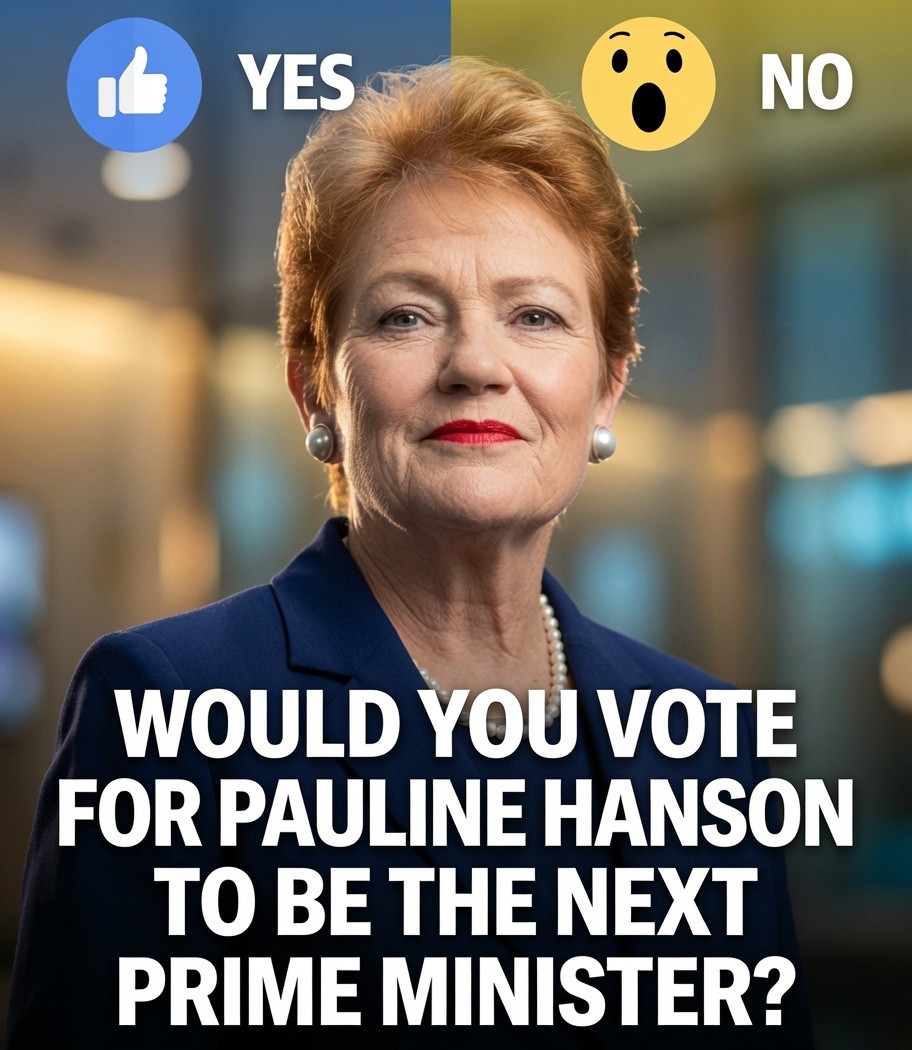
Speaking during a business breakfast in Perth, Hanson said the years she spent operating a fish and chip shop taught her lessons about hard work, financial responsibility and everyday Australians that many career politicians never experience.
“I could do it,” Hanson said when asked whether she believed she was capable of becoming prime minister.
Rather than pointing to parliamentary experience, she highlighted her background in small business, saying managing a family-operated fish and chip shop exposed her to the challenges faced by ordinary Australians trying to make a living.
Hanson argued that running a small business requires balancing wages, supplier costs, taxes, regulations and customer expectations every day—experiences she believes provide practical knowledge that cannot be learned inside Parliament House.
Her comments reinforce a message she has promoted throughout much of her political career: that she represents Australians outside what she frequently describes as the Canberra political establishment.
Before entering federal politics in the mid-1990s, Hanson worked in a variety of jobs before eventually operating a fish and chip business in Ipswich, Queensland. She has often cited those experiences as the foundation of her political outlook, saying they helped her understand the financial pressures confronting families and small businesses.
The remarks came as Hanson addressed supporters and business leaders while discussing One Nation’s growing political momentum.
She argued that increasing public dissatisfaction with cost-of-living pressures, housing affordability, immigration levels and energy policy has created greater support for alternative political voices outside Labor and the Coalition.
Although One Nation remains a minor party in Parliament, Hanson said Australians were becoming increasingly willing to reconsider traditional voting patterns as economic pressures continue to mount.
Hanson also contrasted her background with that of many professional politicians.
She suggested that spending years operating businesses, employing staff and managing day-to-day financial decisions provides a stronger understanding of economic realities than progressing directly from university into political offices and Parliament.
“Life teaches you far more than Canberra ever will,” she argued during the discussion, emphasising that leadership requires practical judgement as much as political experience.
The One Nation leader has consistently built her political identity around the idea of being an outsider prepared to challenge established institutions.
Since first entering federal politics in 1996, Hanson has campaigned on issues including immigration, border protection, regional development, energy affordability and reducing government regulation.
Supporters view her as someone willing to raise issues they believe the major parties avoid, while critics argue many of her proposals are divisive or lack sufficient policy detail.
During the Perth event, Hanson again defended her record of speaking directly to voters, even when her views generate controversy.
She maintained that One Nation’s growth reflects frustration among Australians who believe both Labor and the Coalition have become disconnected from everyday concerns, particularly rising household expenses and housing affordability.
The comments also come as One Nation has enjoyed renewed political attention.
Recent polling has suggested the party has strengthened its support in several states, particularly among voters concerned about immigration, cost-of-living pressures and regional economic issues.
Political analysts note that while One Nation’s primary vote remains well below that of the two major parties, increased support can still influence election outcomes through Senate representation and preference flows.
Despite Hanson’s confidence, becoming Australia’s prime minister would require One Nation to secure enough seats in the House of Representatives to either form government outright or lead a governing coalition.
Australia’s preferential voting system has historically made that extremely difficult for minor parties, with governments almost always formed by Labor or the Coalition.
Political scientists note that smaller parties typically exercise influence by holding Senate seats, negotiating legislation or shaping broader policy debates rather than leading governments.
Nevertheless, Hanson dismissed suggestions that minor parties should limit their ambitions.
She argued that political landscapes can change rapidly when voters lose confidence in established parties and maintained that every political movement begins with people willing to challenge conventional expectations.
Her remarks fit within a broader international trend in which populist leaders have increasingly argued that experience outside politics is an advantage rather than a disadvantage.
Around the world, several political figures have successfully presented business backgrounds as evidence they understand economic management and everyday concerns better than long-serving career politicians.
Whether voters accept that argument often depends less on biography than on confidence in a party’s broader policy platform and ability to govern.
For Hanson, whose political career has spanned three decades and generated both loyal supporters and determined critics, the latest comments reinforce her long-standing effort to position herself as a practical alternative to Australia’s political establishment.
As Australia moves closer to its next federal election cycle, questions about leadership, economic management and voter dissatisfaction are likely to remain central themes.
Whether One Nation can convert growing public attention into significantly greater parliamentary representation remains uncertain.
What is clear, however, is that Hanson intends to continue presenting herself not simply as the leader of a minor party, but as someone she believes possesses the practical experience, resilience and political conviction required to lead the country from the nation’s highest elected office.






