A powerful Australian trade union has called for the Union Jack to be removed from the national flag, arguing the symbol represents colonial oppression and has no place in a modern Australia seeking to advance reconciliation with First Nations peoples.
The proposal comes from the Australian Manufacturing Workers’ Union (AMWU), one of the Labor Party’s most influential affiliated unions, which has included the recommendation in its Union Blueprint for Action ahead of Labor’s National Conference in Adelaide.
Within a section titled Solidarity with First Nations Peoples, the union outlines a series of measures it says are necessary to confront Australia’s colonial legacy and strengthen Indigenous recognition.
Among those recommendations is a direct call to remove what it describes as “symbols of oppression”, including the Union Jack that occupies the upper-left corner of Australia’s national flag.
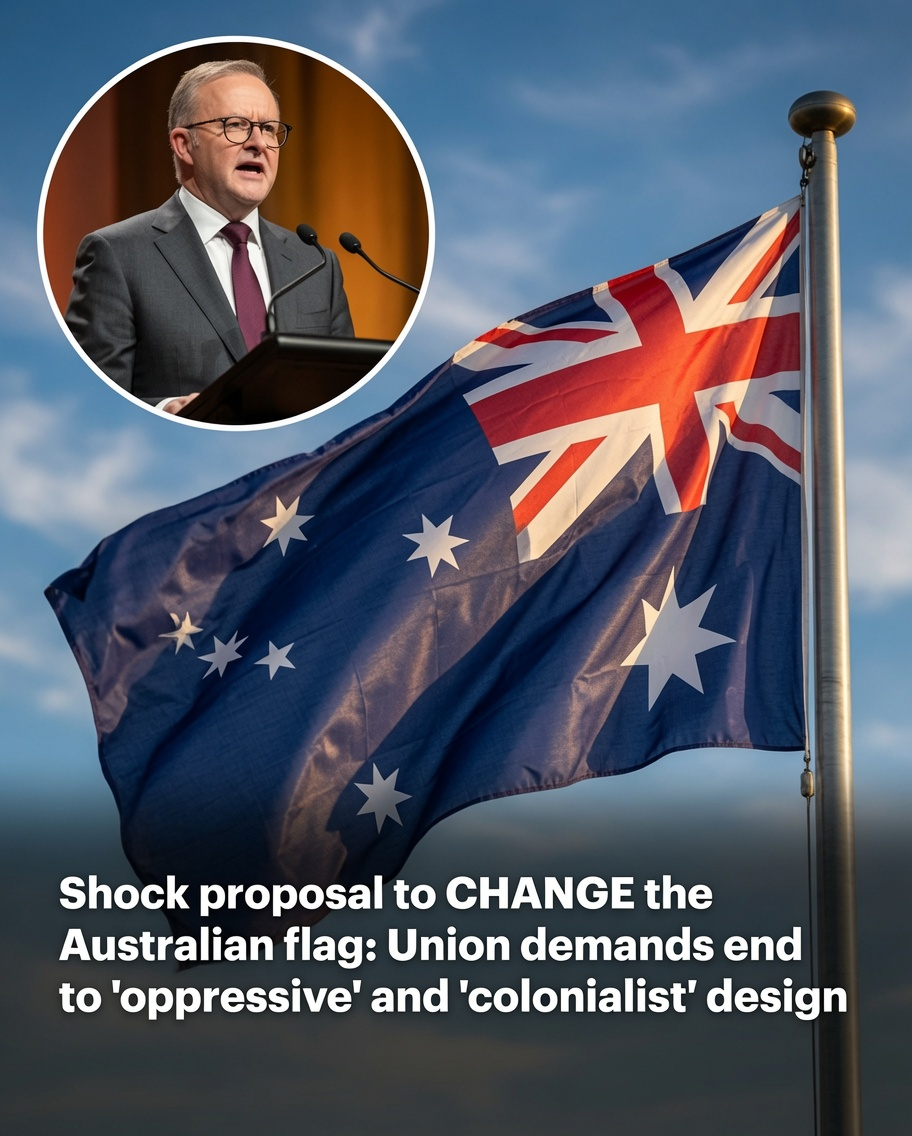
“We need to strip away the constant reminders of the old ruling class and colonial empire,” the blueprint states.
It continues by arguing that Australia should no longer publicly celebrate symbols associated with the dispossession of Aboriginal and Torres Strait Islander peoples.
“A fair country should not celebrate the very symbols used to commit violence and dispossession against its First Peoples,” the document says.
The proposal forms part of a much broader policy platform that also urges the Albanese Government to fully implement the Uluru Statement from the Heart, including a Voice to Parliament, treaty-making processes and national truth-telling initiatives.
The recommendations arrive despite Australians rejecting the proposed Indigenous Voice to Parliament at the 2023 referendum, where almost 60 per cent of voters opposed the constitutional amendment and no state recorded a majority in favour. The Australian Capital Territory was the only jurisdiction to return a majority “Yes” vote.
The AMWU argues that although present-day Australians did not personally commit historical injustices, they continue to benefit from institutions established during the colonial period.
The blueprint states that modern Australians therefore inherit a responsibility to address structural inequalities created by those earlier systems.
Beyond Indigenous recognition, the union is also advocating higher taxes on wealth and inheritances, increased taxation of gas exports and a significant expansion of publicly funded essential services as part of a broader progressive agenda.
The proposal has immediately placed pressure on the Albanese Government ahead of Labor’s highest policy-making gathering.
Although affiliated unions play an important role in shaping debate within the Australian Labor Party, proposals raised at the National Conference do not automatically become government policy. The conference provides delegates with an opportunity to debate and amend the party platform, while the government ultimately determines its legislative priorities.
Senior ministers have already sought to distance themselves from the flag proposal.
Housing Minister Clare O’Neil repeatedly declined to endorse the recommendation during television interviews before eventually stating she did not support changing Australia’s national flag.
Instead, O’Neil said the government’s attention remained focused on issues Australians discuss “around the kitchen table”, including housing affordability and cost-of-living pressures.
Opposition politicians were quick to criticise the proposal, arguing that the Australian flag reflects the nation’s democratic heritage as well as the sacrifices made by generations of Australians who have served under it.
Critics also questioned whether debates over national symbols should take precedence over economic challenges facing households.
The controversy has revived a discussion that has surfaced periodically throughout Australia’s modern history.
The current national flag was selected following Federation in 1901 after a nationwide design competition. It incorporates the Union Jack, representing Australia’s constitutional origins within the British Empire, alongside the Commonwealth Star and the Southern Cross, both recognised as uniquely Australian symbols.
Calls to replace the flag are not new.
Supporters of change argue Australia’s identity has evolved into an independent, multicultural nation whose national symbols should better reflect Indigenous heritage and Australia’s modern place in the world rather than its colonial origins.
Others contend the Union Jack no longer accurately represents Australia’s cultural diversity or constitutional maturity.
Those who favour retaining the current design argue it reflects Australia’s history without preventing recognition of Indigenous Australians or multicultural communities.
They also point to the service of Australian military personnel under the existing flag during conflicts, peacekeeping operations and humanitarian missions over more than a century.
The broader debate frequently overlaps with discussions about whether Australia should eventually become a republic.
Advocates for constitutional change often argue that adopting an Australian head of state would naturally lead to reconsideration of national symbols, including the flag.
However, public opinion has generally remained cautious about changing the flag.
Recent polling has continued to show more Australians prefer retaining the current design than replacing it, although support for a new flag remains significant among some sections of the community. Historical Roy Morgan polling has consistently found a majority favour keeping the existing flag, while more recent surveys continue to show opinion divided but weighted toward retention.
The latest proposal illustrates the continuing influence of Labor-affiliated unions in shaping internal policy debates, even where their recommendations extend beyond the government’s immediate agenda.
It also highlights the differing priorities that often emerge within the broader Labor movement, where unions, grassroots members and parliamentary leaders do not always advocate identical policies.
As Labor delegates gather in Adelaide, it remains uncertain whether the AMWU’s proposal will attract significant support inside the conference.
What is clear, however, is that the recommendation has once again reignited one of Australia’s longest-running cultural and political debates—whether the nation’s most recognisable symbol should continue to acknowledge its British heritage or evolve to reflect a different vision of Australia’s future.






