The Albanese Government is facing renewed scrutiny after official procurement records revealed that up to $4.217 million has been allocated to secure luxury accommodation and conference facilities in Fiji for delegates attending a major international climate meeting ahead of COP31.
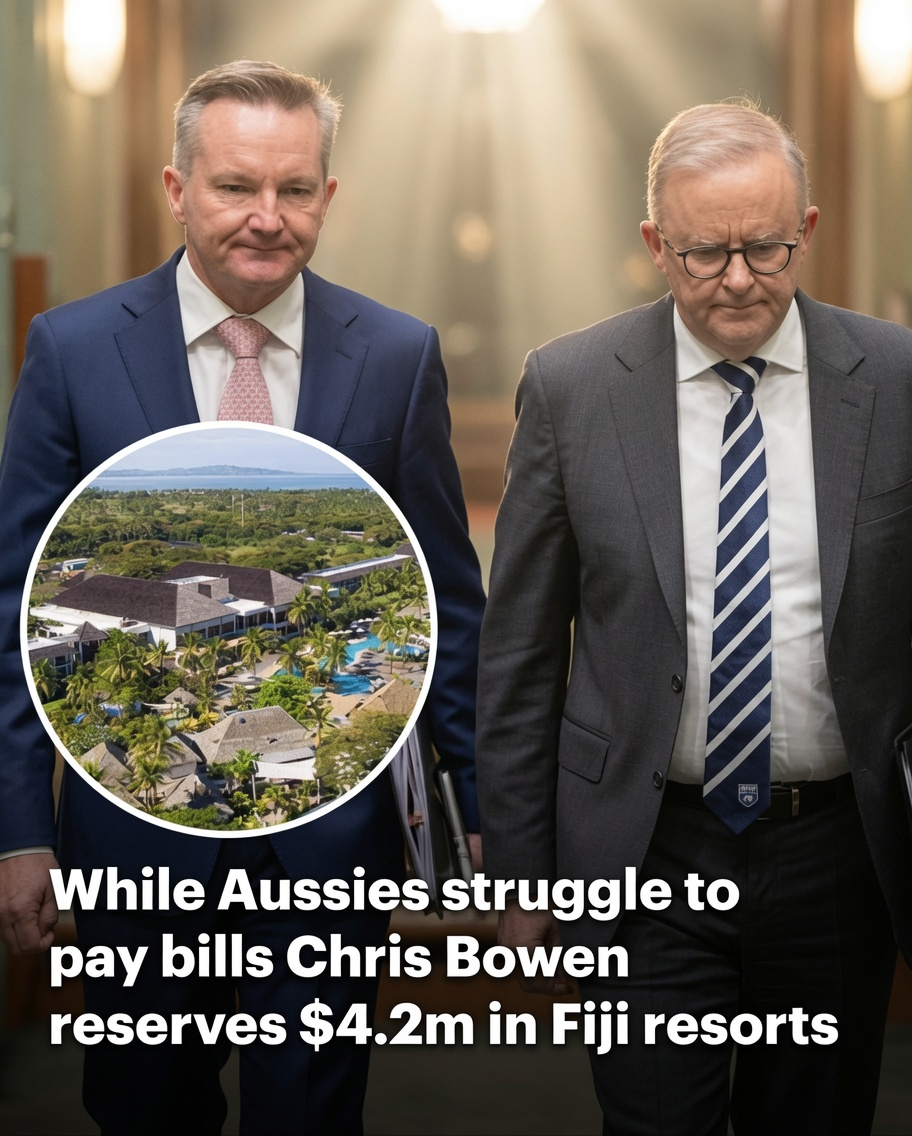
The reservations relate to the pre-COP31 ministerial meeting scheduled for 5–8 October in Fiji, where Climate Change and Energy Minister Chris Bowen will serve as co-president of the Conference of the Parties negotiations before the main United Nations climate summit later this year.
According to AusTender procurement documents, the Department of Climate Change, Energy, the Environment and Water (DCCEEW) has entered contracts with three resorts on Denarau Island with a combined maximum value of $4,217,040.
The largest contract—worth up to $2.11 million—covers accommodation, conference facilities and meeting rooms at the Sheraton Fiji Golf and Beach Resort. A further $2.08 million has been allocated for reservations at the nearby Sofitel Fiji Resort and Spa, while almost $20,000 has been set aside for facilities at the Radisson Blu Resort Fiji.
All three properties are five-star resorts located on Fiji’s popular Denarau Island tourism precinct, with the Sheraton and Sofitel offering beachfront accommodation, conference centres and extensive hospitality facilities suitable for large international gatherings.
The procurement documents have prompted criticism because the reservations were made using Commonwealth contracts at a time when Australians continue to experience elevated household costs, higher mortgage repayments and ongoing concerns over energy affordability.
Opposition figures argue the spending is difficult to justify while governments continue urging Australians to manage living-cost pressures and while public finances remain under close scrutiny.
Shadow Energy Minister Dan Tehan questioned whether the expenditure represented value for money and challenged Chris Bowen to explain why taxpayers should potentially fund accommodation at luxury resorts for overseas delegates.
The government, however, strongly disputes suggestions that Australian taxpayers will ultimately pay the full $4.2 million.
DCCEEW says the contracts represent the maximum possible financial commitment required to reserve sufficient accommodation before final attendance numbers are confirmed.
Officials emphasise that many participating governments—including COP31 host Türkiye—will cover their own accommodation costs, while unused rooms have been booked under flexible arrangements allowing cancellations and refunds.
“Costs to the Commonwealth will be minimised,” a department spokesperson said.
“Turkey will cover their own costs, accommodation has been secured on a flexible basis so that rooms not required can be cancelled for a refund, and as such, the cost to the taxpayer is not $4 million.”
The department also defended its choice of venues, arguing there are very few locations in Fiji capable of accommodating dozens of international delegations together with the conference infrastructure, security arrangements and meeting facilities required for an event of this scale.
“The venues are the only suitable locations capable of accommodating an event of this scale, with the required accommodation capacity,” a DCCEEW spokesperson said.
Officials further noted that reserving accommodation for foreign delegations before major international conferences is standard diplomatic practice.
They pointed to previous Australian-hosted international events—including the 2014 G20 Leaders’ Summit and the ASEAN–Australia Special Summits—as examples where governments similarly secured accommodation well in advance before final participant numbers were known.
The Fiji meeting is regarded as one of the most important preparatory gatherings before COP31.
Known as the “pre-COP”, the conference brings together ministers and senior negotiators from key negotiating blocs to narrow differences before formal negotiations begin at the annual United Nations Climate Change Conference.
This year’s pre-COP will be held in Fiji as part of Australia’s continuing leadership role in the negotiations, despite the main COP31 conference being hosted by Türkiye later in the year.
Australia retained a significant diplomatic role after reaching an agreement with Türkiye earlier this year under which the Pacific would host preparatory meetings while Australia would continue serving in the presidency of the negotiations.
The Albanese Government has argued that supporting meetings in Fiji demonstrates Australia’s commitment to Pacific nations, many of which regard climate change as their most significant long-term security challenge.
Ministers have repeatedly said stronger engagement with Pacific partners strengthens Australia’s regional relationships and broader strategic interests.
The latest procurement disclosures are not the first expenditure linked to Australia’s COP31 responsibilities to attract political attention.
Earlier this year, parliamentary estimates hearings heard that funding connected with Australia’s COP31 presidency, Pacific engagement and associated diplomatic activities could total around $150 million across multiple programs.
Government representatives stressed that figure covers a wide range of operational, diplomatic and regional initiatives rather than accommodation alone.
Media reports have also previously detailed overseas planning visits undertaken by departmental officials preparing for the October meetings, including operational inspections in Fiji designed to assess venue capacity and logistical requirements before delegates arrive.
Supporters of the government’s approach argue the procurement reflects normal logistical planning for a major international conference rather than extravagant discretionary spending.
Large diplomatic meetings require conference facilities, security arrangements, interpretation services and accommodation capable of hosting hundreds of participants in a single location—something available only at a limited number of venues in Fiji.
They also note that procurement contracts commonly specify maximum values rather than guaranteed expenditure, allowing flexibility once attendance numbers are confirmed.
Critics, however, argue the optics remain problematic.
With cost-of-living pressures continuing to dominate Australian politics, they contend taxpayers expect governments to demonstrate restraint whenever public money is committed, particularly where luxury accommodation is involved.
The debate has become part of a broader political contest over Labor’s climate agenda.
The Albanese Government has consistently promoted international climate leadership and stronger Pacific partnerships as central elements of its environmental and foreign policy.
The Coalition supports emissions reduction but has repeatedly criticised what it considers excessive spending associated with international climate conferences and Australia’s broader climate diplomacy.
Whether the Fiji accommodation arrangements ultimately prove controversial may depend on the final financial outcome.
If participating governments reimburse accommodation as anticipated and unused bookings are refunded, the Commonwealth’s actual expenditure could be substantially lower than the headline contractual figure.
Until those final accounts are settled, however, the procurement documents are likely to remain a focal point in political debate over government spending, fiscal responsibility and the costs associated with Australia’s leadership role in international climate negotiations.






