A confidential review commissioned to improve governance and oversight across Victoria’s multibillion-dollar Big Build program reportedly took more than six months before its recommendations began to be implemented, prompting frustration from within the Labor government itself.
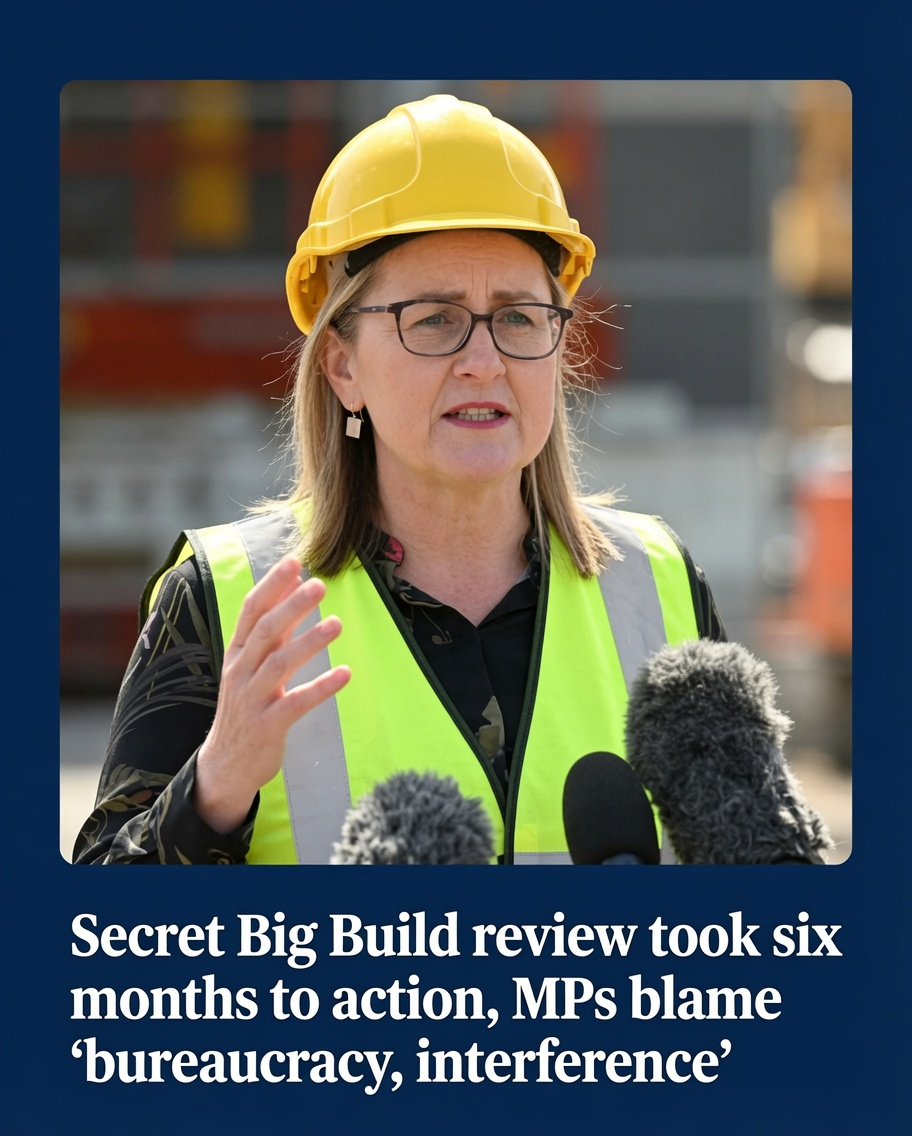
The delay has become the latest flashpoint in the growing political battle surrounding Victoria’s infrastructure program, with Labor MPs privately arguing that excessive bureaucracy and political interference slowed reforms that many believed were urgently needed.
According to those familiar with the matter, the review was commissioned to identify weaknesses in the way major infrastructure projects were being managed and monitored, particularly as concerns mounted over governance, contractor oversight and integrity risks on large construction sites.
Although the review was completed months earlier, many of its recommendations reportedly remained unimplemented for more than half a year.
Labor MPs have attributed the delay to layers of departmental bureaucracy and competing interests that prevented reforms from being introduced as quickly as intended. Several have reportedly argued that once reviews are commissioned, governments must be capable of translating recommendations into practical action without lengthy administrative delays.
The revelations come during one of the most politically challenging periods for Victoria’s Big Build program.
In recent months, the state’s flagship infrastructure agenda has faced sustained scrutiny following allegations that organised criminal figures infiltrated parts of the construction sector, with growing calls from critics for stronger integrity measures and, in some cases, a royal commission into alleged misconduct. Premier Jacinta Allan has acknowledged that organised criminal behaviour occurred on some Big Build projects while rejecting calls for a royal commission, arguing existing agencies and targeted reforms are better suited to addressing the problem.
The secret review is understood to have been commissioned before many of the most recent political controversies intensified, reflecting growing concern inside government that governance arrangements required strengthening regardless of subsequent allegations.
Its recommendations reportedly focused on improving accountability, streamlining oversight arrangements and ensuring government agencies responded more quickly when integrity concerns emerged on major projects.
Supporters of the review argue that reforms designed to improve transparency should never become trapped inside lengthy administrative processes.
One Labor MP reportedly described the delay as an example of “bureaucracy and interference” preventing government from acting at the speed expected by the public.
The criticism is particularly significant because it comes from within the governing party rather than from political opponents.
Victoria’s Big Build represents one of Australia’s largest public infrastructure programs, encompassing major rail, road, tunnel, hospital and level crossing projects worth well over $100 billion.
The program has been promoted as a long-term investment intended to reduce congestion, improve transport capacity and support economic growth while creating thousands of jobs.
However, its enormous scale also creates substantial governance challenges.
Large infrastructure programs involve numerous government departments, statutory authorities, private contractors, subcontractors and regulators. Coordinating decision-making across such a complex system inevitably creates administrative pressure, particularly when projects are delivered simultaneously across multiple regions.
Infrastructure experts have long argued that major public works require robust governance structures because delays in implementing oversight reforms can become increasingly costly as projects progress.
International research into megaproject delivery consistently shows that governance weaknesses, fragmented decision-making and delayed responses to emerging risks can significantly increase costs and undermine public confidence.
In Victoria, scrutiny has intensified following allegations involving criminal infiltration, labour hire arrangements and inappropriate influence within parts of the construction industry.
Although investigations continue into various allegations, the broader political debate has increasingly focused on whether government oversight mechanisms were sufficiently strong and whether warning signs should have prompted earlier intervention.
The delayed implementation of the confidential review therefore raises broader questions beyond a single report.
Critics argue that commissioning reviews has limited value if governments cannot implement recommendations promptly.
Supporters of the government, however, note that translating complex governance recommendations into operational policy often requires consultation across departments, legal advice, budget approvals and coordination with existing regulatory bodies.
Those processes can legitimately take time, particularly where reforms affect procurement rules, contractor management or statutory oversight agencies.
Nevertheless, the political optics remain challenging.
When reforms designed to improve integrity are perceived to have been delayed by internal processes, governments risk reinforcing public perceptions that administrative systems move too slowly to respond to emerging problems.
The issue also arrives as Premier Jacinta Allan continues defending her government’s response to allegations surrounding the Big Build.
While apologising for criminal conduct that occurred on some projects, the Premier has maintained that strengthening investigative powers and improving enforcement offers a more effective response than establishing a lengthy royal commission.
Opposition parties remain unconvinced, arguing that only a full independent inquiry can determine how alleged misconduct developed and whether systemic failures existed within government oversight.
The latest revelations about the confidential review are likely to intensify those political arguments.
For infrastructure delivery more broadly, the controversy highlights a recurring challenge faced by governments worldwide.
Large public projects are frequently judged not only on engineering outcomes but also on governance, transparency and the speed with which governments respond when concerns arise.
Administrative caution can help ensure reforms are legally sound and properly implemented, but excessive delay can undermine confidence in the very systems designed to improve accountability.
Whether the delayed implementation materially affected the operation of Big Build projects remains unclear.
What is clear is that the episode has provided critics with another example of internal processes struggling to keep pace with rapidly evolving political and operational challenges.
As Victoria continues delivering one of the country’s most ambitious infrastructure pipelines, attention is likely to remain focused not only on whether projects are completed on time and within budget, but also on whether governance reforms are introduced quickly enough to maintain public trust.






