Independent senator David Pocock has challenged Prime Minister Anthony Albanese’s explanation of a document circulated from his office about fellow independent Helen Haines, drawing a sharp distinction between routine political briefing and material that can cast doubt on an MP’s integrity. Albanese says the file concerned Haines’s requests for funding for her electorate and was not intended as a personal attack.
The row has taken on particular sensitivity after the alleged vehicle attack that left Haines critically injured. That incident is the subject of a separate criminal investigation. No established evidence links the circulation of the political document to the alleged attack or identifies political briefing as a motive. Treating the two events as causally connected would go beyond the facts.
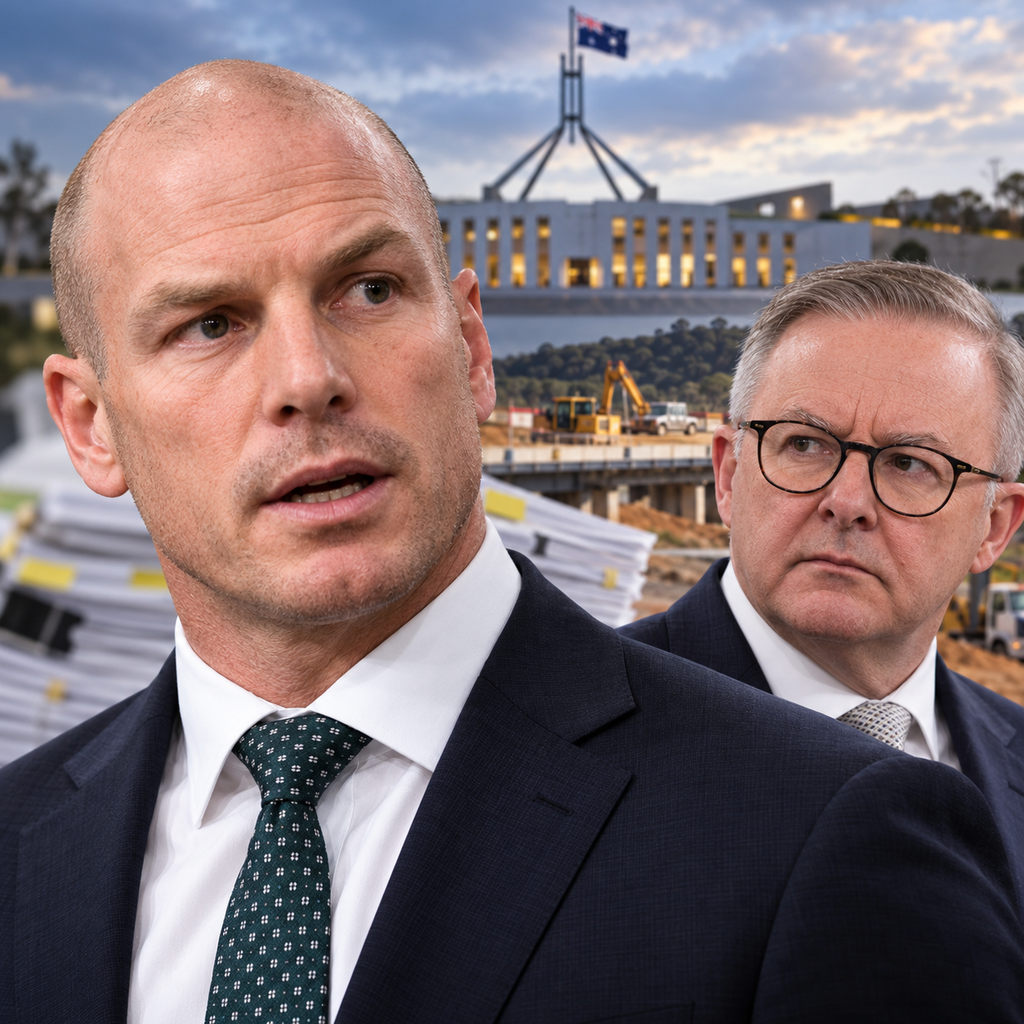
Published reporting describes a document prepared within the Prime Minister’s office about funding requests Haines had made on behalf of the electorate of Indi. It included possible questions journalists could ask about requests and whether any undeclared interests existed. Those questions were not findings that Haines had acted improperly, and they must not be repeated as verified accusations.
The document emerged against a dispute over Commonwealth infrastructure grants, including a $6 million grant to a golf club in Albanese’s electorate that had attracted scrutiny. Haines and other independents had been asking questions about grant decisions and transparency. Criticising the allocation of public funds and requesting funding for one’s own electorate are both routine parts of political work; neither alone establishes a conflict of interest.
Reporting has differed in how the document’s dollar figures are described. One account refers to selected projects and another to a wider list of requests. The figures should not be treated as cash personally received by an MP, approved expenditure, or a definitive measure of benefits to private interests. A request for government funding is not the same as a government payment.
Pocock, an ACT independent and an ally of Haines on integrity matters, has been critical of Albanese’s defence of the circulated material. His objection is directed at the conduct and accountability of the Prime Minister’s office, particularly in light of the government’s public emphasis on respectful political debate.
The criticism does not amount to an independent investigation or a finding against the Prime Minister. It is a political demand for a fuller explanation of why the file was assembled, who authorised its release and whether its content was fair. Those questions are capable of being answered through records and statements rather than speculation about motives.
Albanese has described Haines as a strong advocate for Indi and denied the file was a personal criticism. That response is material: readers should hear the Prime Minister’s explanation alongside Pocock’s criticism, not merely an accusation stripped of the defence.
Opposition research is a familiar part of Australian politics. Political parties routinely collect published statements, spending figures and previous positions to challenge opponents or independent members. Such research can serve a legitimate public purpose when it identifies an inconsistency and links it to documentary evidence.
Problems arise when an unanswered question is presented in a way that encourages the audience to assume misconduct occurred. A suggested line of inquiry about donations or gifts can be appropriate for a journalist to verify; it cannot safely be transformed into a headline declaring a conflict without evidence. The difference between an investigatory question and an established fact is particularly important where an MP’s reputation is at stake.
A proper examination would ask whether the figures in the document accurately described the projects, what source material supported the questions, and what evidence — if any — existed for an alleged undeclared interest. Publishing a list of suspicions is not a substitute for answering those questions.
Haines’s reported injuries have prompted a national discussion about how elected representatives and staff can work safely. Police are investigating the alleged vehicle attack in Wangaratta and criminal allegations must be described as allegations unless established by a court. The suspect’s motivation remains a matter for investigators and the legal process, not for partisan inference.
It is legitimate for Pocock and others to argue that political leaders should set a respectful example. It is also legitimate to scrutinise whether a government office circulated unfair material. But neither argument proves that a particular document caused a criminal act. Readers deserve a clear boundary between the conduct of political offices and the evidence in an unrelated investigation.
The distinction protects political accountability as much as it protects accuracy. Scrutiny of the Prime Minister’s office is not weakened by refusing to attach unsupported causal claims to the tragedy surrounding Haines.
Several matters are open to clarification: the exact purpose of the briefing, who commissioned and approved it, whether the document was sent to multiple journalists, and whether any of its questions were supported by evidence beyond public funding requests. An explanation on those points would help Australians judge the conduct of the office on its merits.
Public infrastructure grants also deserve scrutiny independent of this dispute. Governments should be able to explain selection criteria, conflicts-management measures, value-for-money assessments and the reasons a project was funded or rejected. Local MPs are expected to advocate for their communities; the integrity test concerns the process by which funding decisions are made.
For now, Albanese maintains the file was not a personal attack, while Pocock questions that account. Their disagreement remains political and evidentiary, not proof of wrongdoing by Haines or an explanation for the alleged attack. The next useful development would be verifiable disclosure about the document and the decisions behind it.
A debate about how a prime minister’s office briefs journalists is also a debate about the integrity of infrastructure grants. Government funding requests can come from local councils, community organisations and MPs representing their constituents. That advocacy is part of representative democracy. The question for an auditor or journalist is whether the eventual spending decision follows the published criteria and is supported by evidence of public benefit.
Published reporting describes the document as listing requests from Haines totalling more than $1.8 billion over two years. Describing the figure as requests matters: the total is not evidence that the projects were all funded, that Haines controlled those funds or that the money was paid to her. The size of an electorate’s infrastructure needs can be large without indicating personal gain.
The document emerged after controversy about a $6 million grant to a golf club in Albanese’s electorate. That spending decision warrants scrutiny in its own right, including eligibility, the assessment process and any declared interests. However, the existence of that separate grant does not make allegations about Haines true. Competing questions about two MPs are not interchangeable evidence.
A finding of improper conduct normally requires something more concrete than a project’s proximity to an MP’s community or the possibility that someone known to a politician could benefit. Investigators would look for actual financial interests, relationships requiring disclosure, official decisions affected by those interests, and whether the relevant rules were breached.
Public registers of parliamentary interests and government grant records can help answer such questions, though any record must be examined for the period and circumstances in which it applied. An absence of detail from a headline or briefing should prompt further checking, not a presumption that someone concealed information.
The fact that a document proposes questions for reporters may show what a political office wanted examined; it does not prove the suggested concerns would survive verification. A fair account should distinguish between the office’s choice to circulate material and independent evidence of what the material implies.
Politicians routinely argue about funding priorities, but the language used to frame an opponent can shape how readers understand a story before the underlying figures are checked. A question about potential wrongdoing may be read as an accusation, particularly when distributed by an office with the authority of the Prime Minister. That is one reason Pocock has pressed for an explanation rather than simply debating the grant totals.
The Prime Minister has emphasised Haines’s integrity and her advocacy for constituents. Those comments form part of his defence, yet they do not themselves explain every step involved in the document’s creation or distribution. The unanswered procedural questions could be resolved without requiring anyone to infer hostile intent from the mere existence of a briefing.
Political standards should apply consistently to governments, opposition offices and independents. Asking who authorised research, what facts underpinned it and whether affected people had a chance to respond is a more reliable test than treating every political dossier as either a scandal or routine business by definition.
The Australian National Audit Office is reportedly considering an audit of the infrastructure grants programme. Consideration of an audit is not an audit finding, and it would not establish wrongdoing by any particular MP. That distinction matters when political figures use the possibility of scrutiny to imply that a conclusion has already been reached. Any eventual review should be judged by its formal scope, evidence and published conclusions.