Queensland Opposition Leader Steven Miles has challenged the government’s handling of a death involving a lengthy wait for an ambulance, while Health Minister Tim Nicholls has apologised to the family for the distress caused by learning details of the delay through news coverage. Nick Bradford’s relatives want to understand what happened after he called Triple Zero from his Brisbane home. Their questions concern both the emergency response and the information provided to them as they grieved.
Bradford, 51, called Triple Zero reporting chest pains. Paramedics reached his home in Annerley about two hours later and found him dead. The home was close to Princess Alexandra Hospital, a detail that has heightened public concern. Distance to a hospital, however, does not explain the availability of an ambulance or establish whether an earlier response would have altered the outcome. Those questions require examination of ambulance records and medical evidence.
His brother Daniel said relatives had been left asking why Nick had not sought help, only to discover through reporting that he had called for an ambulance and waited for it to arrive. The family already knew he had died. The fresh distress arose from learning important circumstances surrounding his attempt to obtain care through the media rather than receiving a clear explanation from health authorities. Daniel said the family wanted to know whether anything could have been done to prevent another such loss.
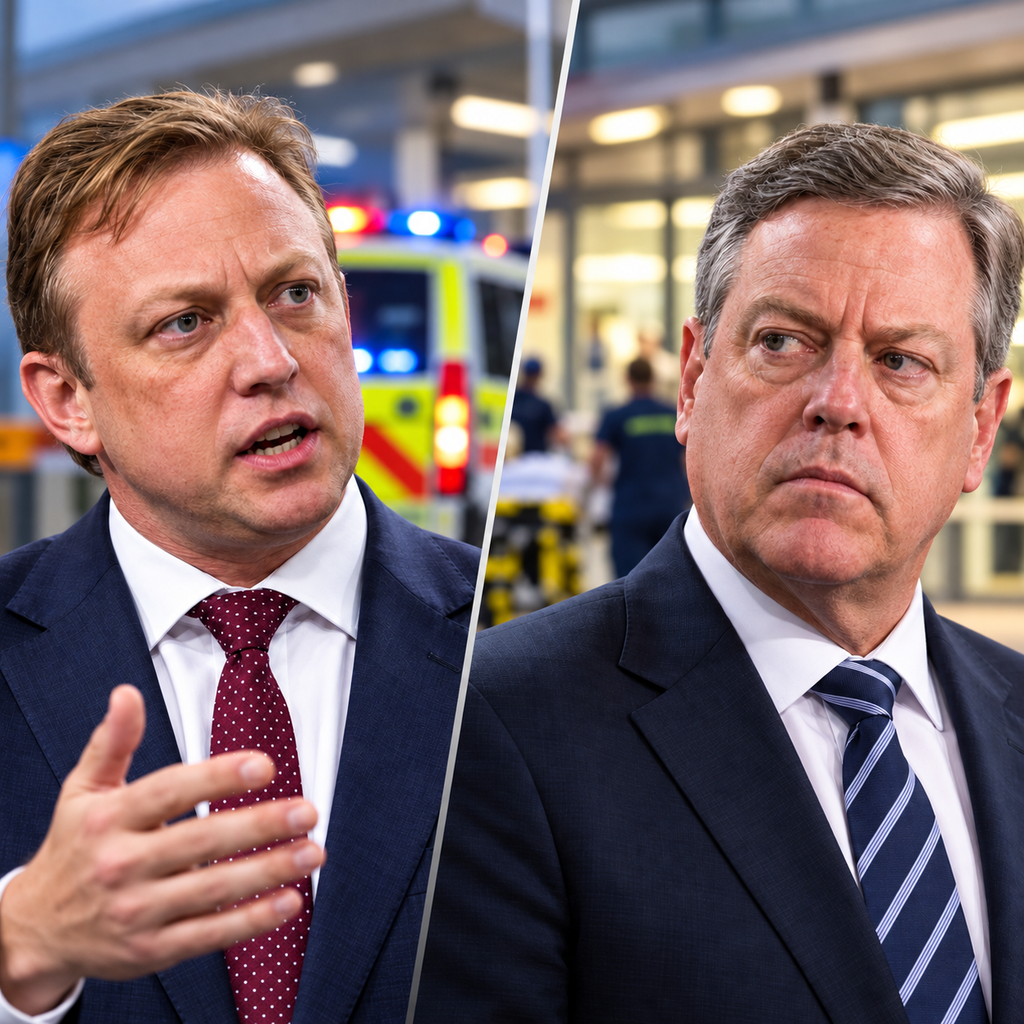
Miles linked the case to the broader pressure on Queensland hospitals and ambulance services, accusing the government of failing to manage ramping and delays. ‘He should have had paramedics at his house in minutes, not in hours,’ he said. He also criticised the way information reached Bradford’s family. Those were strong political accusations about emergency care and accountability; no completed clinical review has established a medical cause of death or whether the delay changed it.
Nicholls apologised for the family’s distress and said he hoped to address its concerns in a meeting. He told reporters Queensland Health initially lacked contact details for relatives and that he had sought more information after being advised of the death. The minister acknowledged the circumstances were unacceptable and said a critical-incident review had been ordered. The explanation leaves questions about the communication process, including when family members could reasonably have been identified and informed.
The family wants to know whether something could have been done differently and, if so, what changes might prevent another family experiencing a similar loss. That is a more demanding question than assigning blame in a political interview. It requires attention to the emergency call, the triage assessment, vehicle availability, dispatch decisions, response chronology and the patient’s medical circumstances.
The family’s unanswered questions
The two-hour wait is established by the reporting and accepted account of the incident. The medical question is different: could emergency treatment have changed Bradford’s outcome, and, if so, at what point? A critical-incident review can examine the call information, dispatch priorities and clinical evidence. Until those records are assessed, it is not possible to attribute his death to a particular minister, ambulance officer or hospital decision.
Queensland’s ambulance system depends on more than the number of vehicles on the road. It is linked to emergency departments, hospital bed capacity, discharge pathways, staffing and the ability to hand patients over safely. Ambulance ramping occurs when crews remain with patients outside or within hospitals instead of becoming available for new calls. This can reduce capacity elsewhere, but a statewide problem cannot automatically be treated as the proven cause of a particular delay.
Investigators can reconstruct the call and dispatch sequence from available records. The time of the initial call, the urgency assigned, changes in the patient’s condition and the location of available crews will all matter. Hospital handovers could also be relevant if ambulances were unavailable, but that connection needs evidence specific to Bradford’s call. The review may be able to identify a system failure even if it cannot answer every question about the ultimate medical outcome.
The case has also revived an uncomfortable tension between public accountability and the family’s right to privacy. Ministers need enough information to explain system performance, yet personal medical details do not become public property simply because a tragic death receives media attention. Officials should communicate promptly with relatives before discussing details that may affect them, while avoiding claims of certainty about medical conclusions that have not been reached.
The complaint about communication is not a minor secondary issue. For a grieving family, uncertainty can compound distress. Knowing what a loved one did to seek help, and when professionals were able to respond, may be central to understanding the final circumstances. Administrative problems with contact details might explain part of a delay in communication, but an explanation is only useful if it is tested against the practical steps taken to find and inform the family.
Nicholls has promised a critical-incident review and said he expects it to explain the circumstances and recommend improvements. The findings will matter most to Bradford’s relatives, who have asked for an account that makes sense of his final attempt to seek help. A review can also inform the public about ambulance operations without releasing private medical information. Its announcement is an undertaking to investigate, not a conclusion about fault.
Miles’s attack places pressure on the government to account for ambulance availability and hospital capacity. His language also carries an obligation to distinguish broader evidence of ramping from an individual clinical outcome. The opposition’s role is to question those responsible for public services; that role is strengthened, not weakened, by refusing to claim medical causation before a competent investigation has addressed it.
The case also raises a broader question about ambulance capacity across Queensland. Figures on response times by clinical priority, crews waiting to hand patients over at emergency departments and regional dispatch coverage could help show whether Bradford’s experience reflects a wider pattern. One incident cannot establish that pattern, but it gives the government and health service a compelling reason to account for their performance in measurable terms.
What an incident review can reveal
For households across Queensland, emergency care is a basic expectation. People calling Triple Zero are often making a decision under extreme stress and may be unable to organise other transport safely. The service therefore needs clear triage rules, enough resources to respond to urgent cases and ways to escalate changing symptoms. Public confidence depends on more than an average response-time figure if the most serious delays carry heavy consequences.
There is also a workforce dimension. Paramedics and emergency clinicians operate in difficult conditions, making decisions with incomplete information and competing needs. An investigation should identify whether barriers were structural, operational or specific to an individual decision without treating workers as presumptively culpable. If a shortage of available resources was decisive, the response should focus on correcting that constraint rather than locating an easy scapegoat.
The political disagreement centres on whether government services and communication failed the Bradford family. Miles points to the wider problem of ambulance ramping, while Nicholls says he has requested an examination of the incident and apologised for the distress caused. The facts so far establish a distressing delay and an inadequate experience of communication for the family. They do not settle the clinical question or determine legal responsibility.
An emergency-call recording and dispatch log may be particularly important to the review because they can show what information was available at each point in the response. A patient’s condition may be described differently during an initial call and in subsequent contact. The urgency assigned by a dispatcher is therefore one matter; the clinical progression of symptoms is another. It would be inappropriate to assume from the final outcome alone that the triage decision was negligent, or that the information supplied was sufficient to predict the outcome.
Bradford’s family also faces the practical challenge of obtaining records and speaking with those examining his death. Medical privacy should not become a barrier to giving close relatives a clear explanation of what happened, while sensitive details that the family wishes to keep confidential deserve protection. A thorough process would give relatives a meaningful chance to ask questions and would explain any lessons for the public without exposing unnecessary personal information.
The funding question deserves scrutiny without assuming an answer in this case. Additional ambulances may help if dispatch capacity is the limiting factor; extra emergency-department beds or faster hospital handovers may help where crews cannot be released. Better call-triage processes may matter in other circumstances. An investigation should identify where any constraint occurred, rather than applying a generic remedy because a delay fits a familiar political narrative.
Sustained oversight should also include evidence that any corrective steps work. If a review recommends changes to clinical escalation or ambulance allocation, Queenslanders can ask how compliance will be checked, whether results will be reported, and how quickly problems will be escalated to senior health officials. Transparency is a continuing obligation, not a single apology or the publication of a final report.
Bradford’s relatives are seeking an explanation of why emergency help did not reach him sooner and why information about the delay reached them through the media. That demand deserves a response grounded in dispatch and medical records. Queenslanders also need to know whether the review uncovers any wider service problem that can be corrected. For Miles and Nicholls, the accountability test is now whether the family receives meaningful answers rather than another round of political claims.






