Former treasurer Josh Frydenberg has warned that the Liberal Party faces an existential threat, openly questioning its performance under opposition leader Angus Taylor and calling for a change of direction. His intervention puts a difficult choice before the Liberals: how to regain voters who have drifted to independents and rival parties while presenting a credible alternative to the Albanese government. Taylor has welcomed the possibility of Frydenberg returning to politics, although he has not answered every part of the former treasurer’s criticism.
Frydenberg made his criticism during an interview with Nine’s 60 Minutes, as interest grew around his political memoir and the possibility of a parliamentary comeback. He said the Liberals needed to change and drew attention to the party’s historically weak polling. His warning was not a formal leadership challenge, nor an announcement that he would stand for a seat. But the message was unmistakably directed at the organisation Taylor leads.
Frydenberg’s clearest warning came in his interview with Nine’s 60 Minutes: ‘Things have to change, because there’s something existential about the threat that I think the party now faces.’ He argued the Liberals were polling at an ‘all-time low’ and Taylor was facing criticism from several quarters. That is a blunt assessment from someone who served as treasurer and once represented the Melbourne seat of Kooyong, although he no longer holds parliamentary office.
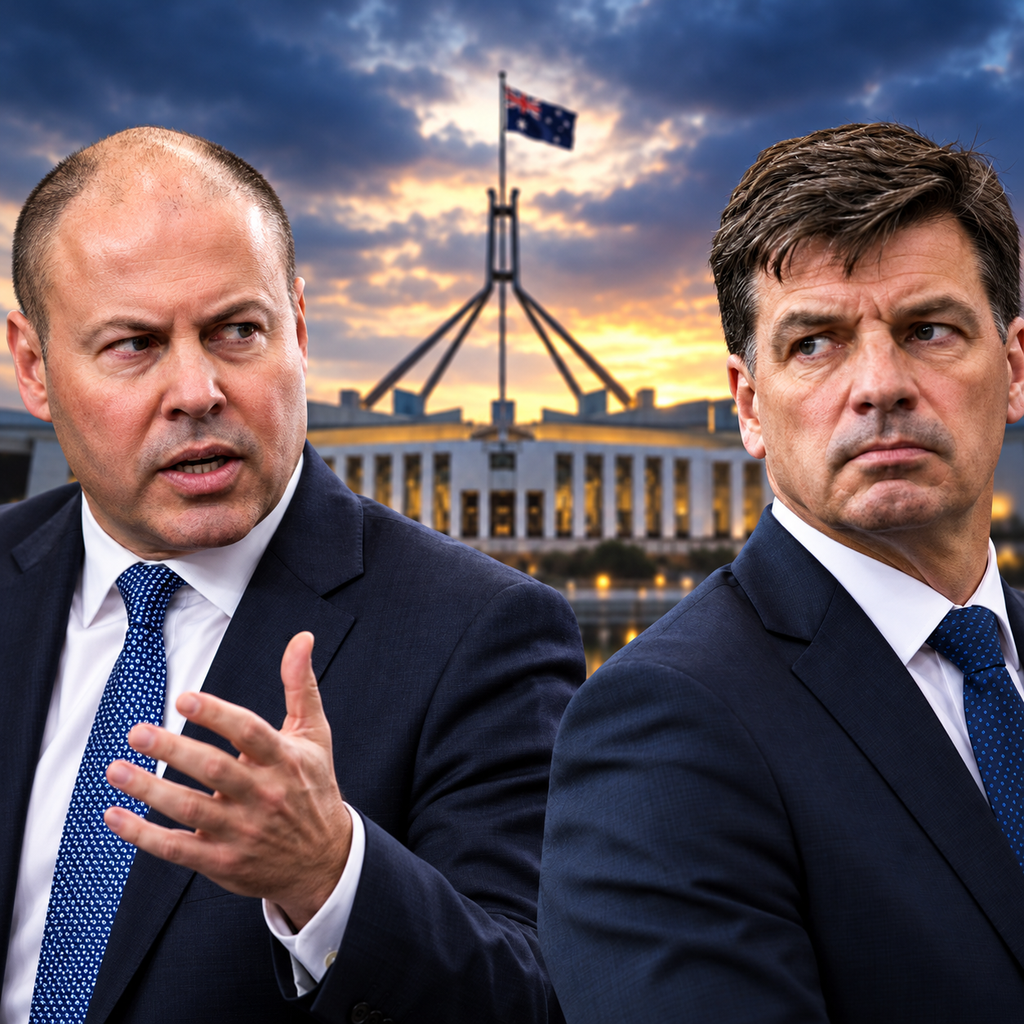
Taylor responded to questions about Frydenberg’s possible return by welcoming his former colleague’s contribution. He asked Liberals and Nationals who shared his vision for Australia to help defeat Labor and make the case for change. The invitation addressed Frydenberg’s political future more directly than the substance of his attack. It nonetheless showed the challenge for Taylor: projecting unity while an influential former minister publicly questions the party’s direction.
Frydenberg’s influence derives in part from his tenure as treasurer and from the extraordinary election in which he lost the once-safe Liberal seat of Kooyong to independent Monique Ryan. His defeat became a symbol of the electoral disruption confronting the party in traditionally affluent metropolitan constituencies. It also exposed an enduring dilemma: a party cannot rebuild simply by recovering familiar personalities unless it understands why voters turned elsewhere.
The Liberal Party faces more than one electoral pressure. Labor occupies government, while One Nation competes for disaffected voters on the right. Teal independents have also challenged Liberal candidates in seats where economic management and professional competence once formed a reliable electoral pitch. Those contests demand different responses, creating a strategic squeeze for a national party trying to speak consistently across urban and regional Australia.
Why Frydenberg’s warning matters
The polling explains some of the urgency. Surveys have placed the Coalition well behind its historic support, with Labor and One Nation competing for an unsettled electorate. Polls are snapshots of respondents’ preferences, not final election results, and support can shift during campaigns. Their significance for the Liberals is the pressure they place on a leader trying to convince colleagues and voters that his strategy can recover lost ground.
The criticism also revives a debate about policy substance. Frydenberg has discussed changes to the tax system, including ideas around the goods and services tax and income-tax relief. Such suggestions may appeal to politicians who want a distinctive economic platform, yet they carry obvious distributional questions. Raising a consumption tax can affect households differently depending on compensation, exemptions and changes to direct taxes. Any serious proposal needs an explanation of who would pay more and who would gain.
Those details matter because cost-of-living pressure is not an abstract talking point for Australian families. When grocery bills, housing expenses and essential services strain budgets, voters are unlikely to reward a grand reform pitch that leaves them uncertain about the immediate effect on weekly spending. A tax debate framed only as a test of party courage may miss the question citizens ask first: what changes for me?
There is a leadership dimension as well. A figure outside parliament has freedom to criticise without making the daily compromises required of a leader responsible for shadow ministers and partyroom consensus. Taylor, by contrast, must reconcile colleagues who disagree about economic policy, climate and the appropriate relationship with other conservative parties. That does not make either position more credible by itself, but it explains why a call for dramatic change is easier to issue than to implement.
Leadership alone cannot solve the Liberals’ electoral problem. A different leader would still have to explain what the party would do on housing, energy, taxation and public services — and why those proposals offer a credible alternative to Labor. Voters in metropolitan seats and regional communities may have different priorities. A party seeking to govern has to persuade both, with policies that can survive detailed questioning rather than slogans about personalities.
Frydenberg’s political memoir and television appearance have prompted renewed speculation about whether he will seek a parliamentary comeback. His own words leave that option open without settling it. He has not announced a confirmed candidacy or launched a formal challenge to Taylor. A return would also require a suitable electorate, local party processes and a campaign that could win over voters who have already shown they are willing to abandon familiar Liberal names.
Taylor’s invitation may help him present a united front, but it cannot erase the disagreement about the party’s performance. Frydenberg wants a sharper diagnosis of what has gone wrong; Taylor must defend the strategy being pursued by the opposition he leads. Senior Liberals are also weighing the value of experienced figures returning against the disruption that leadership speculation can cause. The tension is political and public, without evidence of a formal leadership move arising from Frydenberg’s interview.
The policy gulf confronting the Liberals is not confined to economics. A broad conservative party must decide how to balance its traditional focus on market competition and fiscal restraint with demands for public investment, social protections and a credible account of environmental change. Those choices affect which voters regard the party as an acceptable government rather than merely an outlet for frustration. A leadership contest conducted without that work risks producing the same argument under a different name.
The bigger task for the Liberals
Another problem is the tendency to describe electoral setbacks as evidence that voters have lost their way. Frydenberg’s formulation is different. By saying the party needs to change, he places at least part of the responsibility with the Liberals themselves. That is a significant distinction. A party cannot demand loyalty on the basis of past achievements while declining to examine whether its current proposals respond to the circumstances people face.
There are practical questions about organisation too. Candidate recruitment, local campaign networks and trust in individual members can be decisive in close seats. The return of a well-known former minister could lift attention and fundraising, but a candidate’s profile is only one part of an election. Local credibility and sustained engagement count, particularly where a party has lost long-held constituencies to independents.
Within Liberal ranks, Frydenberg’s warning is likely to resonate differently. Some supporters want a former treasurer to speak frankly about political weakness. Others put more weight on the responsibility borne by MPs and senators who must pursue policy and hold government to account from the opposition benches. The party has not resolved that difference simply by having Taylor publicly welcome the prospect of a return.
For Australians outside the Liberal Party, the issue is still consequential. A functioning opposition is expected to challenge the government with alternative policies, examine public spending and test ministerial decisions. Voters may support or reject the Coalition, but they have an interest in understanding what a prospective government would do rather than hearing only claims about why its rivals have failed.
There is also a financial credibility test that cuts across party factions. If the Liberals want to promise lower taxes or smaller government, voters can fairly ask how essential services would be funded and which expenditures would change. A government-in-waiting must connect its political diagnosis to a budget that adds up. Frydenberg’s experience at Treasury gives him a voice in that debate, but proposals still require scrutiny, including any impact on lower-income households and people whose income does not rise with prices.
Younger voters create another challenge for a party once closely associated with home ownership and wealth accumulation. High housing costs can make the older promise of security through property less convincing to renters and first-home buyers. A credible response would need to explain land supply, tax settings, infrastructure and the obstacles to building homes, while recognising the different interests of existing owners and people trying to enter the market. That problem cannot be solved through slogans about leadership alone.
Electoral competition with One Nation adds a further complication. Repeating another party’s language may attract headlines yet still leave voters preferring the original. Ignoring frustrated conservative voters carries its own risk. The Liberals must decide what they stand for independently, including which economic and institutional principles they would defend if doing so proved unpopular with sections of the electorate. Frydenberg’s comments have exposed that strategic problem; they have not supplied a completed blueprint for resolving it.
Frydenberg’s warning has drawn attention because it comes from a recognisable figure with experience at the highest levels of government. Taylor’s answer has been to keep the door open to his return. The harder task sits beyond both statements: a policy platform that makes sense to families, businesses and communities who no longer give the Liberals automatic support. Without that, arguments over personalities risk overshadowing the question the party needs to answer — what would it do differently for Australians?






