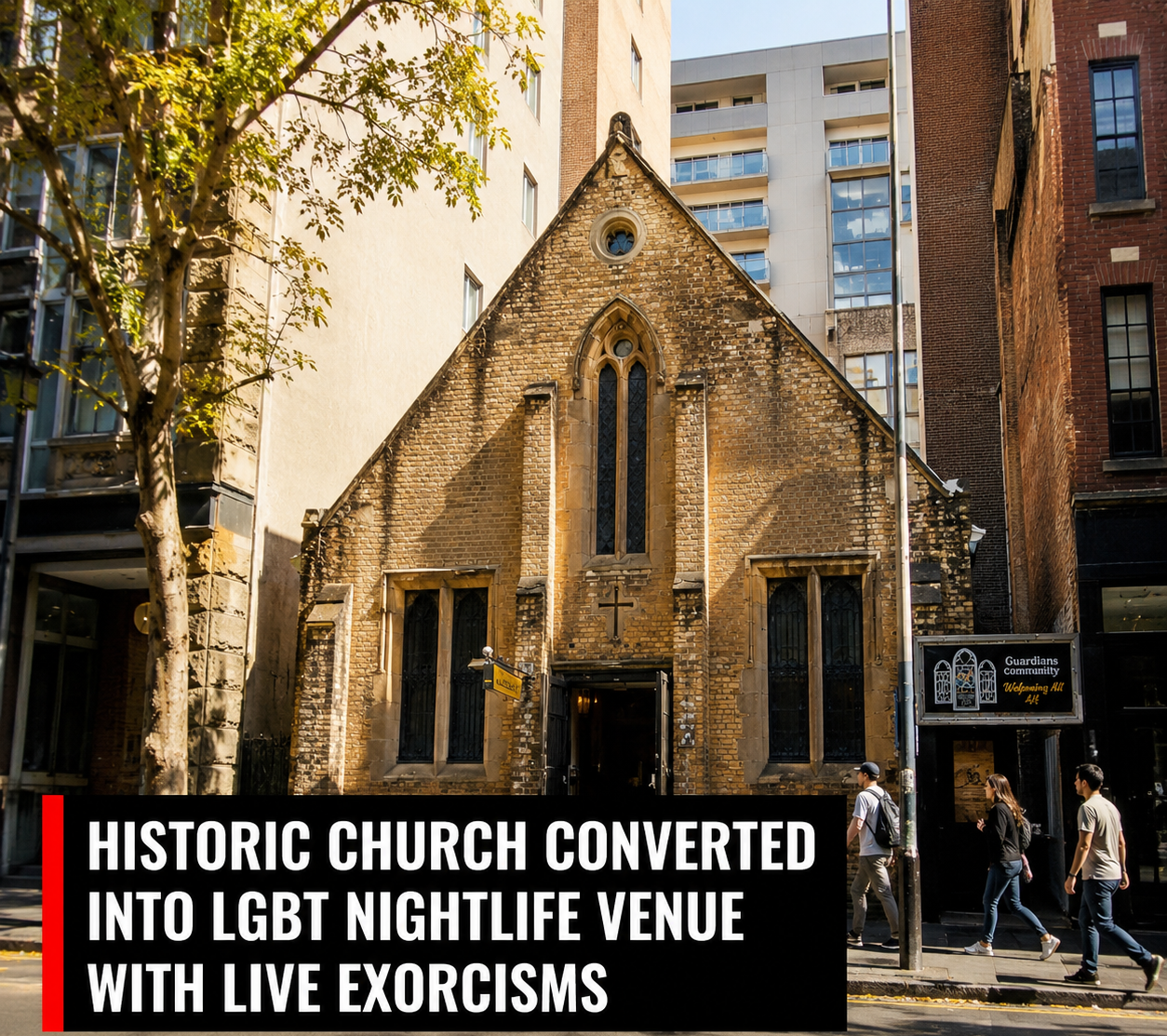
A historic former church in central Sydney is preparing to begin a new chapter after being transformed into UNHOLY PLAYHOUSE, a pop-up arts, performance and nightlife venue that has already generated widespread public discussion.
The heritage-listed building, originally constructed in the nineteenth century and no longer used as an active place of worship after being deconsecrated, will host a diverse program of live entertainment, music, visual arts and experimental performances throughout its initial operating period.
UNHOLY PLAYHOUSE is scheduled to open inside the former church on Kent Street, a heritage building dating from the 1860s that previously housed the Genesian Theatre after its religious use ended. Organisers describe the project as a temporary creative hub featuring live music, theatre, cabaret, comedy, exhibitions, community events and a licensed bar.
The launch program includes performances by local artists, DJs, choirs and theatre companies, together with themed events such as gospel choir karaoke, late-night cabaret, art installations and an event titled Possession, promoted as Australia’s first live exorcism performance. Promotional material presents the event as part of the venue’s artistic programming rather than a religious ceremony.
Venue founder Kat Dopper has said the project aims to create an inclusive space where artists and audiences can gather for creative expression. According to organisers, the concept is intended to celebrate independent performance, emerging artists and community participation while giving new life to a significant heritage building. Programming also includes collaborations with a range of Sydney arts organisations and nightlife collectives.
The redevelopment has attracted differing reactions. Supporters argue that adapting unused heritage buildings for cultural purposes can preserve historically significant structures while encouraging artistic activity and public engagement. Others have expressed concern that using a former church for entertainment with deliberately irreverent themes may be insensitive to its religious history and symbolic importance.
Urban planning specialists note that adaptive reuse has become increasingly common in Australian cities as former industrial and religious buildings find new purposes after their original functions end. Such projects often seek to balance heritage conservation with changing community needs, although they can also generate debate where cultural or religious symbolism remains important to sections of the public.
UNHOLY PLAYHOUSE is expected to operate initially as a temporary venue, with organisers indicating the current lease runs for one year with an option to extend. During that period, the site will host a rotating calendar of performances, exhibitions and community events while contributing to Sydney’s broader nightlife and creative arts sector.
As the venue opens its doors, discussion is likely to continue around the balance between heritage preservation, artistic freedom, commercial reuse of historic buildings and respect for their original purpose. Those differing perspectives reflect broader conversations about how culturally significant spaces evolve as cities change over time.






