Labor Senator Charlotte Walker has drawn criticism over a social-media video in which she eats a sausage roll while making jokes and political comments about One Nation and other federal politicians, turning a deliberately casual clip into a broader debate about how elected representatives use short-form platforms.
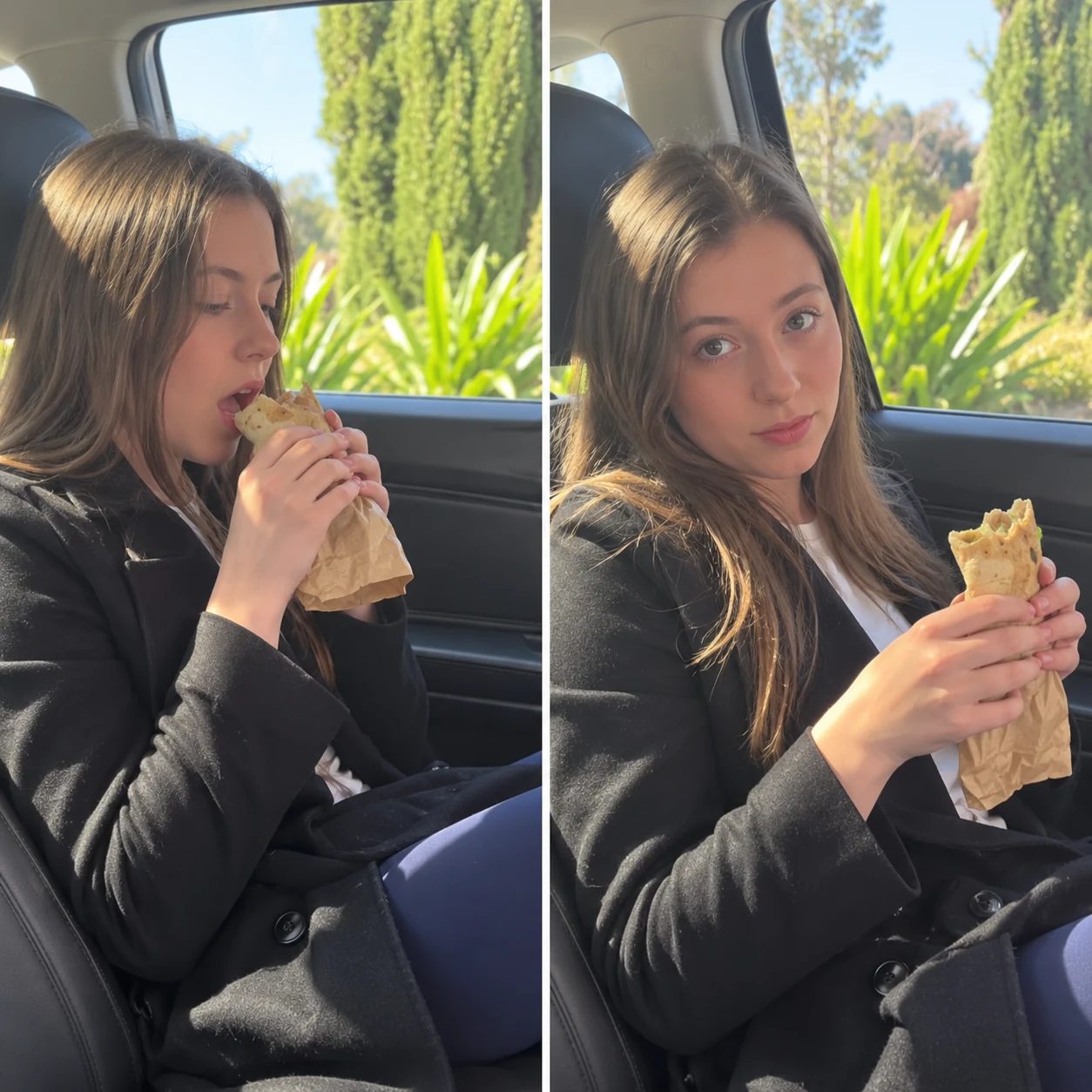
The South Australian senator filmed the video inside a vehicle and spoke in an informal, conversational style while eating. The clip included criticism of One Nation’s use of animated political content and questioned the substance of the party’s policy offering.
Senator Walker said One Nation spends time “making cartoons” and argued that the party does not produce enough substantive policy. She also made jokes involving the Liberal Party, independent Senator David Pocock and the long-running political reference to Engadine McDonald’s.
The presentation was intentionally unlike a parliamentary speech or television interview. Senator Walker spoke directly to camera, ate throughout the clip and left in moments that would normally be removed from a polished political advertisement.
That style is common on TikTok, Instagram Reels and other short-form platforms, where creators often try to appear spontaneous rather than scripted. In politics, however, the same informality can create a sharp divide between viewers who see it as accessible and those who see it as unbecoming of public office.
Critics of the video argued that the tone was flippant and that the content relied more on jokes than a detailed argument about policy. Supporters of informal political communication can counter that younger audiences often ignore traditional press conferences and party advertising, making a different style necessary if politicians want to reach them.
Why the video became a political story
Senator Walker’s age is part of the attention surrounding the clip. Born in May 2004, she was elected to the Senate for South Australia in 2025 and is one of the youngest people to serve in the federal Parliament.
Her official parliamentary biography records that she worked as an electorate officer and union official before entering Parliament and has served on several parliamentary committees since taking office.
That background means the video was not simply judged as content from a private social-media personality. It came from a serving senator, which brings expectations about public resources, political communication and the seriousness of elected office.
One line of criticism focused on the vehicle in which the clip was recorded. Some social-media users suggested it may have been taxpayer-funded. Reporting on the controversy said it was not established whether that particular vehicle was funded by taxpayers.
That distinction should be maintained. The fact that federal politicians can receive travel and transport support does not prove the ownership or funding arrangement of a vehicle seen in one video. Without documentation or confirmation, the claim remains unverified.
The criticism also reflects the increasingly personal style of political communication. Parties once relied heavily on television advertising, newspaper coverage, door-knocking and set-piece speeches. Those channels still matter, but politicians now compete for attention in feeds dominated by influencers, entertainment and humour.
Short-form video rewards immediacy. A carefully qualified policy explanation may attract fewer views than a direct joke, an unusual visual or a recognisable cultural reference. Politicians who use those platforms therefore face an incentive to behave more like creators.
The trade-off is that the conventions of social media do not always align with the expectations attached to Parliament. A joke that works in a private group chat can sound dismissive when delivered by an elected representative. A casual setting can appear authentic to one audience and unserious to another.
Senator Walker’s video landed directly in that tension. The sausage roll became part of the story because it made the clip visually memorable and reinforced the deliberate informality of the presentation.
The political substance should still be separated from the style. Senator Walker criticised One Nation’s communications and policy record. Those claims can be assessed by examining One Nation’s published policies rather than by deciding whether viewers liked the way she ate on camera.
Likewise, criticism of Senator Walker’s presentation does not by itself disprove anything she said about another party. It is possible to dislike the style while considering the political argument separately.
One Nation has made significant use of online graphics, memes and animated content. Other parties and politicians have also increased their use of platform-specific material, particularly as younger voters consume less traditional broadcast news.
That competition is likely to intensify. The political benefit is that voters can see more direct communication from their representatives without waiting for a news organisation to select or edit the message.
The risk is that attention becomes the main measure of success. Content designed to trigger comments, shares and outrage can encourage politicians to simplify complex policy disputes into personal attacks or jokes.
There is also a question of authenticity. Highly produced political content can feel artificial, while deliberately rough or casual material can itself become a calculated branding strategy. Viewers may not always know how much planning sits behind something that appears spontaneous.
Senator Walker’s video drew substantial negative feedback and media coverage. Her most widely reported response in the early coverage was to answer a question about where the sausage roll came from rather than issue a lengthy defence of the clip.
That response kept the informal tone going rather than shifting the argument back to conventional political messaging.
For Labor, the episode is a small but revealing example of the opportunities and risks of using younger politicians as social-media communicators. A senator who speaks in the language of online culture may connect with people who would never watch Question Time, but the same content can be used by opponents as evidence of poor judgment.
For One Nation, the video provided an opportunity to argue that Labor was focused on mockery rather than substantive debate. One Nation figures and supporters criticised both the style and the senator’s comments.
Those responses are political claims and should be understood as such. The existence of criticism does not establish that Senator Walker misused public resources, just as the existence of a viral video does not establish that its policy claims are correct.
The most useful way to evaluate the episode is to separate three issues: what Senator Walker actually said, whether those claims about other parties are supported by their records, and whether voters consider the style appropriate for a federal senator.
The first two can be examined through evidence and published policy. The third is a matter of political judgment.
There is also a basic verification lesson in the controversy. Claims about the use of parliamentary or taxpayer resources should be supported by expense records, official disclosure or confirmation from the relevant office. A vehicle appearing in a politician’s social-media clip is not enough, by itself, to prove who paid for it or under what arrangement it was being used.
That does not prevent journalists from asking the question. It means the answer should remain described as unknown until evidence establishes it.
What is clear is that the video achieved something politicians increasingly seek online: attention. It moved from Senator Walker’s social feed into mainstream political coverage and generated a debate much larger than the original clip.
Whether that attention ultimately helps or hurts her message cannot be established as a fact from one video. But it shows how quickly the boundaries between parliamentary communication, influencer culture and political campaigning are being redrawn.