A company linked to Pauline Hanson’s One Nation built a shed valued at about $56,000 on the private Queensland property of the party’s national director, James Ashby, according to reporting by The Guardian Australia.
The report puts a fresh spotlight on the way assets connected to political organisations are owned, paid for and used, particularly where a party official also has a personal interest in the company involved.
The company, Small Batch Brewing Pty Ltd, is an active Australian private company registered in March 2025. Public Australian Business Register information lists it as operating from Queensland. The Guardian reported that Ashby, Hanson and the party’s treasurer are among its owners.
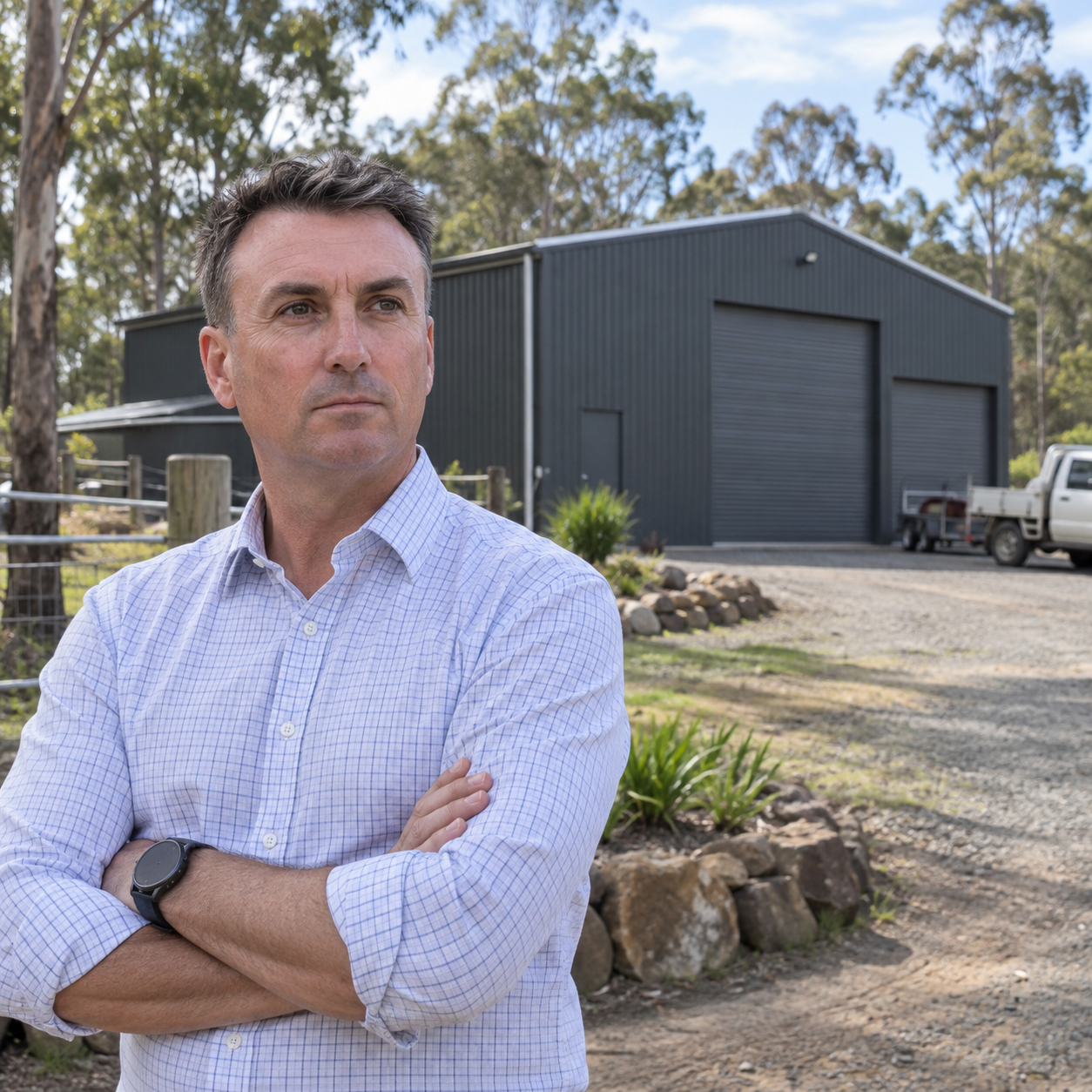
The shed is on Ashby’s private property. The Guardian reported that the company paid for its construction and placed the value at about $56,000.
That fact alone does not establish that any law was broken. The material reviewed for this article does not contain a finding that the building work was unlawful, that public money paid for the shed, or that the arrangement breached political finance rules.
The significance is instead a question of transparency and governance: when a company linked to a political party pays for an asset on land owned privately by one of its senior figures, voters are entitled to understand who owns the asset, what business purpose it serves, how its use is recorded and whether any benefit to an individual is properly accounted for.
What is Small Batch Brewing?
Australian Business Register records show Small Batch Brewing Pty Ltd has an active Australian Business Number and is registered for GST. The company’s registration does not by itself say how active its commercial operations are or how its assets are used.
The Guardian described it as a company tied to One Nation and reported that it does not hold liquor or excise licences and is not currently operating as a brewing business.
That distinction matters because the name of the company suggests one purpose, while the reported shed expenditure raises questions about what the building is intended to be used for in practice.
A shed on rural or semi-rural private property can have many legitimate purposes. It may store equipment, vehicles or campaign material, or be used for commercial work. None of those possibilities should be assumed without evidence.
The key point is that the asset sits on private land while the company that funded it has political links and overlapping ownership involving senior One Nation figures.
Ashby’s role inside One Nation
Ashby is one of the best-known non-parliamentary figures in One Nation. He serves as the party’s national director and has worked closely with Hanson for years.
That makes the financial and practical boundaries between his personal property, companies connected to party figures and party-related resources a matter of public interest, even where no wrongdoing has been established.
The Guardian’s report also examined other assets used in One Nation’s political operations. It said Ashby regularly flies a Cirrus aircraft donated by a company associated with mining billionaire Gina Rinehart, and uses a Ford Ranger gifted to One Nation by Hancock Agriculture chief executive Adam Giles.
Ashby has said those resources are used for campaigning rather than for his personal benefit.
Those separate assets are relevant context because they show why questions about ownership and use can become complicated. A political party can legitimately receive support and assets, but the public interest lies in understanding whether those resources are clearly separated from private use and whether disclosure obligations are met.
Political disclosure rules are not the same as proof of a breach
Australia’s federal political finance system requires certain donations and gifts to political parties and political entities to be disclosed once statutory thresholds are exceeded.
For the second half of 2026, the Australian Electoral Commission says the disclosure threshold is more than $17,300 under the rules currently in force. Gifts can include non-cash or in-kind benefits in some circumstances.
However, those general rules should not be used to jump to a conclusion about the shed.
The available reporting does not establish that the shed was a donation to One Nation, a donation to Ashby, or a reportable gift under federal electoral law. Nor does the existence of a $56,000 construction bill prove that the amount should appear in any particular political disclosure return.
That would depend on the legal character of the transaction, who owns the shed, what consideration was provided, how the expenditure was booked and whether the arrangement falls within the definitions used by electoral law.
Those are accounting and legal questions, not conclusions that can safely be drawn from the price tag alone.
Why the private-property location attracts scrutiny
The reason the story has political weight is simple: buildings normally become closely associated with the land on which they are constructed.
When a company pays for improvements on a shareholder’s private property, clear documentation is important. Businesses routinely deal with leasehold improvements, licences, reimbursement arrangements and related-party transactions. Those arrangements can be legitimate, but they generally require careful records so the company and the individual can show who received what value.
For a company connected to senior political figures, the expectation of clarity is even stronger because supporters, donors and voters may want to know how politically connected resources are being used.
One Nation is not unique in facing that scrutiny. Major parties, minor parties and political campaign organisations can all be questioned about property, vehicles, travel, staffing, fundraising and related entities.
The standard should be factual: identify the transaction, establish the ownership and purpose, and distinguish evidence from assumptions.
No finding of illegality
It is important to state what has not been established.
There is no finding in the sources reviewed here that Ashby stole money, misused taxpayer funds, received an unlawful political donation or broke building laws. The Guardian’s report raises questions about benefits and asset use, but those questions are not a criminal or regulatory finding.
Likewise, the reported value of the shed should not be described as money taken from taxpayers. One Nation receives and raises money through a range of lawful political and private channels, and the source of the shed expenditure would need to be established from company records before stronger claims could be made.
That distinction is especially important in political reporting, where a striking dollar figure can create an impression of wrongdoing that the underlying evidence may not support.
What would clarify the arrangement?
The most useful information would be straightforward documentation.
That could include confirmation of who legally owns the structure, whether Small Batch Brewing has a lease or licence over the part of the property where it sits, whether Ashby pays the company for any private use, how the $56,000 expenditure is treated in the company’s accounts, and what business activity is planned for the building.
If the shed is used solely for company or campaign purposes, records should be capable of showing that. If there is mixed private and organisational use, the accounting treatment would become more important.
The same principle applies to vehicles and aircraft associated with political campaigning. The public-interest question is not whether a senior party figure is allowed to use them at all, but whether their ownership, purpose, benefits and disclosures are accurately recorded.
Disclosure rules are also changing
The timing is worth noting because federal political finance rules are scheduled to change from 1 January 2027. The current disclosure threshold applies to the present period, while the new regime will lower the threshold and introduce faster reporting for many political donations and transactions.
Those reforms do not retrospectively decide how this particular shed arrangement should be classified. They do, however, reflect a broader policy move toward more timely information about money and benefits in federal politics. Any assessment of the shed has to apply the law and definitions that were in force when the relevant transaction occurred, rather than importing future rules backwards.
The wider political context
One Nation has expanded its visibility in national political debate, making the internal structures and resources behind the party more consequential than when it operated with a smaller footprint.
Ashby’s role gives him significant organisational influence, even though he is not currently an elected federal parliamentarian.
That makes scrutiny of arrangements involving companies he partly owns relevant to understanding how the party operates. It does not mean the arrangements are improper.
The strongest version of the story is therefore also the most precise one: a company linked to One Nation and partly owned by senior party figures paid about $56,000 for a shed built on Ashby’s private Queensland property, according to The Guardian.
The unresolved issue is how that asset is owned, used and accounted for.
Until documentary evidence or a regulator establishes more, the story is about transparency and governance — not a proven case of corruption, theft or misuse of public funds.