Three women have died in three separate suspected domestic violence-related incidents across New South Wales within about 24 hours, prompting three police investigations and renewed attention to the scale and complexity of domestic and family violence in the state.
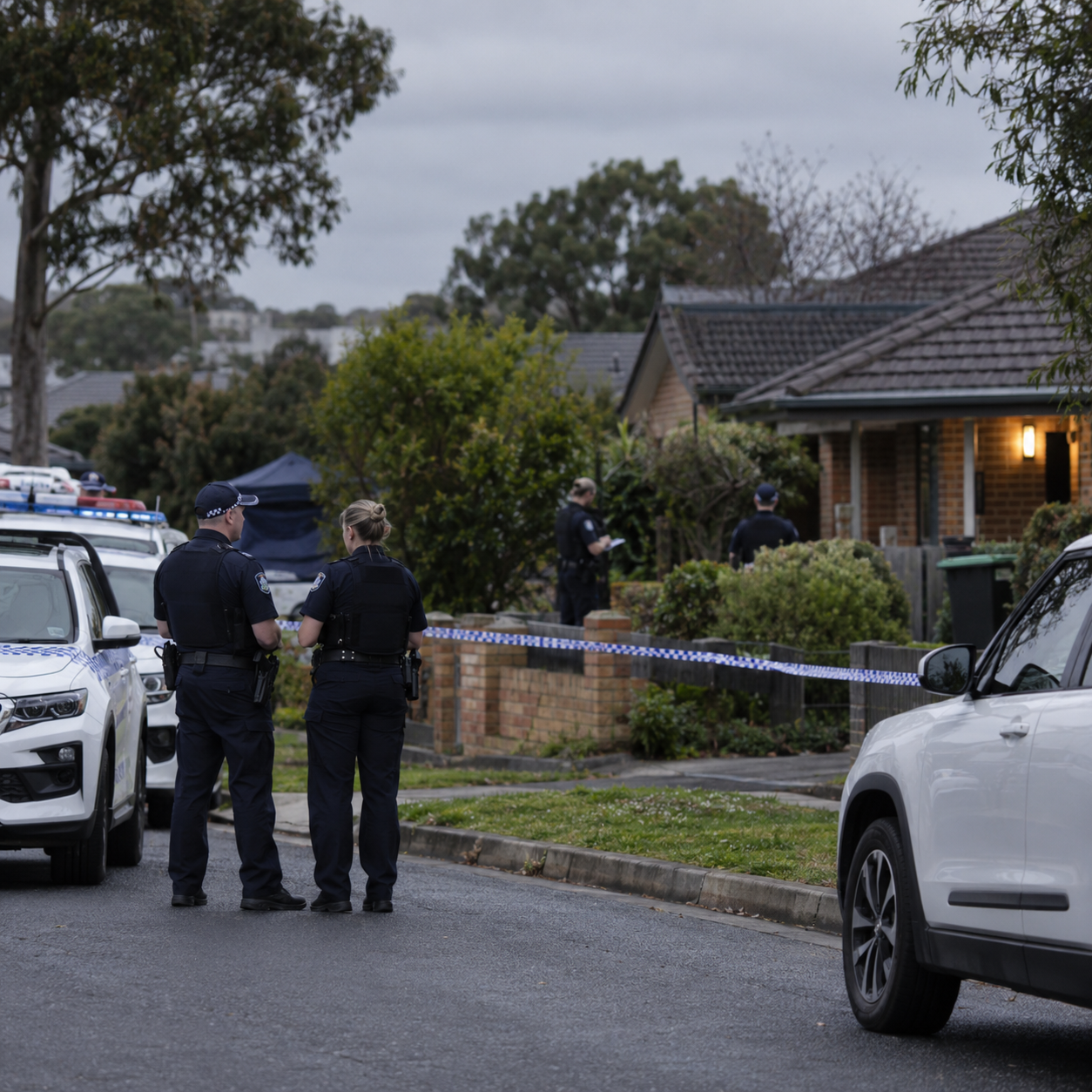
The deaths occurred in Bondi Beach in Sydney, at Mole River near Tenterfield in the Northern Tablelands and at Kooringal in Wagga Wagga.
The incidents are separate. Police have not suggested they are connected, and the legal status of each case is different.
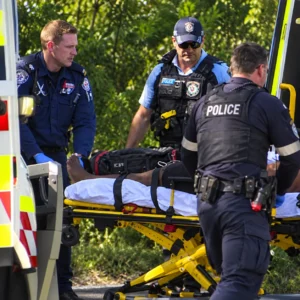
At Bondi Beach, emergency services were called to a unit about 5:15pm on Saturday. A 90-year-old woman was found with stab wounds to her torso. Paramedics treated her, but she died at the scene.
A 47-year-old man who was known to the woman was arrested at the unit and later charged with domestic violence-related murder. He was refused bail to appear before a local court.
The charge is an allegation, not a finding of guilt. The prosecution will have to prove the offence in court and the accused is entitled to the presumption of innocence.
Hours later, police were called to a property on Ironbark Road at Mole River, west of Tenterfield, after reports of a domestic violence incident.
Police said they were told a 37-year-old man had entered a property, attempted to steal a vehicle and assaulted a 74-year-old male homeowner.
After the man was arrested, officers searched a neighbouring property and found a body believed to be that of a 70-year-old woman. At the time of the initial police release, she had not been formally identified.
A house on the property had also been partially damaged by fire. Police established crime scenes at both locations and began an investigation with assistance from the State Crime Command’s Homicide Squad.
The available police information did not, at that stage, establish a criminal charge over the woman’s death. Reporting should therefore avoid treating the circumstances as proven beyond what police have confirmed.
In the Riverina, emergency services were called to a home in Kooringal about 11:45am on Saturday after reports that a woman had been stabbed.
Police and paramedics performed CPR on a 23-year-old woman, but she died at the home.
An 18-year-old man was initially arrested near the scene and later released without charge.
Police then arrested a 31-year-old man at another Kooringal address about 8pm. NSW Police later announced that he had been charged with domestic violence-related murder.
Police allege in court that the 23-year-old woman and the 31-year-old man were in a domestic relationship. Again, the allegation has not been proven and the accused remains entitled to the presumption of innocence.
The sequence of deaths is confronting because it compresses several serious incidents into a short period, but the cases need to be reported separately and carefully.
Domestic and family violence is not one single offence or one predictable pattern. It can involve physical assault, coercive control, threats, stalking, sexual violence, financial abuse, isolation or other forms of control. Fatal incidents are the most extreme outcome of a much broader pattern of harm.
NSW crime data provides context without determining what happened in any individual case.
The Bureau of Crime Statistics and Research says 85 murder victims were recorded in NSW in the 12 months to June 2026. Of those, 38 were killed in incidents classified as domestic violence-related. Women and children made up the majority of those domestic-violence murder victims, including 18 adult women and five children.
Those statistics are based on police classifications and are separate from the three investigations now under way.
The NSW Domestic Violence Death Review Team uses an even broader review process. It examines deaths where domestic violence is considered a significant contributing factor and looks at the history of relationships, interactions with services and opportunities for prevention.
That work is intended to identify systemic patterns rather than assign criminal responsibility, which remains a matter for police and courts.
One lesson from domestic-violence death reviews is that risk can escalate around separation, threats, stalking, access to weapons and breaches of protective orders, but risk factors do not predict every incident and should not be used to speculate about these current cases before investigators establish the facts.
The immediate priority in all three matters is the police investigation and the impact on families and communities.
At Bondi and Wagga Wagga, murder charges mean the cases will now move through the courts. Prosecutors will need to establish the elements of the alleged offences and defence lawyers will have the opportunity to test the evidence.
At Mole River, investigators must establish the identity of the woman, the circumstances of her death and whether any criminal offence has occurred.
The fact that police describe an incident as domestic violence-related is important but does not remove the need for precise reporting.
It does not mean every person present is criminally responsible, and it does not justify publishing unverified claims about relationship histories, motives or prior conduct.
That caution also matters for victims and surviving relatives. Sensational details can cause further harm while adding little to public understanding.
The broader public-interest question is how people at risk can reach help before violence escalates.
In an emergency, people should call Triple Zero on 000.
The NSW Domestic Violence Line is available on 1800 656 463 and provides counselling, information and referrals for women experiencing domestic and family violence. 1800RESPECT is available nationally on 1800 737 732, with text and online options. Full Stop Australia provides sexual, domestic and family violence support on 1800 385 578.
Friends and relatives who are worried about someone can also seek advice. They do not need to investigate a situation themselves or confront a suspected abuser.
Specialist services generally advise supporters to listen, take disclosures seriously, consider safety and help the person access professional support while respecting their choices where possible.
For men concerned about their own behaviour, or for people seeking help for a man using violence, the Men’s Referral Service can be contacted on 1300 766 491.
Police responses are only one part of the system. Housing, legal assistance, health services, income support, crisis accommodation and specialist counselling can all affect whether someone is able to leave or remain safe.
That is one reason governments increasingly focus on coercive control and patterns of behaviour rather than only responding to individual assaults.
NSW criminalised coercive control in intimate partner relationships in 2024, reflecting recognition that repeated controlling conduct can create serious danger even where no single incident appears catastrophic in isolation.
The current deaths should not be used to assume that any particular legal reform has succeeded or failed. Evaluating policy requires broader evidence over time.
What these three incidents do show is the continuing human cost of suspected domestic violence across very different parts of the state: an elderly woman in Sydney, a woman in a rural Northern Tablelands community and a young woman in the Riverina.
Police will release further details as the investigations progress, and court proceedings will determine the allegations that have been charged.
Until then, the most accurate account is that three women died in separate incidents police are treating as suspected domestic violence-related matters, two men have been charged with domestic violence-related murder in separate cases, and a third investigation remains ongoing.
Domestic-violence data also shows why a short cluster of deaths should be understood in a wider context rather than treated as an isolated anomaly. BOCSAR says 38 of the 85 murder victims recorded in NSW in the year to June 2026 were killed in domestic-violence-related incidents. Eighteen of those victims were adult women and five were children.
Recorded domestic-violence assault is far more common than homicide. NSW data to the end of 2025 showed tens of thousands of DV-related assaults recorded in a single year. Most do not become fatal, but the volume illustrates why police, courts, health services and specialist support organisations treat domestic and family violence as a continuing public-safety issue rather than a series of unrelated private disputes.
Risk management also depends on information moving between systems. Police may hold reports of assaults or threats, courts may issue protection orders, health workers may see injuries, and support services may know about housing or financial barriers. Death-review processes examine how those pieces of information interacted, with the aim of finding preventable gaps.
That kind of systemic analysis should come later, after the facts of each current case are established. It would be irresponsible to use general risk factors to invent a history for any of the three women or the men involved.
The immediate public message is therefore twofold: allow investigators and courts to establish responsibility, and make sure people currently experiencing violence know that specialist help is available before a situation becomes life-threatening.
Anyone in immediate danger should call 000. People seeking confidential domestic and family violence support can contact 1800RESPECT on 1800 737 732 or the NSW Domestic Violence Line on 1800 656 463.