ASIO director-general Mike Burgess has warned that Iran could seek to target prominent Jewish Australians for assassination on Australian soil, while stressing that the security agency is not currently investigating an immediate threat against the people it has alerted.
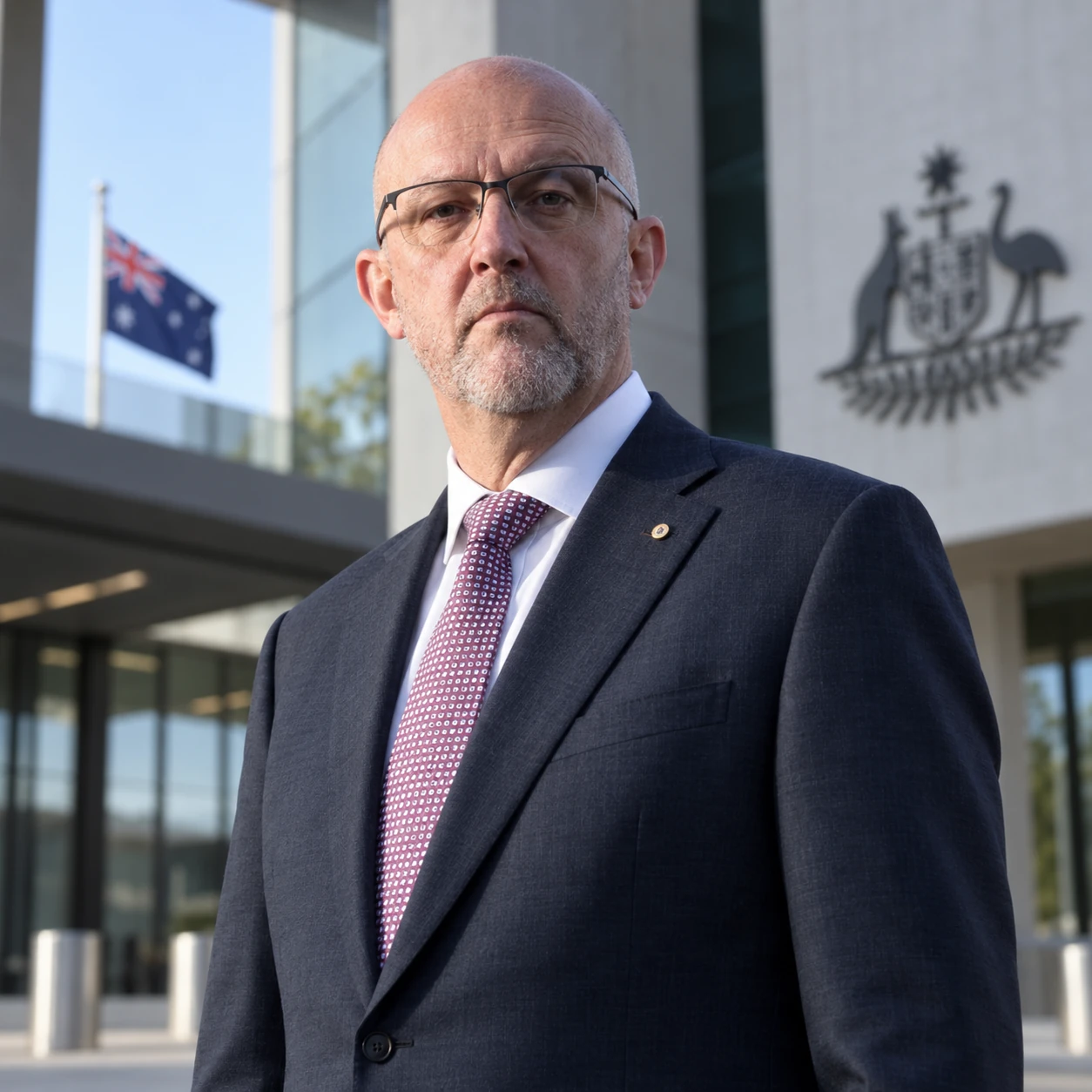
Burgess made the comments in a rare media interview as he discussed the changing national-security environment, antisemitism and the risk of foreign states using proxies or criminal networks to conduct hostile activity in Australia.
He said ASIO had spoken to certain Jewish leaders about the possibility of becoming targets and that he held grave concerns that a foreign power could one day kill an Australian citizen in Australia. Asked specifically about Iran, Burgess said he would not rule out the possibility that Tehran could want to kill prominent Jewish Australians.
The qualification is important. Burgess did not announce that ASIO had uncovered a current Iranian assassination plot. He explicitly said there was no immediate threat being investigated against those individuals at the time of his remarks.
The warning reflects a broader assessment of risk rather than confirmation of an active operation. Intelligence agencies routinely brief people who may face elevated threats even when there is no evidence that an attack is imminent.
The comments come after the Australian government publicly attributed two antisemitic attacks to Iran’s Islamic Revolutionary Guard Corps. In 2025, Canberra expelled Iran’s ambassador after ASIO said the IRGC had directed attacks against Jewish sites in Sydney and Melbourne through intermediaries.
Those incidents changed the public understanding of foreign interference in Australia. Instead of espionage or cyber activity alone, the allegations demonstrated the possibility of a state actor using third parties to generate fear and violence inside Australian communities.
Iran rejected Australian accusations of involvement at the time. As with other intelligence-based attributions, much of the underlying classified evidence cannot be made public, which means the government and ASIO carry a responsibility to distinguish clearly between what they assess, what they can prove publicly and what remains an intelligence judgement.
Burgess’s latest warning was framed within that existing assessment. He said Iran had shown a willingness to inflame antisemitism and that Australian agencies had to consider whether future activity could escalate from property attacks or intimidation to attempts against individuals.
For prominent Jewish Australians, a security briefing can have significant practical consequences even in the absence of an immediate threat. It can lead to changes in travel, event security, home protection, online behaviour and the way public appearances are planned.
The concern also extends beyond one community. A foreign state conducting or commissioning violence in Australia would be an attack on Australian sovereignty regardless of the victim’s religion or political position.
That is why foreign interference and politically motivated violence are handled through overlapping intelligence, policing and diplomatic responses. ASIO may identify and assess threats, while police investigate criminal conduct and governments can impose diplomatic or economic consequences.
The national terrorism threat level remains at “probable”, meaning security agencies assess there is a greater than 50 per cent chance of an onshore terrorist attack or attack planning in the next 12 months. That measure relates to terrorism and does not capture every form of hostile-state activity.
Burgess has questioned whether the existing public threat-level framework is broad enough to communicate the range of dangers Australia now faces. Modern security threats can include terrorism, espionage, cyber sabotage, foreign interference and state-directed violence, with boundaries between those categories increasingly blurred.
The distinction matters in the Iranian context. An assassination commissioned by a foreign state may be treated primarily as hostile-state activity even if the method and intended public impact resemble terrorism. Intelligence agencies need to assess both the actor’s motivation and the operational network being used.
Antisemitism has become a major security concern since the Hamas attacks of 7 October 2023 and the subsequent war in Gaza. Australia has recorded threats, harassment and attacks against Jewish institutions, alongside intense political disagreement over Israel and the conflict.
Burgess has repeatedly argued that criticism of the Israeli government or its policies is not the same thing as hatred of Jewish people. The security concern arises when rhetoric or ideology contributes to threats, intimidation, violence or support for terrorist activity.
The same principle applies to public debate more broadly. Governments need to protect communities from violence without treating legitimate political protest as a security offence. Intelligence agencies operate under legal thresholds and oversight precisely because national-security powers can have serious consequences for civil liberties.
ASIO’s decision to warn individuals is therefore not a public declaration that those people will be attacked. It is a protective measure based on the agency’s assessment of capability, intent, precedent and vulnerability.
The Iranian government has a documented history of allegations from Western governments involving plots against dissidents and other targets abroad. Australian agencies are examining that international pattern alongside the conduct they have attributed to Iranian-linked operations in Australia.
Hostile states can also use cut-outs — people or organisations that obscure the connection between the sponsor and the person carrying out an act. That makes attribution difficult and can allow a government to deny responsibility even when intelligence agencies believe it directed or enabled the operation.
For law enforcement, disruption may occur before a complete public case can be presented. Surveillance, visa action, arrests on other offences, protective-security changes and diplomatic pressure can all reduce risk without producing a dramatic announcement of a foiled plot.
Burgess said the role of ASIO and police is to get ahead of such threats where possible. That emphasis on prevention explains why people may be warned even when the agency says there is no immediate threat under investigation.
The public should therefore avoid two opposite errors. The first is to dismiss the warning because no active plot has been announced. The second is to report the warning as proof that an Iranian assassination team is currently operating against named Jewish Australians. Neither conclusion is supported by Burgess’s wording.
What ASIO is saying is that the risk is credible enough to plan for. Iran is one state actor of concern, antisemitic violence has already been linked by Australian authorities to foreign direction, and the agency believes prominent Jewish Australians could be attractive targets in a future escalation.
The policy response will involve more than physical security. Australia is also reviewing how it communicates threat levels, how agencies share information with vulnerable communities and how governments respond when foreign interference uses social divisions as an operational tool.
Those questions will remain prominent as the government, opposition and security agencies debate the lessons of recent attacks and the adequacy of Australia’s counter-terrorism and foreign-interference frameworks.
For the people who have received warnings, the immediate message is more personal: take the risk seriously, maintain contact with security agencies and adopt sensible protective measures, but recognise that ASIO has not said an attack is currently imminent.
Australia’s decision to expel Iran’s ambassador in 2025 was an unusually serious diplomatic step and followed the government’s acceptance of ASIO’s assessment that the IRGC had directed the arson attacks through intermediaries. The episodes included the Lewis Continental Kitchen in Sydney and the Adass Israel Synagogue in Melbourne.
That history gives the latest protective briefings a concrete basis. Burgess is not asking the public to imagine a completely hypothetical capability; he is pointing to conduct Australian authorities say has already crossed from hostile rhetoric into directed operations. The uncertainty concerns how far such activity might escalate and whether individuals, rather than buildings or institutions, could become targets.
That balance — urgency without exaggeration — is essential to understanding Burgess’s warning. The threat he described is serious, but it is a forward-looking security assessment, not an announcement that an assassination plot has already been detected.