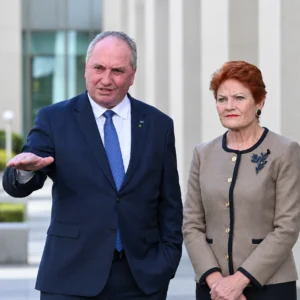
Federal Finance Minister Katy Gallagher has put the Northern Territory government on notice that the Commonwealth may send money directly to frontline organisations if federally funded programs are not being delivered quickly enough, escalating a dispute over how public money is reaching housing and community services in the Territory.
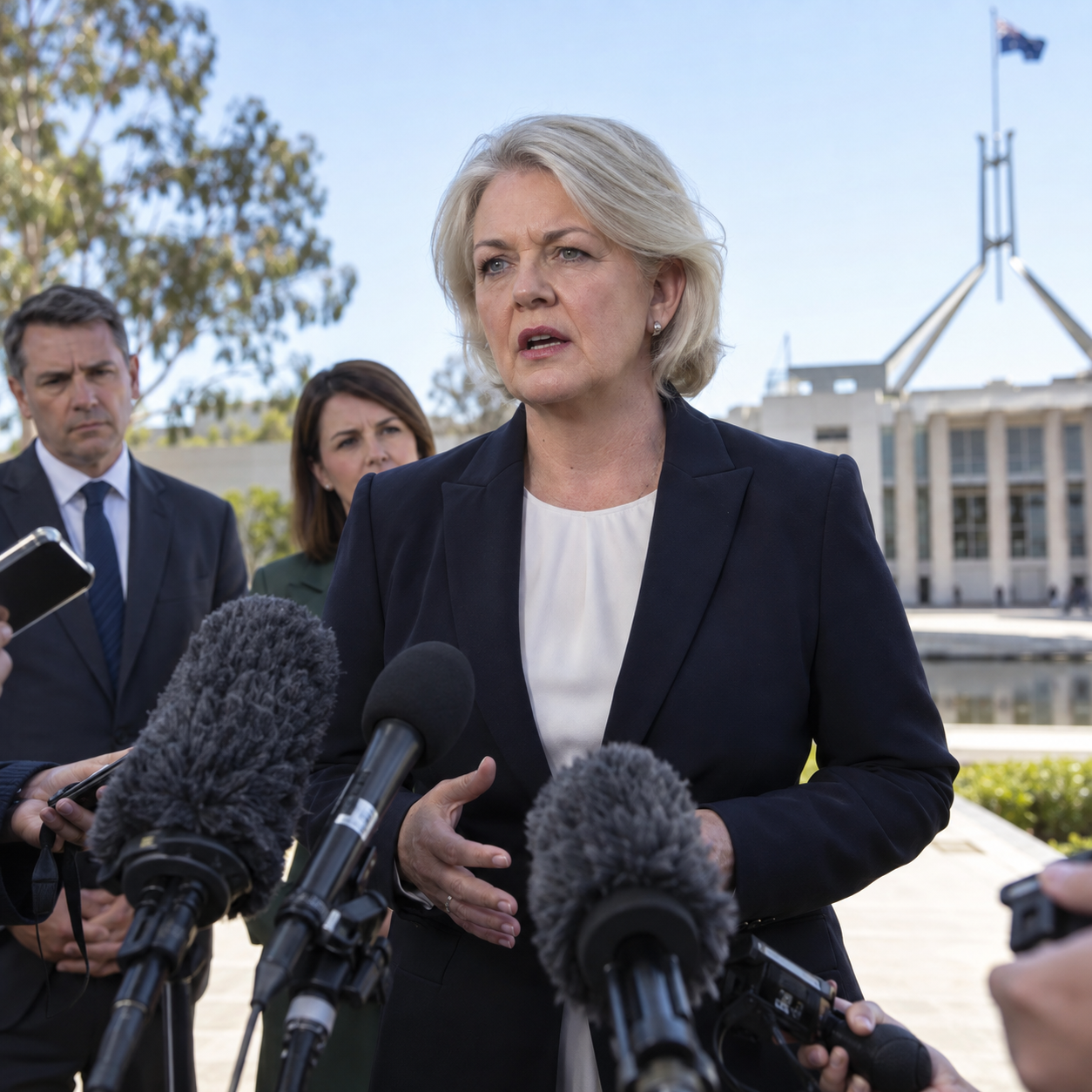
Senator Gallagher travelled to Darwin for talks with Acting Chief Minister Gerard Maley after the Commonwealth raised concerns about the administration of several federally funded programs. She said Canberra wanted to see money already committed to the Territory translated into practical outcomes rather than remaining tied up in processes or delayed projects.
The warning is significant because the Northern Territory relies heavily on Commonwealth revenue. The NT government’s 2026–27 budget says about 72 per cent of total Territory revenue comes from Commonwealth sources, including GST distributions and tied grants. Total Territory revenue is forecast at about $10.7 billion for 2026–27, with Commonwealth revenue projected at roughly $7.7 billion.
Those figures do not mean the federal government controls 72 per cent of day-to-day NT spending. A large share is GST revenue, which is distributed through the federation system and is not the same as a program-specific grant. Other funding is tied to agreed purposes, milestones or national agreements covering areas such as health, housing, education, infrastructure and community services.
That distinction matters in the current dispute. Senator Gallagher’s concerns relate to particular programs and investments rather than a blanket allegation that the NT government has mishandled all Commonwealth money.
She highlighted housing and domestic, family and sexual violence services as areas where the federal government wants faster delivery. Her message was that Canberra expects funding intended for new homes or frontline service systems to produce visible results for Territorians.
Senator Gallagher also raised the possibility that, where appropriate, the Commonwealth could bypass the Territory government and fund frontline organisations more directly. Such a move would change the delivery pathway for particular programs, but it would not by itself establish that money had been stolen, unlawfully spent or corruptly diverted.
No such finding has been made. The current issue is accountability for implementation: whether agreed programs are moving at the pace expected, whether funding is reaching the intended services, and whether existing Commonwealth–Territory arrangements are producing the outcomes promised.
Mr Maley pushed back strongly on the federal criticism. He described it as “a bit rich” for Senator Gallagher to travel to Darwin and tell the Territory how to manage services, and argued the Commonwealth should scrutinise programs it funds directly through non-government organisations as well.
The acting chief minister said the NT government had previously sought a fuller audit of Commonwealth-funded activity in the Territory and questioned whether federal spending outside Territory government channels was always well targeted. That response shifts part of the accountability debate back toward Canberra.
The disagreement therefore has two sides. The Commonwealth says it wants more confidence that its investments are moving through the Territory system and producing results. The NT government says federal ministers should also be transparent about money Canberra sends directly to organisations operating in the Territory.
NT budget documents help explain why the issue matters financially. For 2026–27, GST revenue alone is forecast at about $5.1 billion, representing close to half of total Territory revenue. Current grants are forecast at just over $2 billion and capital grants at about $585 million. Territory taxes and mining royalties together make up a much smaller share of the overall revenue base.
The Territory’s own-source revenue is structurally limited by its small population, large distances and relatively narrow tax base. That has long made federal transfers central to the delivery of public services across remote and regional communities.
It also makes arguments over program design more consequential than they might be in a larger state. A delay in one major housing or service agreement can have an outsized effect where construction costs are high, workforces are thin and communities are separated by hundreds of kilometres.
Tied Commonwealth funding is generally delivered through formal agreements that specify the purpose of the funding and may include milestones, reporting requirements and implementation schedules. Those arrangements are designed to give the Commonwealth assurance about outcomes while leaving states and territories responsible for much of the delivery.
In practice, the lines of responsibility can become blurred. Canberra may fund a Territory department, a local service provider, an Aboriginal community-controlled organisation or a national organisation operating in the NT. Different programs can have different reporting rules and different chains of accountability.
That complexity is one reason Mr Maley’s call for a broader audit is politically relevant even though it does not answer the Commonwealth’s concerns. A full picture of federal spending in the NT would need to distinguish money transferred to the Territory government from money paid directly to other organisations.
For taxpayers, the central question is less about which level of government wins the argument and more about whether money reaches the purpose for which it was committed. In housing, that can be measured through homes started, completed or upgraded. In family-violence services, the indicators can include staffing, service availability, case capacity and whether promised programs are operating.
Those measures are not always immediately comparable. A large housing project can take years to plan and build, while a grant to an existing service provider may produce activity much sooner. That means delays need to be assessed against the actual conditions and milestones of each agreement.
The Commonwealth’s direct-funding warning could become more important if the two governments cannot agree on delivery. Direct grants can shorten the path between Canberra and a service provider, but they can also create coordination problems if federal and Territory programs overlap or operate under different reporting systems.
There is also a broader federation question. States and territories generally argue they need flexibility to deliver services according to local conditions, while the Commonwealth often seeks stronger assurance when it is providing large amounts of tied funding.
The Northern Territory makes that tension particularly visible because Commonwealth revenue is so dominant in its budget. The 2026–27 budget forecasts total revenue of about $10.7 billion, but only a minority is raised through Territory taxes, royalties and other own-source streams.
That dependence does not remove the NT government’s authority over its own programs, but it gives Canberra significant leverage when negotiating future funding agreements and monitoring existing ones.
The next practical test will be what follows the Darwin meeting. The two governments can resolve concerns through revised milestones, reporting, project acceleration or changes to the way money is passed on. If the Commonwealth moves toward direct funding, the specific programs and organisations involved will matter.
Until then, the strongest conclusion supported by the available evidence is that the federal government is dissatisfied with the pace or delivery of some Commonwealth-funded programs and has threatened to change the funding route if necessary.
It is not evidence of a proven misuse finding against the NT government. Mr Maley disputes the federal criticism and wants Canberra’s own direct spending examined as well.
The budget data also shows why accountability cannot be reduced to one headline percentage. Of the Territory’s forecast $10.7 billion in 2026–27 revenue, GST is about $5.1 billion, current grants just over $2 billion and capital grants about $585 million. Taxes, royalties, sales and other income make up the balance.
GST is generally untied, while many program grants are attached to specific agreements. That means a disagreement about one housing or family-violence funding stream does not automatically call the whole Territory budget into question.
The Commonwealth and NT also operate through long-term federation funding agreements. These can set reporting requirements, delivery dates and performance measures. Where milestones are missed, governments can renegotiate, delay payments, redirect programs or establish different delivery arrangements.
Direct funding is therefore one possible administrative response rather than a punishment in itself. It can give Canberra a clearer line of sight to a provider, but it may also reduce the Territory government’s ability to coordinate services across agencies and communities.
Remote delivery adds practical complexity. Construction costs can be higher outside Darwin, workforce availability can be limited and wet-season access can delay projects. Those conditions can help explain slower delivery in some programs, but they do not remove the requirement for governments to account for money and progress.
The same applies to family and domestic violence services. Building a service system may involve grants to multiple organisations, recruitment, accommodation, specialist workers and local partnerships. Measuring whether money has “reached the frontline” therefore requires more than checking whether a single payment has left a government account.
For both governments, transparency will matter if the dispute continues. Publishing clearer program-level milestones, amounts paid, amounts committed and services delivered would allow the public to distinguish genuine implementation delays from political claims made across the federal–Territory divide.
For Territorians, the outcome will be judged less by the intergovernmental argument than by whether promised housing, safety and community services are actually delivered — and whether both governments can show where public money went and what it achieved.