A federal inquiry has called for national minimum standards across Australia’s youth justice systems and urged the government to confront what the committee described as a false narrative that the country is in the grip of a youth crime wave.
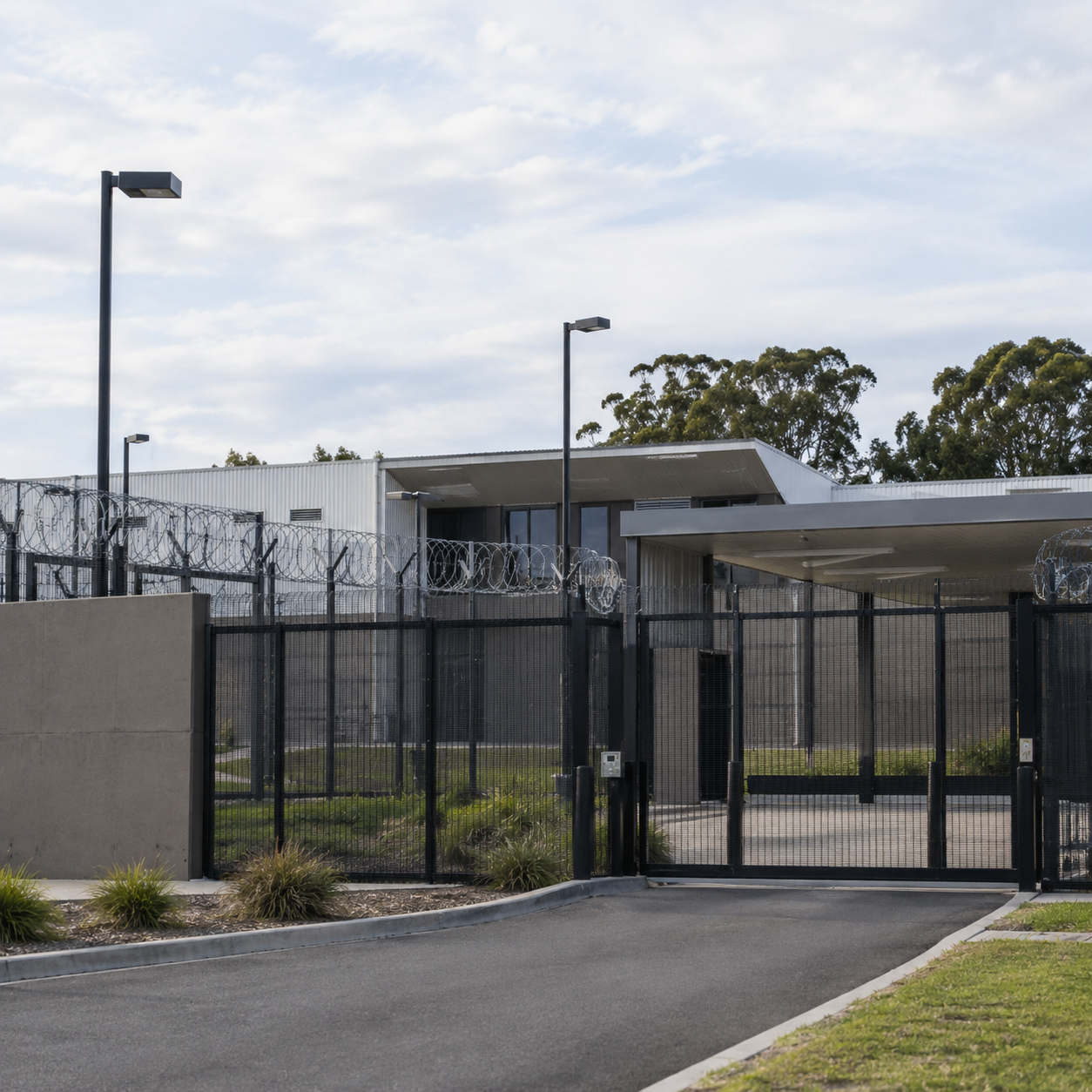
The recommendations come from a parliamentary inquiry involving Liberal, Labor and Greens members. Its report argues that youth justice laws and practices are fragmented across states and territories, leaving children with very different levels of support, protection and treatment depending on where they live.
The committee wants the federal government to work towards national minimum standards for youth detention and justice, create a cross-jurisdictional taskforce involving child justice and police agencies, and fund a public education campaign about youth offending and alternatives to incarceration.
The report’s language about a youth crime wave is a committee conclusion and should be understood in that context. It does not mean crime concerns in every community are invented, or that every type of youth offending is declining everywhere. It means the committee believes national data do not support a simple picture of a country experiencing an across-the-board surge in youth crime.
Australian Bureau of Statistics data cited in the debate show 44,583 offenders aged 10 to 17 were proceeded against by police nationally in 2024–25, down 5 per cent from the previous year. The population-adjusted youth offender rate also fell, from 1,764 to 1,660 per 100,000 people aged 10 to 17.
Those figures provide important national context, but they need careful interpretation. Police-recorded offender data measure people proceeded against by police, not every offence committed, and legal settings differ between jurisdictions. Changes to the minimum age of criminal responsibility in the Northern Territory and the ACT have also affected comparisons in some periods.
The national trend can also sit alongside serious local problems. A community can experience a cluster of vehicle thefts, assaults or repeat offending even while the national number of young offenders falls. Policy arguments become distorted when either the national decline or local harm is treated as if it cancels out the other.
The inquiry’s broader concern is that political and media pressure can push governments towards increasingly punitive responses without enough attention to rehabilitation, diversion and the circumstances that bring children into contact with the justice system.
It identified poverty, housing insecurity, exclusion from education, racial discrimination and systemic neglect among factors linked to youth offending. The report argues that addressing those conditions is part of community safety rather than an alternative to it.
One of the starkest findings concerns First Nations children. The inquiry said 56 per cent of children under youth justice supervision nationally were First Nations, despite Aboriginal and Torres Strait Islander children making up only a small proportion of the overall child population.
That over-representation has been a long-running feature of Australian youth justice. Indigenous legal organisations argue that the system often encounters children only after failures in housing, health, disability support, education and family services have already accumulated.
Nick Espie from the National Aboriginal and Torres Strait Islander Legal Services described youth justice systems as being in crisis and welcomed national minimum standards. He argued that jurisdictions have been competing to appear tougher rather than consistently applying therapeutic and evidence-based approaches.
The current national guidance is not the same as a binding national legal framework. The committee heard that standards used by Australasian youth justice administrators are aspirational, meaning jurisdictions can diverge substantially in practice.
A national minimum standard could cover matters such as conditions in detention, access to health and education, use of isolation, family contact, cultural support, complaints processes and rehabilitation. The exact content would have to be negotiated because states and territories are primarily responsible for their own child protection, justice and detention systems.
That constitutional and administrative split is one reason national reform is difficult. The federal government can fund programs, coordinate policy and use national institutions, but it does not directly run most youth detention centres. Any uniform system would require cooperation from governments with different laws and political pressures.
The inquiry also stopped short of recommending that the age of criminal responsibility be raised to 14 nationwide, despite that position being supported by many health, legal and human-rights organisations and by United Nations bodies.
Only three senators on the inquiry — Liberal Andrew McLachlan, Greens senator David Shoebridge and independent senator Lidia Thorpe — supported that move. Senator Thorpe criticised the report for not going further, saying the evidence supports keeping younger children out of detention.
The age issue illustrates the disagreement inside the broader reform debate. Some governments argue communities need strong legal responses to serious offending, particularly where there are repeat offenders or violent incidents. Reform advocates argue that incarcerating younger children can worsen long-term offending by exposing them to more trauma and disconnecting them from education and family.
The committee’s proposed public education campaign is also contested. It wants the government to explain national trends and the claimed community-safety benefits of alternatives to incarceration. Senator Thorpe did not support the recommendation, warning that government messaging could become politicised without proper community leadership and consent.
The federal Attorney-General’s office has said the government will consider the inquiry’s recommendations and respond in due course. It pointed to justice reinvestment spending and acknowledged that governments at all levels need to do more to reduce the number of young people in detention, especially First Nations children.
Justice reinvestment generally involves shifting resources towards community-led services intended to prevent offending and reduce contact with the justice system. Programs can include housing support, school engagement, family services, health care, mentoring and locally designed diversion schemes.
Supporters say those approaches can address the drivers of offending earlier and cost less than repeated detention. Critics often ask whether prevention programs can respond quickly enough to immediate community concerns and whether governments are willing to measure outcomes rigorously when programs do not work.
The committee’s national-crime argument also needs to be separated from the experience of victims. A decline in aggregate youth offender numbers does not make an individual burglary, assault or car theft less serious. The policy question is what combination of policing, courts, detention, rehabilitation and prevention best reduces the chance of more victims in future.
ABS data show that acts intended to cause injury were the most common principal offence among youth offenders nationally in 2024–25, accounting for about a quarter of young offenders proceeded against by police. Theft was also a significant category in several jurisdictions.
At the same time, youth offender rates have fallen substantially from levels recorded when the current ABS series began in 2008–09. That long-run trend is central to the committee’s argument that national discussion should not assume a simple, continuous rise in youth crime.
Different states can nevertheless move in different directions in particular years. Western Australia, for example, recorded an increase in total offenders in 2024–25 even as youth offender numbers there fell slightly. Queensland’s youth offender count fell 9 per cent that year, while New South Wales and Victoria also recorded declines.
The inquiry is therefore asking governments to separate evidence from political shorthand. It argues that a system can take serious offences seriously while still recognising that most young people who enter the justice system will eventually return to the community and that reducing reoffending is a public-safety goal.
If national minimum standards are developed, the difficult part will be enforcement. A document that merely restates best practice would not solve the fragmentation the inquiry identified. Governments would need to decide whether standards are tied to funding, legislation, independent inspections or other accountability mechanisms.
The same applies to the proposed national taskforce. Coordination can improve consistency, but it will matter only if agencies share comparable data, track outcomes and act when one jurisdiction’s practices fall below the agreed standard.
The immediate next step is the federal government’s formal response. Until then, the inquiry’s recommendations remain proposals rather than binding national rules. State and territory youth justice laws continue to operate as they do now.
The strongest conclusion supported by the current evidence is narrower than either side of the political debate sometimes suggests: Australia has serious youth justice problems, including major First Nations over-representation and harmful offending in some communities, while the latest national police data show fewer young offenders overall than the year before and a much lower rate than in the late 2000s.
The inquiry’s case is that policy should be built around both realities — protecting communities from harm while creating a more consistent system that reduces the chance children cycle repeatedly through police, courts and detention.