Western Australia’s Court of Appeal has rejected the state government’s attempt to use child sexual abuse survivor Dion Barber’s concluded compensation case to obtain legal guidance that could have affected almost 200 similar claims. The decision leaves Mr Barber’s payment intact and forces the state to confront disputed legal issues, if it chooses to pursue them, in a live case where another claimant’s rights and evidence are actually before the court.
Mr Barber was awarded about $2.85 million after a District Court case over abuse he suffered while in state care in the 1980s and 1990s. The government paid the judgment and repeatedly promised it would not try to recover the money, even if its appeal succeeded. The state nevertheless asked the Court of Appeal to revisit important parts of the reasoning behind the award.
The tension at the heart of the appeal was therefore unusual. In practical terms, the dispute with Mr Barber over his compensation had been resolved: he had been paid and the government said the payment was safe. In legal terms, however, the state still wanted the appeal court to rule on questions that could shape how future historical-abuse claims were negotiated or defended.
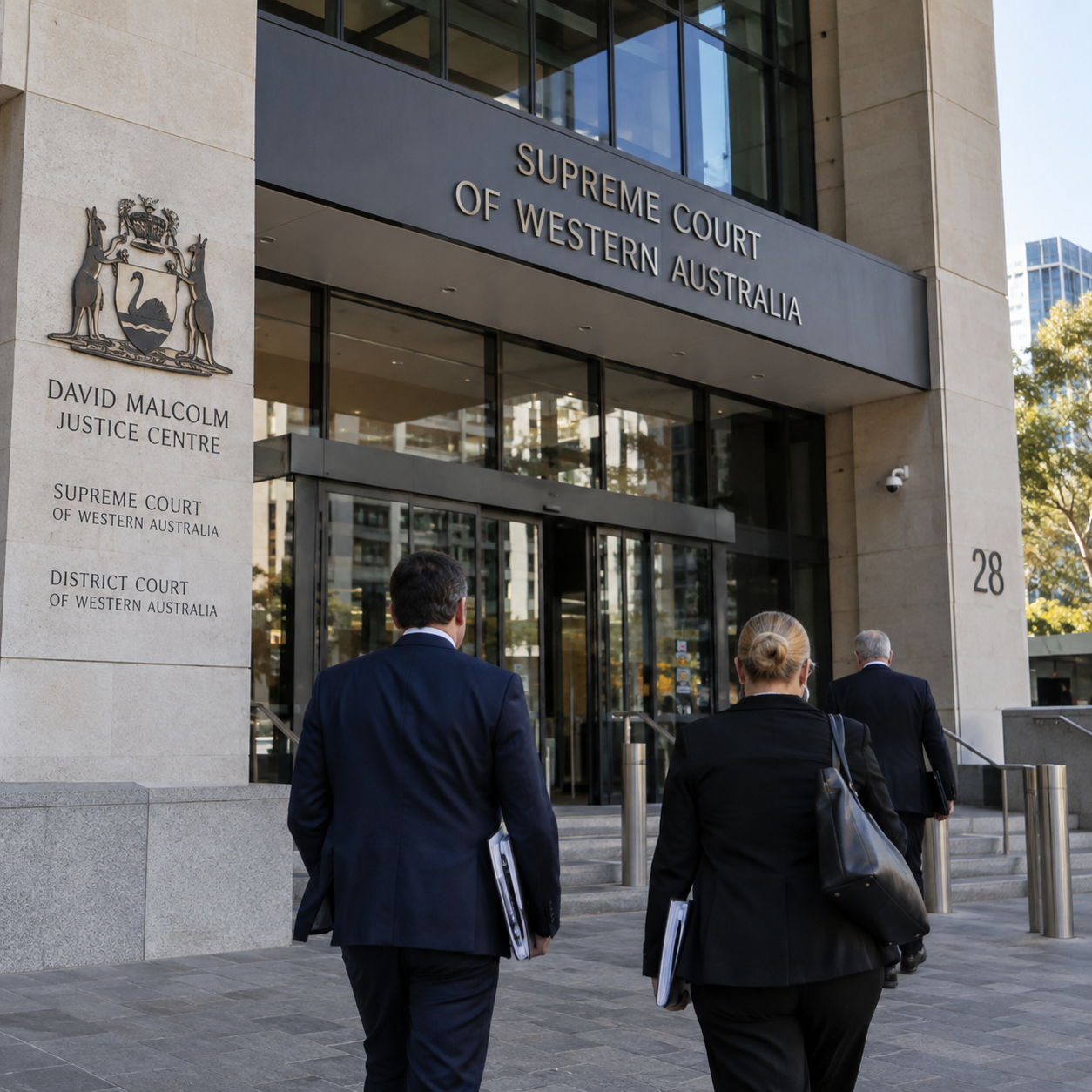
ABC News reported that three Supreme Court justices, including Chief Justice Peter Quinlan, dismissed the appeal and later published reasons explaining why. The court concluded that hearing the matter in those circumstances would not be an appropriate exercise of judicial power. The reasons focused on the fact that the state was seeking answers with consequences for other cases even though there was no longer a practical dispute over Mr Barber’s payment.
The state had told the court there were almost 200 other people pursuing claims involving a similar statutory issue. The appeal court said the government appeared to be seeking a decision that would help it negotiate those claims, potentially on terms more favourable to the state than the outcome in Mr Barber’s case.
The judges’ response was that if the state wants to deny or contest another survivor’s claim, it should do so openly in the ordinary course of litigation in a properly constituted case. That approach ensures the person affected by the legal argument is actually before the court and can respond to the evidence and submissions that may determine their rights.
The decision does not mean the nearly 200 other claimants automatically win. It does not set a universal compensation figure and it does not prevent the state from raising legal defences in future litigation. Instead, it rejects the use of Mr Barber’s already-resolved dispute as a vehicle for obtaining what would effectively be advice about other people’s cases.
The state had argued that aspects of the District Court judgment needed clarification. Earlier parliamentary answers said the government was acting on advice from senior legal counsel and the Insurance Commission of Western Australia. One argument concerned whether state officers acting in good faith should affect the state’s liability. The government also disputed elements of the damages reasoning.
Premier Roger Cook has defended the appeal as an attempt to create legal clarity that could help other survivors resolve claims more quickly and avoid the ordeal of a full trial. That has been the government’s consistent public position: Mr Barber’s abuse was not being disputed, his payment was not at risk, and the appeal was said to be about future legal certainty.
The Court of Appeal’s reasoning exposed the other side of that argument. A legal precedent can speed negotiations, but it can also change bargaining power. If a ruling narrowed state liability or reduced the basis for damages, it could make future claims easier for the government to resist or settle for less. That is why the court was concerned about being asked to decide issues detached from a live dispute.
Mr Barber’s lawyer, Hugo Seymour, has been critical of the state’s approach. Opposition figures have also attacked the Insurance Commission’s handling of historical abuse claims. Those criticisms are political and legal arguments about the government’s conduct; they are separate from the court’s narrower procedural conclusion that this particular appeal should not be used to obtain an advisory ruling.
The broader background is Western Australia’s decision to remove the limitation period for civil child sexual abuse claims. The reform, passed after the change of government in 2017 and taking effect in 2018, opened a path for survivors whose claims might otherwise have been blocked simply because the abuse occurred decades earlier.
That change created a large body of historical litigation involving institutions and the state. Parliamentary records show the Insurance Commission had finalised more than 300 historical sexual abuse claims by late 2025, with more than $110 million paid. Later committee evidence referred to 344 WA-based historical child sexual abuse claims having been settled, again with more than $110 million paid.
Those figures help explain why a single appellate ruling matters to the state. Historical claims can involve substantial damages, complex questions of institutional responsibility and evidence that is decades old. Governments also have an obligation to manage public liabilities consistently. But the courts remain responsible for deciding actual controversies, not giving governments a general negotiating manual.
Mr Barber’s own case has been especially sensitive because the state does not dispute the seriousness of the abuse he suffered. Parliamentary statements repeatedly acknowledged the abuse while defending the legal appeal. The government also publicly guaranteed his compensation would not be clawed back.
For Mr Barber, however, the continuation of the litigation still had a personal cost. He told ABC Perth that the appeal had caused further torment and said meaningful change in the way survivors are treated would matter more to him than words alone. The court’s decision ends this appellate attempt, but it does not erase the stress produced by another year of legal proceedings.
The nearly 200 other claims now return to the centre of the policy question. Without an appellate ruling from Mr Barber’s case, the state can continue settling claims, contest particular issues in individual cases, or seek legislative change if it believes the law needs clearer boundaries. Each path carries different consequences for survivors, public finances and the time taken to resolve claims.
Settlement is generally faster and less adversarial than a trial, but it depends on both sides having enough information to assess risk. A government may want consistent principles across cases; survivors may be wary of a framework that treats highly personal histories as interchangeable. The appeal court’s reasoning reinforces the idea that broad legal questions should emerge from a real dispute where the affected claimant can answer them.
The case also shows why it is misleading to describe the dismissal as either a blanket victory for every survivor or a finding that the state can never dispute liability. The court did not decide the merits of 200 separate claims. It decided that Mr Barber’s resolved case was not the right mechanism for giving the state the wider ruling it wanted.
That distinction will matter in the months ahead. If the government changes its settlement approach, survivors and lawyers will watch for whether claims are resolved more quickly or become more contested. If the same statutory issue reaches the Court of Appeal again through another live case, judges may then have a proper factual dispute in which to determine it.
For now, Mr Barber keeps the compensation he was awarded, the state’s attempted appeal has been dismissed, and the nearly 200 other claims remain to be dealt with on their own facts. The larger question is no longer whether the government can use Mr Barber’s case to set a reference point. It is how the state chooses to handle each unresolved survivor’s claim without the advisory ruling it sought.
The court’s dismissal also has an institutional dimension. Appellate courts generally decide controversies between parties rather than answer abstract legal questions for government. The state argued there was still public value in clarifying the law, but the judges concluded that the absence of a live dispute over Mr Barber’s payment made this case an unsuitable vehicle. That procedural principle helps explain why the same statutory issue could still return to an appellate court later through a different claimant’s case.
For survivors, the practical importance is time as much as money. Historical abuse claims can require people to revisit traumatic events, locate old records and participate in adversarial proceedings decades after the abuse. The government’s stated objective is to create clearer rules that reduce the need for trials; critics argue that aggressive litigation can itself prolong harm. The Court of Appeal did not settle that policy debate, but it removed one route the state hoped to use to obtain certainty.
The government’s record of settlements is therefore relevant but not conclusive. More than $110 million paid across hundreds of claims shows the state has accepted liability in many matters, while the existence of almost 200 current claims shows the legal and financial exposure remains substantial. The way those cases are handled from here will provide a more meaningful test of policy than the rhetoric surrounding Mr Barber’s appeal.